

Quick Answer
To make a bed wedge pillow safer for a senior after knee replacement, keep the wedge stable on the mattress, support the leg with a slight natural bend, and prevent sliding or hanging off the edge. Place the wedge flat on the mattress, add a non slip layer underneath if it shifts, and check that the heel and calf are supported without forcing the knee completely straight or deeply bent. Always check with a physical therapist or healthcare provider before changing positioning after a knee replacement.
Why This Happens
A wedge often slides on smooth sheets or a soft mattress, which can cause the leg to slip down or twist during the night. When the base is not secure, the senior may try to catch themselves and strain the healing knee.
The angle may not match what your loved one needs right now. A wedge that is too high or too steep can press behind the knee or hold the leg too straight, while one that is too low may not provide enough elevation for comfort. Finding the right height is common concern, and you can learn more in this guide to How High Should Bed Wedge Pillow Be for Elderly.
A single small wedge may not support the full leg, so the foot or ankle hangs off the end and the leg rolls to one side. Without support under the calf and heel, pressure can build on the heel and the knee may turn inward or outward.
Nighttime movement also shifts the wedge out of place. Seniors recovering from surgery often adjust position frequently, and a light foam wedge can move with them, leaving a gap between the pillow and the body or creating an unstable edge near the side of the bed.
Practical Steps to Try
- Stabilize the base first. Place the wedge directly on the mattress, not on top of loose blankets, and try a non slip mat or shelf liner underneath if the cover slides. If your wedge has a grip enhancing cover, keep it clean and dry so it can help reduce unwanted movement, and check that the wedge does not hang over the edge of the bed.
- Check knee position with care. Try to keep the leg in a relaxed, slightly bent position rather than locked straight or sharply bent, and make sure the back of the knee is not pressed hard into the peak of the wedge. Ask the physical therapist what bend is appropriate for your loved one right now, and avoid adding extra pillows that force the joint.
- Support the whole leg, not just the knee. Use the wedge to support the calf and let the heel float just beyond the edge or on a soft small pillow so pressure is not only on the heel. If the wedge is short, try placing a second small wedge or rolled towel under the lower calf to keep the leg aligned and to help keep it from rolling.
- Reduce sliding and make getting help easier. Keep the wedge centered on the bed and away from the side rail or edge to limit entrapment space, and keep the call button, water, and light within reach so the senior does not need to lean over the wedge. Check that bedding is smooth and not bunched under the wedge, which can create an uneven surface.
- Make the setup easy to adjust and clean. Choose a wedge with a removable, washable cover and a handle for repositioning, and check the setup each evening for shifts. For more ideas on choosing support that stays in place, you may find this overview of medline bed wedge pillow review for elderly helpful when comparing shapes and covers.
When a Product Can Help
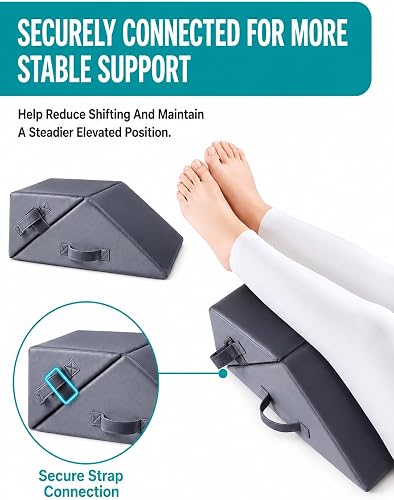
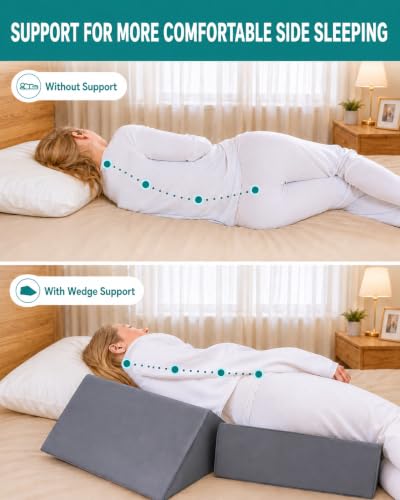
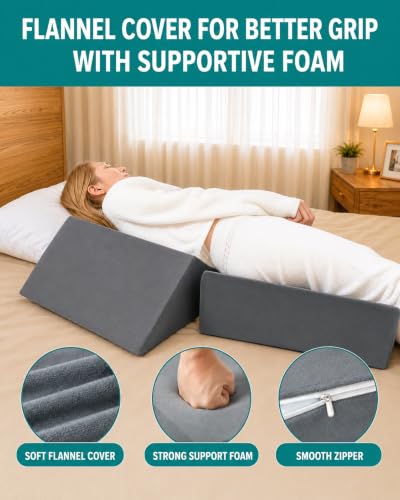
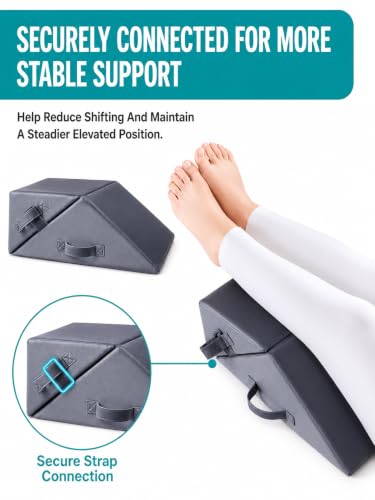
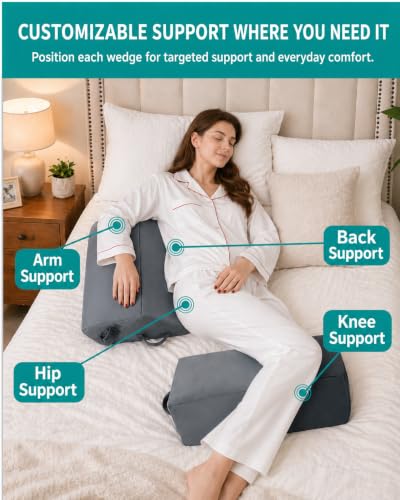
If your current wedge is too small, too soft, or slides easily, a larger multi piece system may help reduce shifting and give you more ways to support the leg safely. One practical option is a set with a larger surface, high resilience foam that holds its shape, and multiple wedges you can combine for head, back, knee, or leg support, plus a grip enhancing flannel cover and built in handle for easier adjustment. These features may help create a more stable and comfortable setup while you follow the care team guidance.
This guide contains affiliate links, and we may earn a commission if you buy through them, at no extra cost to you.

Prime SJFFDP 3PCS Positioning Wedge Pillow Set







As an Amazon Associate we earn from qualifying purchases. Product prices and availability are accurate as of the date/time indicated.
When to Talk to a Professional Instead
This type of wedge setup is not ideal for every senior after knee replacement, and a home adjustment is not a good fit if you notice increased swelling, new numbness or tingling, skin redness that does not fade, or the senior cannot follow the surgeon movement precautions. In those cases, pause and contact the physician, physical therapist, or healthcare provider for guidance before trying another pillow arrangement.
Also skip this kind of DIY repositioning if the senior is at high risk of falling when getting in and out of bed, needs help turning, or the wedge makes it harder to stand up safely. A healthcare provider or occupational therapist can suggest safer bed positioning tools or bed height changes that fit the home layout and recovery plan.
You can explore more general monitoring and support ideas in the Health Monitoring Devices section, but use that information only as background for your conversation with the care team, not as a substitute for their advice.
Frequently Asked Questions
Should the knee be kept completely straight on the wedge after replacement?
Try to avoid forcing the knee into a locked straight position or a deep bend. Most care teams suggest a relaxed, slightly bent resting position with support under the calf so the heel is not bearing all the weight, but always confirm the right angle with the physical therapist.
How can I stop the wedge pillow from sliding down the bed?
Place it flat on the mattress with a non slip layer underneath, smooth the sheets, and check that the cover is not overly slick. A wedge with a grip enhancing cover and high resilience foam that holds shape may help reduce movement, and recentering it each night can help keep support consistent.
Can a senior sleep on their side with a wedge after knee replacement?
Side positioning depends on the surgeon precautions and healing stage, so check with the healthcare provider first. If side resting is approved, a small wedge or pillow between the legs is often used to keep the legs aligned, rather than stacking wedges that could make the bed unstable.
Browse more picks in our Health Monitoring Devices category, or see our related guide on Medline Bed Wedge Pillows for Elderly Support in 2026.










Write Your Review
No reviews yet. Be the first to share your experience!