

Quick Answer
If your threshold ramp feels wobbly, too steep, or slippery for a senior, the most common fix is to stop the movement, correct the height match, and improve traction and support. Check that the ramp sits flush on both sides, will not slide under weight, and has a gentle slope for walkers or wheelchairs. Adding a non-slip surface, clear edge markings, and a sturdy handhold nearby may help reduce the risk of slips, then consider a heavier, properly sized replacement only if those fixes are not enough.
Why This Happens
A ramp that moves even a little can feel unsafe, especially for someone using a cane, walker, or wheelchair. Lightweight ramps on tile, hardwood, or dusty concrete can creep forward when weight shifts, and a gap at the top or bottom lip can catch wheels or toes. Always check with a healthcare provider, physician, or occupational therapist before making mobility changes for a senior in your care, especially if balance or strength has changed recently.
Slope matters more than it looks. A ramp that is too short for the threshold height creates a steep incline that requires more strength to push up and more control to go down. If the rise is more than the ramp was designed for, the front edge may lift or the transition may feel like a bump instead of a smooth roll.
Surface and weather play a big role at entrances. Smooth rubber or aluminum can become slick when wet, and leaves, dirt, or ice reduce grip for shoes and wheels. Poor lighting makes edges hard to see, so a senior may misjudge where the ramp starts or ends.
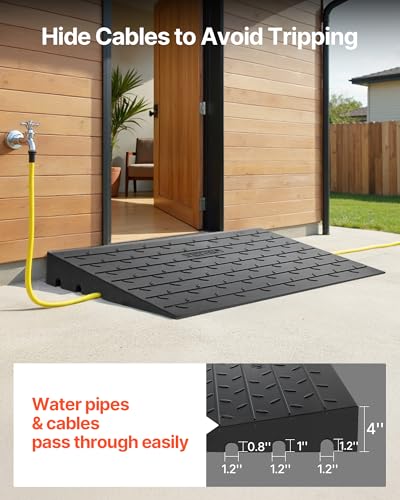
The surrounding setup can also make a safe ramp feel unsafe. Without a handrail or wall support nearby, there is nothing to steady against during the transition. Doors that swing over the ramp, narrow openings, or cords and hoses running under a ramp can add tripping or clearance problems that have nothing to do with the ramp itself. You can review general entrance checks in the Outdoor & Entrance Safety guide for context.
Practical Steps to Try
- Confirm the size and secure the base. Measure the threshold height and compare it to the ramp’s rated rise, then check that both ends sit fully flush with no rocking or gaps. Try cleaning the floor and ramp bottom, using the manufacturer’s non-slip backing or adhesive if provided, and placing the ramp so the door can open without lifting it. If it still slides, that is a sign the weight or grip is not ideal for that doorway.
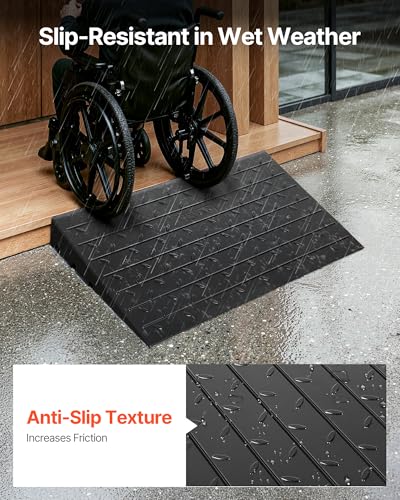
- Improve traction and keep the surface clear. Look for a grooved or textured surface that channels water away, and keep the ramp free of dust, leaves, and moisture. For outdoor use, consider a covered entry or mat to reduce wet tracking, and trim any loose rug edges near the transition that could catch a walker tip.
- Make the edges obvious, especially in low light. Add high-contrast tape or reflective markers along the sides if the ramp allows it, and ensure the entry is well lit at night. This helps a senior and a caregiver see where the slope begins and ends, which may help reduce the risk of a misstep.
- Add steady support within reach. If there is no railing, see if a wall-mounted handrail or a secure grab bar can be added next to the ramp at a comfortable height. The support should be firmly anchored to framing, not just to drywall or siding, and should allow a natural hand position while stepping or rolling through.
- Check mobility aid clearance and door swing. Roll a walker or wheelchair slowly over the ramp and watch for wheel catch, scraping, or tipping at the lip. Also try opening and closing the door fully to confirm the ramp does not block the swing or threshold seal, and adjust placement so the transition remains smooth in both directions. For ideas on matching ramps to mobility aids, see Wheelchair Ramps for Seniors With Hearing Loss: Mobility Guide for general fit tips that apply broadly.
When a Product Can Help
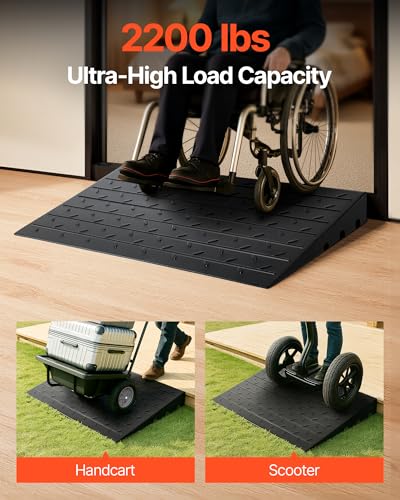
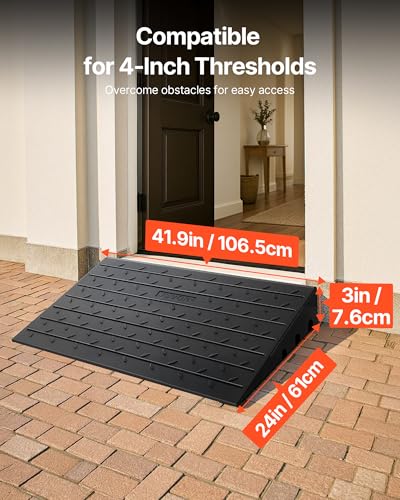
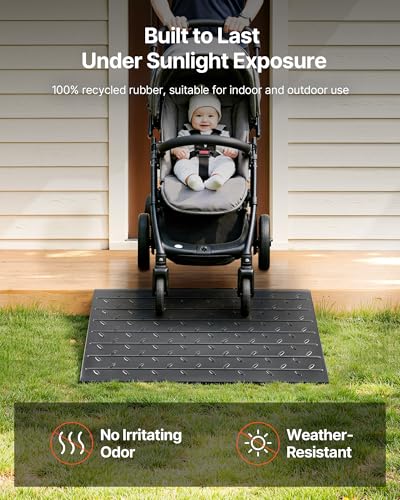
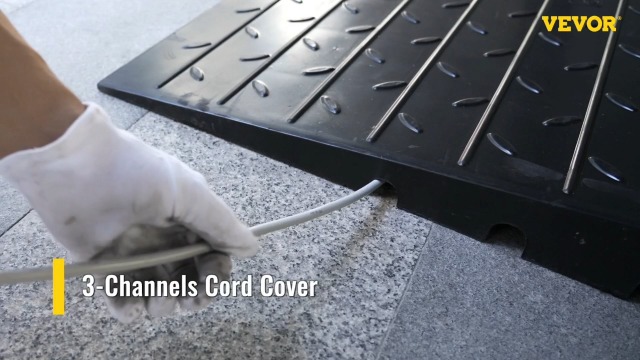
If your current ramp is too light, too narrow, or too steep for the doorway, a replacement that is heavier, wider, and correctly rated for the rise may help reduce movement and improve comfort. One common option is the VEVOR 3″ Rise Rubber Threshold Ramp, which is described as having a gentle 7.12 degree incline for steps up to 3 inches, a 41.8 inch wide platform for walkers and wheelchairs, a grooved non-slip surface, and a substantial 53 lb rubber construction that stays firmly in place. It is also rated to hold up to 2200 lbs and requires no tools for placement, with three channels underneath to keep cords from creating bumps. This type of solid, one-piece design is often chosen when a lighter portable ramp shifts too easily at a frequently used entry.
This guide contains affiliate links, and we may earn a commission if you buy through them, at no extra cost to you.

Prime VEVOR 3" Rise Rubber Threshold Ramp 41.8" Wide


As an Amazon Associate we earn from qualifying purchases. Product prices and availability are accurate as of the date/time indicated.
When to Talk to a Professional Instead
Some situations are not a good fit for a simple ramp fix and deserve a professional review. If the threshold is higher than a small single-step rise, if the senior has had recent falls, or if strength and balance are changing quickly, a home adjustment alone is not ideal for safety.
This is also not recommended for doorways where the slope would be too steep to use safely with a wheelchair or where there is no room for a handrail or level landing at the top and bottom. An occupational therapist or physical therapist can assess the entry, suggest the right incline and landing space, and confirm whether a threshold ramp, a longer ramp, or a different entry solution is more appropriate.
If you notice the senior leaning heavily on the door frame, needing to be lifted over the threshold, or reporting dizziness at the transition, pause and seek guidance. A physician or healthcare provider can review overall mobility and home safety, and you can also check general support options like ADA Cane Requirements for Seniors Aging in Place: Guide to understand how canes and other supports fit into a broader plan.
Frequently Asked Questions
Why does my threshold ramp slide when stepped on?
Most sliding comes from a light ramp on a smooth or dusty floor without adequate grip. Try cleaning both surfaces, using the manufacturer’s adhesive or non-slip backing, and checking that the ramp weight and bottom texture are suited to the flooring. If it still moves, a heavier rubber model that stays in place may be more appropriate.
How do I know if the ramp is too steep for a senior?
Measure the threshold height and compare it to the ramp’s rated rise and length. If the senior must push hard to get up, feels rushed going down, or wheels catch at the lip, the incline is likely too steep. A longer ramp for the same rise creates a gentler slope that is usually easier to manage.
Can I make a rubber threshold ramp less slippery when wet?
Keep the grooved surface clean and free of debris so water can drain, and keep the entry as dry as possible. Improve lighting and edge visibility so the transition is easy to see, and consider a covered entry or awning if rain regularly wets the ramp. If the surface is worn smooth, replacing it may help reduce the risk of slipping.
Browse more picks in our Outdoor & Entrance Safety category, or see our related guide on Door Lever Handles for Seniors Outdoors in 2026.





Write Your Review
No reviews yet. Be the first to share your experience!