

Quick Answer
If your outdoor grab bar is not working well for a senior with osteoporosis, the most common reason is that it is not giving steady, comfortable support where it is needed most, often because it is loose, poorly placed, or the wrong style for the entrance. Check the mounting, the surface it is attached to, and whether the bar allows a natural hand position while stepping up or down, then try simple adjustments like tightening hardware, improving grip, and adding non slip footing before you consider a different product.
Why This Happens
Outdoor grab bars face conditions that indoor bars do not. Rain, temperature changes, sun exposure, and uneven walls or posts can loosen fasteners over time and make a bar feel wobbly or less secure, even if it was solid at first.
Placement is another common issue. A bar that is too high, too low, too short, or set at an awkward angle may force the hand and wrist into an uncomfortable position. For a senior with osteoporosis, any extra strain or feeling of unsteadiness can make the bar feel unhelpful, even if it is technically secure. Always check with a healthcare provider, physician, or occupational therapist before making mobility changes for a senior in your care.
Surface and grip matter outdoors as well. Smooth metal can become slippery when wet or cold, and a small diameter bar can be hard to hold for long. If the wall material is not solid, such as vinyl siding, stucco over foam, or rotted wood, the bar may flex because the base is not anchored to structural support.
Finally, a single bar is often not enough on its own. Steps that are uneven, lack a contrasting edge, have no handrail on both sides, or lead to a threshold that is hard to see can make any single grab bar feel inadequate. You can learn more about broader entrance options in the Outdoor & Entrance Safety category.
Practical Steps to Try
Try these general household checks in order, starting with the easiest and safest. Stop and get help if anything feels loose, cracked, or beyond a simple tightening.
- Check the mounting and the wall. Gently try to move the bar without putting your full weight on it. Look for loose screws, rust, or movement at the base plates. Confirm what the bar is attached to. It should be anchored into solid wood blocking, studs, or masonry with appropriate hardware, not just siding or trim. If you see crumbling wood, soft spots, or loose anchors, do not rely on the bar and plan for a repair.
- Review the height and location. Have the senior stand at the entrance and notice where the hand naturally falls when stepping up. Most people benefit from support at hand height while standing on the lower step, with the bar running in the direction of travel. If the current bar forces reaching overhead or bending low, consider whether a vertical, horizontal, or angled position would allow a more neutral wrist and steady pull.
- Improve grip and footing around the bar. Clean the bar and check for a textured or brushed finish that stays more comfortable to hold. Clear leaves, moss, or ice from steps, add non slip treads or mats rated for outdoor use, and make sure the area is well lit for evening entries. Good lighting is a simple support that is often overlooked, see related ideas in best motion sensor night light for osteoporosis for how lighting helps with steadiness.
- Add a second point of support if one bar is not enough. Many entrances are more stable with support on both sides, such as a wall mounted bar on one side and a rail or post on the other. Look at whether the steps have a continuous handrail that can be held throughout the entire climb, rather than a single short bar that only helps at one spot.
- Consider the surface underfoot and the threshold. Check for uneven risers, a wobbly step, or a high door sill that requires an extra large step. A small platform, a beveled threshold, or a repaired step edge may help the grab bar work better as part of the whole entrance, rather than asking the bar to do all the work alone.
If these checks do not help, document what feels wrong, for example whether the bar moves, feels too slippery, or is in the wrong place. That note will be useful if you speak with a contractor or a therapist about the next option.
When a Product Can Help
A product may help when the current bar is secure but the design does not match the senior’s hand size, grip comfort, or the amount of support needed at that entrance. In that case, one common option is to look for a bar that is described as easy to grip, made for wet environments, and rated to support a higher load when properly installed into solid structure.
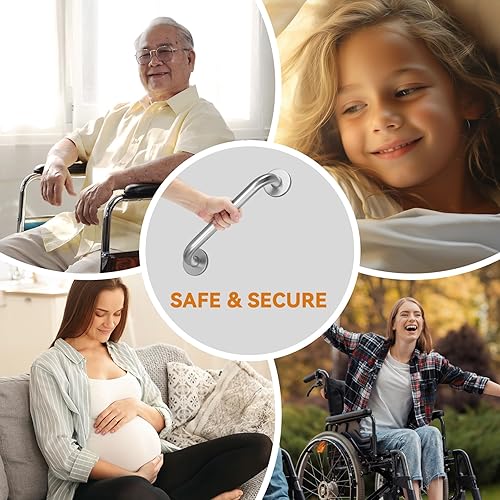
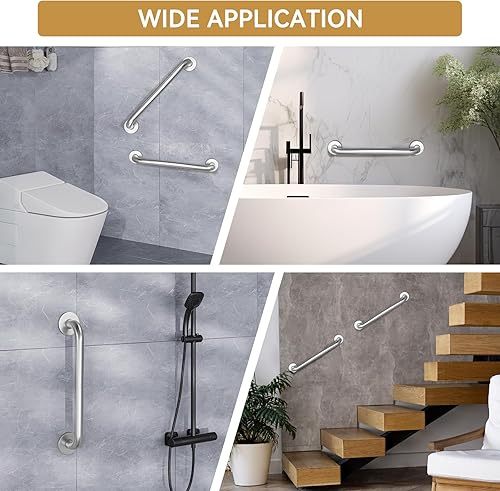
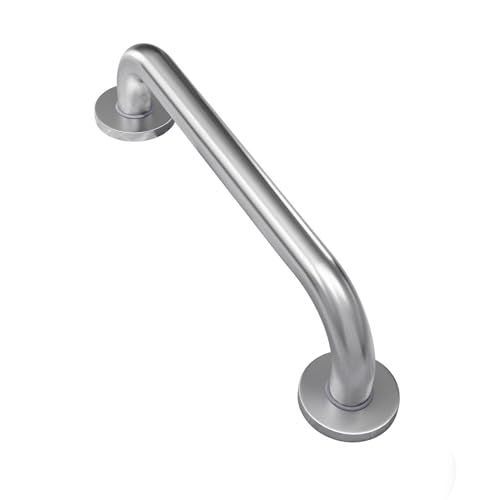
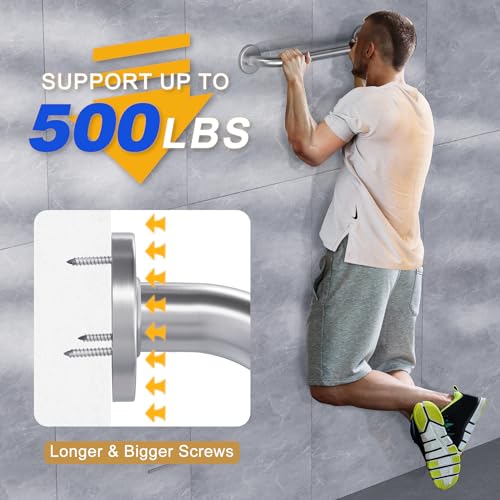
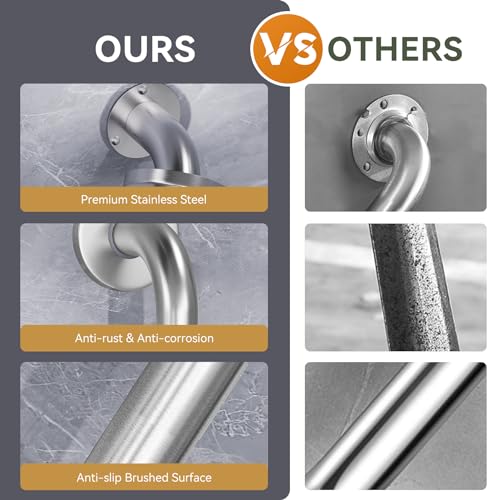
For example, some caregivers look for a simple stainless steel wall bar with a brushed, anti slip surface and a comfortable diameter that allows the whole hand to wrap around it. The product below is one such option that is described as supporting up to 500 lbs when installed as directed, with enlarged bases and included hardware for different surfaces.
This guide contains affiliate links, and we may earn a commission if you buy through them, at no extra cost to you.
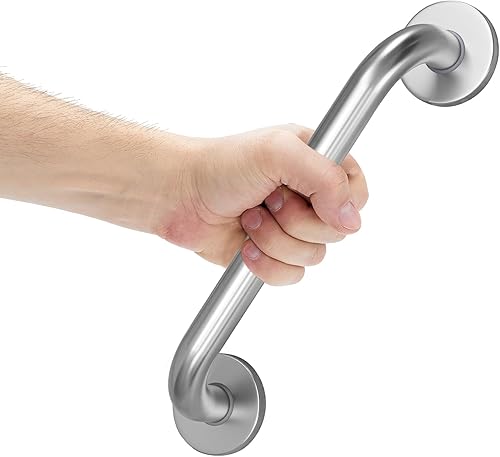
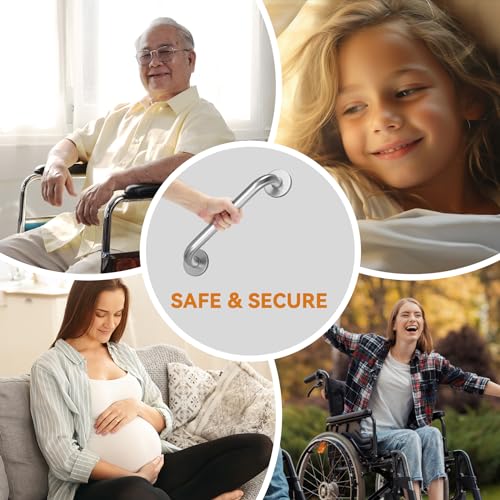
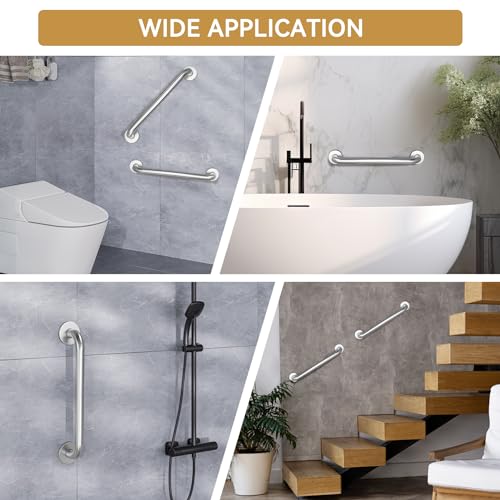
Prime AmazerBath 12 Inch Shower Grab Bar Brushed Nickel




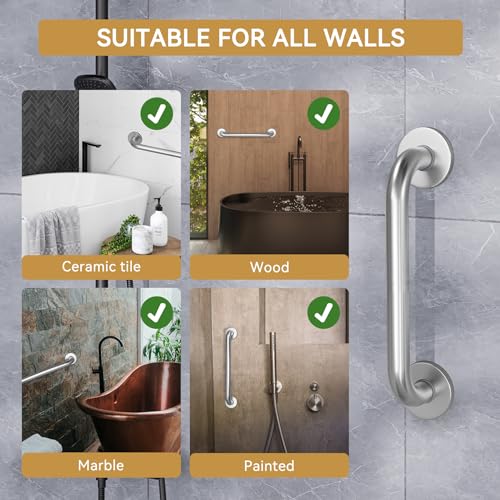
As an Amazon Associate we earn from qualifying purchases. Product prices and availability are accurate as of the date/time indicated.
This type of bar is not a fix on its own. It may help reduce the risk of unsteadiness only when it is installed at the right height, anchored to solid structure, and combined with safe steps, good lighting, and footwear with non slip soles. For related bedroom support ideas, you can also review best bed rails for seniors with osteoporosis.
When to Talk to a Professional Instead
A wall mounted bar is not ideal for every entrance, and it is not a good fit when the wall cannot provide solid anchoring, when steps are severely uneven or damaged, or when the senior has had a recent fall, fracture, or noticeable change in balance. In those situations, a home fix alone is not the right choice.
Talk with a healthcare provider, physician, physical therapist, or occupational therapist if the senior with osteoporosis reports new unsteadiness, pain with gripping, or fear of using the entrance, or if a caregiver notices the senior avoiding the steps entirely. They can help assess what type and placement of support is appropriate and whether additional fall prevention strategies are needed.
A licensed contractor or handy professional should also be consulted if you see signs of structural issues, such as rotted posts, loose masonry, or siding that flexes. A professional can confirm whether blocking needs to be added behind the wall or whether a different style, like a floor to ceiling pole or a continuous handrail system, would be more appropriate for that layout.
Do not try to compensate for a failing installation by adding more screws to weak material or by encouraging the senior to pull harder on a bar that still moves. If the bar cannot be made solid, block off that entrance until it is properly repaired and use a safer entry in the meantime.
Frequently Asked Questions
Why does our outdoor grab bar feel solid but still not helpful?
A bar can be tightly mounted yet still feel unhelpful if it is too short, too far from the step edge, or oriented so the wrist must twist to hold it. Try noting exactly when the hand needs support while stepping, then see if a longer bar or a different orientation would keep the hand in a more natural position through the whole movement.
Can a suction cup bar be used outdoors for extra support?
Suction cup bars are generally described as balance assistance only and are rated for smooth, non porous, airtight surfaces like tile or glass, not for rough, porous, or exterior siding. Outdoors they are typically not recommended for full weight support, so a permanently mounted bar anchored to structure is usually a more appropriate option to discuss with a professional.
What else besides a grab bar helps an entrance feel safer for a senior with osteoporosis?
Look at the whole path, including even step heights, non slip surfaces, clear edges, good lighting, and a handrail that can be held continuously. Supportive, closed toe shoes with non slip soles and keeping hands free of packages while using the rail may also help reduce the risk of a misstep, but check with a healthcare provider for guidance specific to the individual.
Browse more picks in our Outdoor & Entrance Safety category, or see our related guide on Door Lever Handles for Seniors Outdoors in 2026.


Write Your Review
No reviews yet. Be the first to share your experience!