

Quick Answer
If your non-slip bath mat still feels unsafe after a knee replacement, the most common cause is that the suction cups are not fully sealed to the tub floor. Clean the tub with a non-oily cleaner, wet the surface, press the mat down firmly cup by cup to push out air and water, and check that it does not lift at the edges when you shift your weight before you step in.
Why This Happens
Most suction cup mats only hold on a clean, smooth, flat surface. Soap scum, bath oils, textured or refinished tubs, and even a slightly uneven floor can keep cups from sealing, so the mat may slide when you turn or put more weight on one leg.
After a knee replacement, you may bend the knee less, shift weight differently, and need more time to step in and out. A mat that felt fine before can now feel too small, too thin, or too unstable because you are moving more carefully and relying on it for steadiness. Always check with a healthcare provider or physical therapist before making changes that affect balance and mobility after a knee replacement.
A mat alone also does not provide support for standing, lowering, or turning. Without a grab bar or bench to hold, any small shift of the mat underfoot can feel much more unsettling, especially when the new joint is still stiff or sore.
Other common issues include a mat that does not cover your full standing area, drain holes that sit over the tub drain and create a bump, or water pooling under the mat. If the mat floats, wrinkles, or lifts at a corner when you press it, it is not making consistent contact.
Practical Steps to Try
Try these steps in order, easiest first. Stop and get help if you feel unsteady at any point, and have a family member or caregiver nearby when you check the mat.
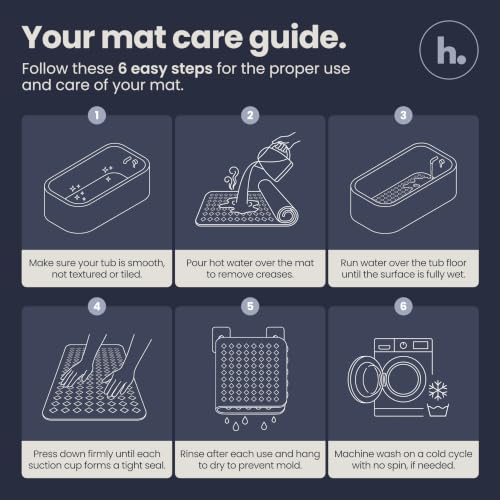
- Clean the tub and reseat the mat cup by cup. Remove the mat, clean the tub floor with a non-oily bathroom cleaner, rinse well, and leave it wet. Place the mat flat, then press down firmly with both hands from the center outward, pressing each suction cup to push out air and water. Try to lift an edge, if it lifts easily, repeat the process. This simple reseating often helps the mat stay put.
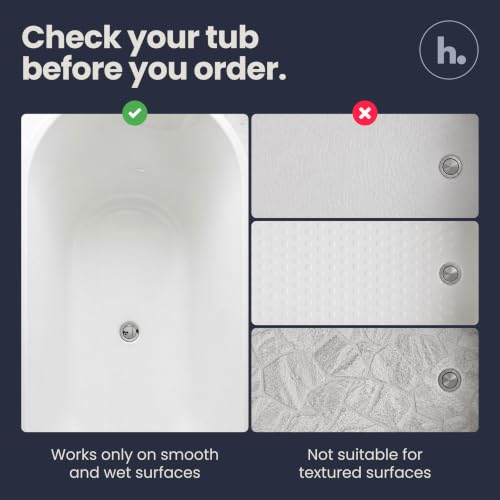
- Check whether your tub surface can hold suction cups. Suction cups generally do not hold on textured, tiled, stone-like, or refinished surfaces, and adhesive strips also need a smooth, flat area away from grout lines. If your tub has a bumpy or etched floor, a suction cup mat may never seal well. In that case, a weighted mat designed for textured surfaces or a different non-slip approach may be a better fit for your bathroom.
- Reposition the mat for full, flat coverage. Center the mat where you actually stand, not just where it looks centered in the tub. Keep the edges flat and avoid folding it over the curve of the tub. Make sure drain holes are not all blocked and that water can flow through, so you are not standing in pooled soapy water. The mat should lie completely flat with no wrinkles or raised corners.
- Add support around the mat, not just under your feet. A properly installed grab bar near the entry and a shower bench or stool can reduce how much you need to rely on the mat for balance. If standing for a full shower feels tiring or unsteady on the new knee, a bench lets you sit while bathing and reduces twisting and weight shifts. See also best bath stool for seniors after knee replacement for ideas on seated options that pair well with a mat.
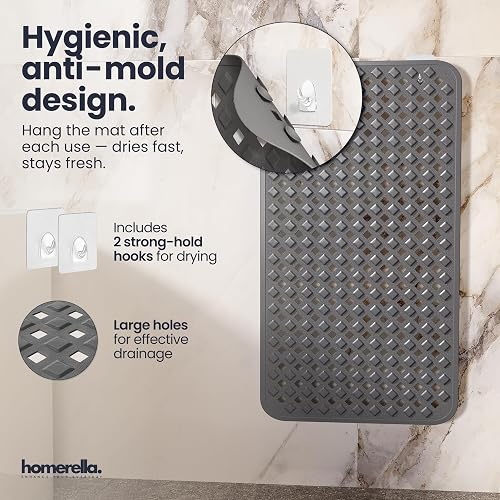
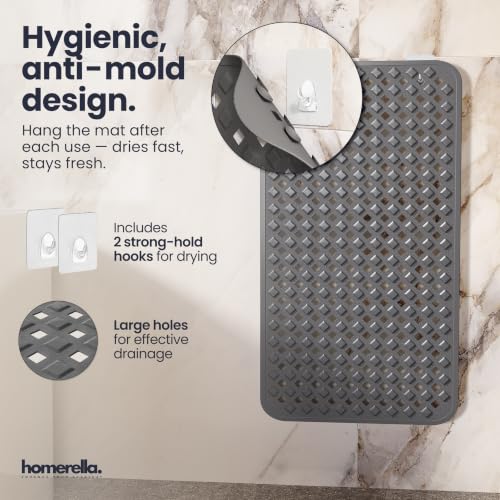
- Build a safer routine and keep the mat dry between uses. Place a non-slip rug outside the tub, keep towels and handheld shower within reach so you do not have to overreach, and step in and out slowly while holding a stable support. After each shower, lift the mat, rinse both the mat and tub, and hang the mat to air dry. This helps reduce mold buildup and lets you check that suction cups are still soft and intact before the next use.
When a Product Can Help
If cleaning and repositioning do not help, or your current mat is too small, curls at the edges, or will not seal to your tub, a different design may help reduce the risk of slipping. Look for a mat that matches your tub surface, covers your standing area, and has drainage that keeps water from pooling underfoot.
This guide contains affiliate links, and we may earn a commission if you buy through them, at no extra cost to you.

Prime Homerella Non-Slip Bathtub Mat 28x16 Inch





As an Amazon Associate we earn from qualifying purchases. Product prices and availability are accurate as of the date/time indicated.
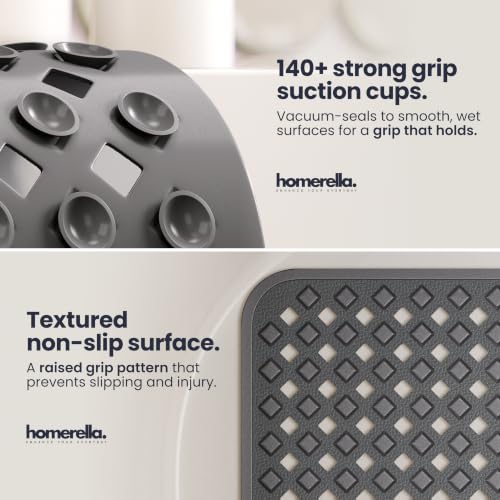
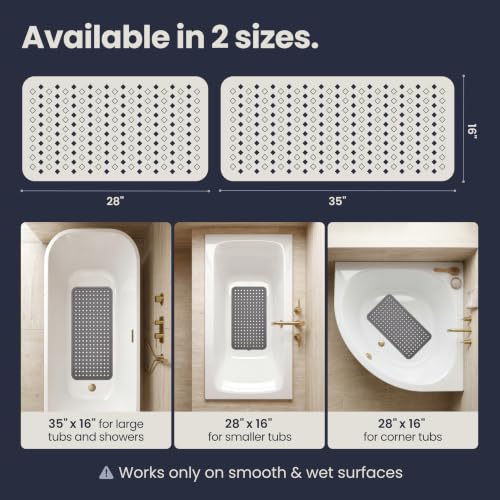
One practical option some caregivers consider is the Shower & Tub Safety category favorite homerella Bathtub Mat Non Slip 28×16 Shower Mat, which is described as having more than 250 suction cups on the bottom and a textured top surface, plus large drain holes to help water circulate. It is also described as machine washable on a cold wash and includes hooks for hanging to dry, which can make regular cleaning easier. As with any suction cup mat, it is intended for clean, smooth surfaces and may not hold on textured, tiled, or refinished tubs, so check your tub type first.
When to Talk to a Professional Instead
A mat or bench is not the right choice when standing, stepping over the tub wall, or balancing on one leg still feels unsafe, even after you have cleaned and reset the mat. If you notice increased swelling, new unsteadiness, or a fear of falling that makes bathing stressful, pause and get professional guidance instead of trying another home fix.
This type of mat is not ideal for textured, stone-like, or recently refinished tubs where suction cups cannot seal, and it is not a good fit if you need substantial weight-bearing support to sit and stand. In those situations, an occupational therapist or physical therapist can assess your bathroom layout, recommend a properly installed grab bar, a shower chair that fits your tub, or a walk-in shower option, and show you safer transfer techniques for your specific recovery.
Bring information about your tub, the mat you are using, and how you get in and out to your appointment. A clinician can help you decide whether a different setup, such as a bench with a back, a transfer bench, or a handheld shower, would support independence more safely than relying on a mat alone. For broader bathroom planning, you can also explore Bathroom Safety resources.
Frequently Asked Questions
Why does my non-slip mat still move after I press it down?
Most often the cups have not formed a seal because of soap film, oils, or a textured surface. Try cleaning the tub with a non-oily cleaner, rinsing well, and pressing each cup firmly on a wet surface. If it still lifts easily, your tub surface may not be compatible with suction cups.
Can I use a bath mat with a shower bench or stool after knee replacement?
Yes, many people use both, but place the bench so its legs sit flat and stable, and make sure the mat does not bunch under the legs or create an uneven surface. A therapist can check that the bench height and placement let you sit and stand without twisting the new knee.
How often should I clean and check the mat?
Rinse and lift the mat after each use to let both the mat and tub dry, and wash it regularly following the maker’s instructions, such as a cold machine wash if the label allows. Before each shower, press the cups again and check for curled edges, cracks, or cups that no longer hold.
Browse more picks in our Shower & Tub Safety category, or see our related guide on Shower Benches We Recommend for Caregivers With Back Pain in 2026.







Write Your Review
No reviews yet. Be the first to share your experience!