

Quick Answer
If your bath lift is not working well, the most common issues are poor suction or fit in the tub, a low battery or remote issue, or a lift style that does not match the senior and the bathtub shape. Try checking the tub surface and suction cups, confirming the battery charge and controls, and verifying the lift is rated for the user and the tub height before you consider a different option.
Why This Happens
Many bath lifts rely on suction cups, a flat tub floor, and a steady power supply. Textured tub surfaces, bath mats, soap residue, or a curved tub bottom can keep suction cups from sealing. When that happens the lift may wobble, slide, or feel unstable even if the motor still runs.
Fit is another frequent cause. Some lifts are too tall or too wide for a particular tub, or the side flaps do not bridge the gap to the tub wall. If the lift cannot sit level, it may not lower fully or may stop early. Always check with a healthcare provider or occupational therapist before making mobility changes for a senior in your care.
A lift may also seem to fail when it is not matched to the person’s needs and abilities. For example, a simple lowering seat without back support or without a high enough lifting range may not help a senior who needs more stability getting in and out. You can learn more about different lift styles in this related guide on best bath lift for elderly with hearing loss.
Battery and control issues are common too. A low charge, a loose connection, or a remote that is not paired can make the lift move slowly, stop mid cycle, or not respond at all. Because these devices are used in wet areas, moisture on contacts and infrequent charging can also reduce performance over time.
Practical Steps to Try
Work through these checks in order, starting with the simplest and safest. Stop and seek help if the lift feels unstable at any point.
- Check the tub surface and suction. Empty the tub, clean the floor with a non residue cleaner, rinse well, and dry the area where the suction cups sit. Remove any bath mat or adhesive strips under the base, press the lift down firmly on a flat, smooth section, and confirm each cup is sealed. If your tub has a textured or non slip bottom, suction based lifts may not hold well.
- Confirm power and controls. Charge the battery fully according to the maker’s instructions, check that the hand control or remote is connected, and try the emergency stop and lift buttons. Look for a low battery indicator and keep the charger and contacts dry when not in use.
- Verify fit and weight rating. Measure the inside width and wall height of your tub and compare it to the lift’s specifications. Confirm the lift is rated for the user’s weight and that the seat height range allows a safe transfer over the tub wall. For broader bathing safety ideas, see Shower & Tub Safety.
- Add stability around the tub. Even when a lift works, many seniors still need a grab bar or tub rail for the step in and out. Check that any existing bars are securely anchored, keep the floor outside the tub dry with a non slip mat, and keep soap and shampoo within easy reach to avoid leaning.
- Review the transfer routine. Try a consistent sequence: sit on the tub edge or transfer flap first, then swing legs in together, then lower slowly. If the senior needs hands on help for any part of that move, plan for a caregiver to be present and consider whether a shower chair outside the tub or a different bathing setup may help reduce the risk of a slip. You can compare options in best shower chair for elderly with hip replacement recovery.
When a Product Can Help
A different product may be worth considering when the tub surface will not hold suction, the current lift does not reach high enough to clear the tub wall, or the senior needs help both in the bath and after a fall on the floor nearby. In those cases, a portable lift that works on flat floors and in wet areas can be a practical option to discuss with a caregiver or therapist, rather than continuing to force a poor fit that may help reduce the risk of instability.
This guide contains affiliate links, and we may earn a commission if you buy through them, at no extra cost to you.

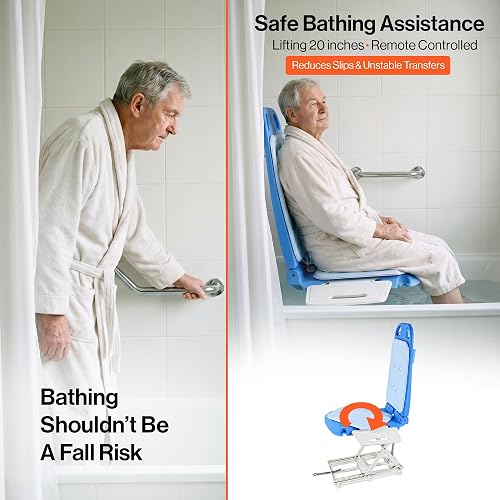
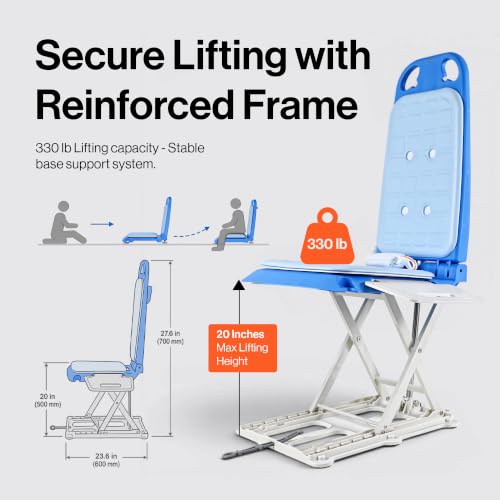
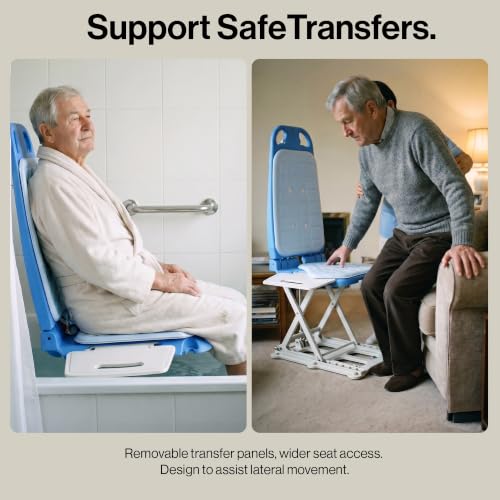
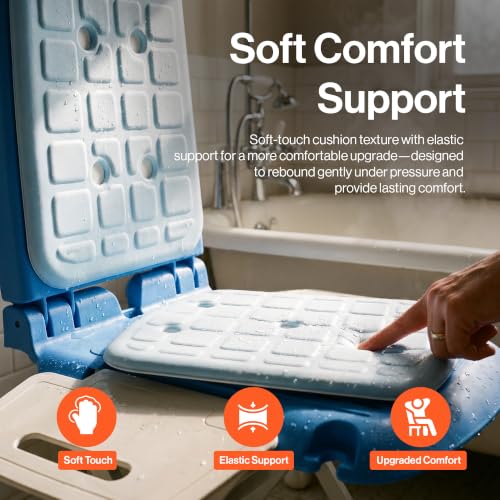
SuperHandy Portable Floor and Bath Lift 330 lb






As an Amazon Associate we earn from qualifying purchases. Product prices and availability are accurate as of the date/time indicated.
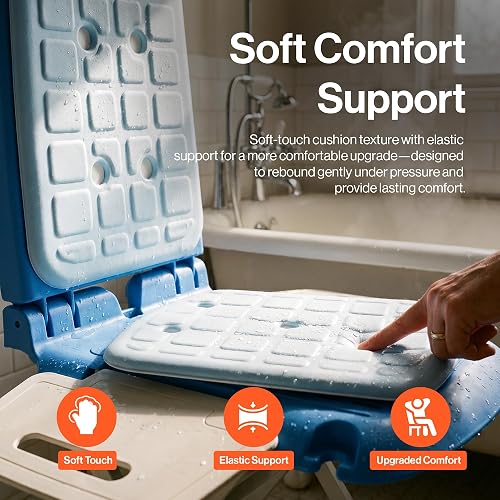
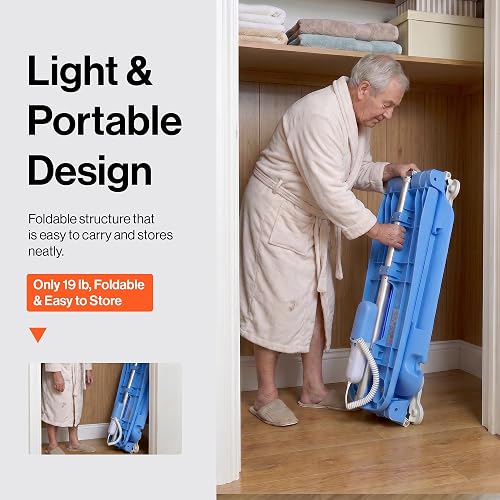
The SuperHandy Portable Floor and Bath Lift is one example designed for this kind of flexible use. According to its specifications it supports up to 330 lbs with a wide reinforced seat base, uses an IP68 rated waterproof system for showers and bathtubs, and weighs about 19 lbs with a foldable design for storage and transport. It also includes a wide seat with drainage holes and removable side panels to help with cleaning and transfers, which some families find easier to manage than a fixed tub mounted lift.
When to Talk to a Professional Instead
This type of bath lift is not ideal for every home or every senior. It is not a good fit when the bathroom has a heavily textured tub floor, a very narrow or unusually shaped tub, or no flat stable surface for the side panels and base to rest on. It is also not the right choice if the senior has had recent surgery, a new change in balance or strength, or needs hands on lifting that goes beyond what a household device is rated to provide.
If the lift tips, makes unusual noises, stops mid lift, or the senior feels unsafe or unsteady at any time, stop using it and talk to a professional. A physician, physical therapist, or occupational therapist can evaluate the bathroom layout, the senior’s transfer ability, and whether a different bathing approach, home modification, or additional supervision is needed.
A professional can also help you decide if the current setup needs anchored grab bars, a different tub or shower configuration, or a personal care plan instead of a product swap. Bring the lift’s manual, the tub measurements, and notes about when the problem happens to that appointment so the advice is specific to your situation.
Frequently Asked Questions
Why does my bath lift feel wobbly or not stay in place?
Suction cups need a smooth, clean, flat surface to seal. Soap film, textured tub floors, or a bath mat underneath can break the seal and cause wobble. Try cleaning the tub floor, removing mats under the base, and resetting the lift on the flattest area, and check the maker’s guide for surface requirements.
What if the bath lift will not go up or down?
Start with power and controls. Confirm the battery is fully charged, the remote or hand control is connected, and the emergency stop is not engaged. If it still does not respond, check for loose connections and follow the troubleshooting steps in the manual, and contact the manufacturer or a healthcare provider for next steps.
What helps if a bath lift is not enough on its own?
Many families combine a lift with other supports such as securely installed grab bars, a non slip mat outside the tub, and a consistent transfer routine with caregiver help when needed. If getting over the tub wall remains difficult or the senior needs help on the floor as well as in the bath, ask an occupational therapist about a more suitable device or a safer bathing setup for your home.
Browse more picks in our Shower & Tub Safety category, or see our related guide on Bath Stools We Recommend for Elderly Safety in 2026.








Write Your Review
No reviews yet. Be the first to share your experience!