

Quick Answer
If your bath lift seems unresponsive or confusing for a senior with hearing loss, the issue is often missed audio cues rather than a broken motor. Try shifting to visual and tactile signals first, check the battery lights, confirm stable placement, and use a simple visual routine before you replace the lift.
Why This Happens
Many bath lifts signal low battery, movement, or an error with beeps or tones. When hearing loss makes those sounds hard to hear, especially with water running, the lift can feel like it is not working. Always check with a healthcare provider or occupational therapist before making mobility changes for a senior in your care.
Water noise, echo in the bathroom, and hearing devices that are removed for bathing can make verbal instructions or remote feedback hard to follow. This can lead to pressing the wrong button or stopping the lift mid cycle without realizing what happened.
Placement issues also mimic a malfunction. Suction cups not sealed on a textured tub, a seat that is not centered, or a battery that is not fully charged can cause slow or jerky motion that feels like the product is failing.
Caregiver communication gaps add to the issue. If cues are spoken from another room or while water is running, the senior may not hear safety prompts. Visual cues and simple hand signals often work better in the bathroom environment.
Practical Steps to Try
- Switch to visual and tactile feedback. Place a large print card near the tub, use clear hand signals for up and down, and keep the remote where lights are easy to see. Show how a light or vibration confirms the button press so the senior does not rely on beeps.
- Check power visually each time. Look at battery indicator lights for charge level, charge fully before bathing, and store the charger outside the bathroom in a dry spot. If the lift moves slowly or stops, low battery is a common cause that is easier to see than to hear.
- Confirm stable placement and suction. Press the base firmly on a clean, smooth tub floor, check that all cups are flat with no soap residue, and center the seat so it does not rub the walls. An uneven seal can cause jerky motion that feels like a failure.
- Simplify controls and build a routine. Use only the essential lift and lower buttons, keep the remote in the same spot, and follow the same steps each time. A short picture checklist can guide the senior without spoken prompts. See ideas for steady routines in shower chair options that support steady routines.
- Improve communication without sound. Face the senior, make eye contact, and agree on a raised hand for stop. Pause fans or water briefly when giving a cue, and plan for visual checks if hearing devices are removed for bathing. Explore more Shower & Tub Safety strategies for quiet bathrooms.
When a Product Can Help
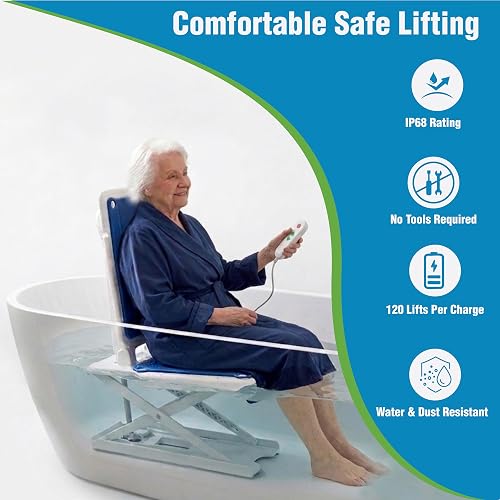
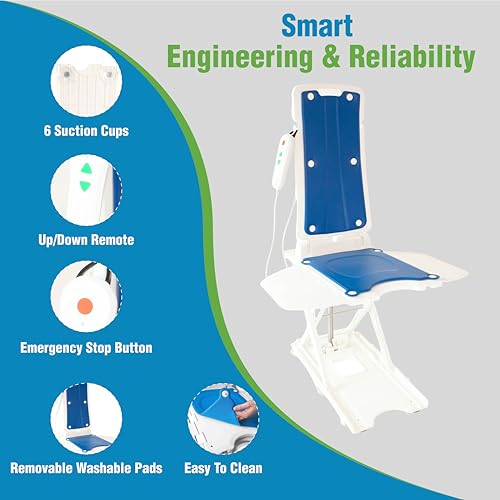
When visual checks and routines still leave the lift confusing, a model with clearer visual feedback may help. Look for bright indicator lights, a simple remote with large buttons, stable suction, and an easy to see emergency stop that may help reduce the risk of misoperation when hearing is limited.
This guide contains affiliate links, and we may earn a commission if you buy through them, at no extra cost to you.

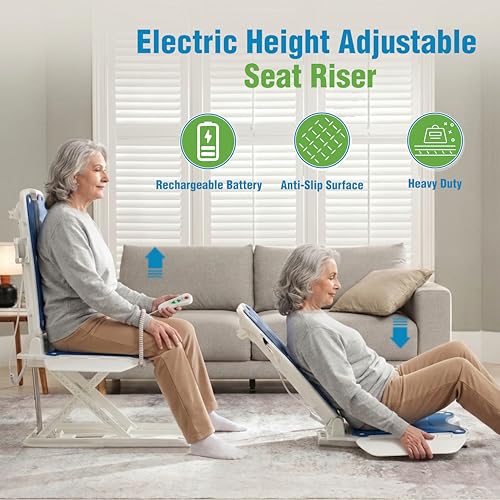
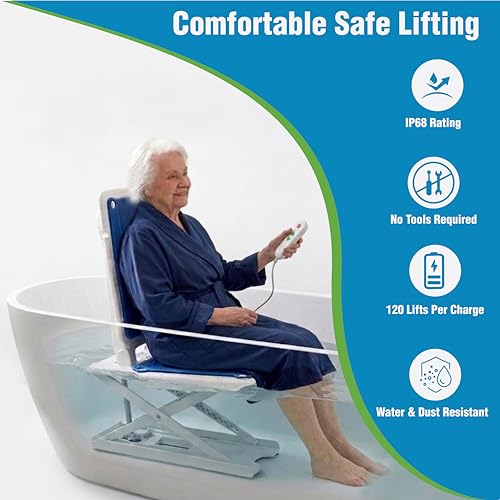
AquaLift Electric Bath Lift Chair for Seniors







As an Amazon Associate we earn from qualifying purchases. Product prices and availability are accurate as of the date/time indicated.
When to Talk to a Professional Instead
This bath lift approach is not ideal for seniors who cannot see indicator lights, feel movement cues, or press the remote accurately even after you add visual aids and practice. If hearing loss is combined with low vision or limited hand strength, a different bathing setup may be safer.
If the senior often misses the stop signal, tries to stand while the seat is moving, or seems confused about which button to press, pause use and seek guidance. An occupational therapist or physical therapist can evaluate the bathroom layout and the senior’s abilities.
When the lift wobbles, tilts, leaks, or stops holding a charge despite correct charging and clean suction cups, stop using it. Do not try to repair or modify the base or battery yourself, and have the device checked as the manual directs.
If the senior has had a recent fall, surgery, or a change in balance that makes tub transfers harder, get professional input before continuing. A clinician can suggest safer options that do not rely on hearing, such as a different transfer method.
Caregivers should also consider the tub itself. Deep or narrow tubs, slippery surfaces, or a lack of grab bars can make any lift harder to use safely. A home safety evaluation can identify simple changes that may help reduce the risk of slips.
If you provide hands on help, make sure you can do so without straining your own back or balance. If you need to lift or twist to assist, ask a healthcare provider about safer transfer techniques or equipment that fits your space.
Keep a simple log of what is not working, such as slow lifting, missed cues, or confusion about controls. Sharing this with a healthcare provider or therapist gives them clear details to recommend next steps without guessing.
For broader bathroom planning, review your overall setup with a professional. You can also explore related ideas in Grab Bars & Rails and Toilet Safety & Commodes to create a more consistent safety system.
Frequently Asked Questions
Why does the bath lift beep and the senior does not respond?
Many lifts use tones for low battery or movement alerts, and running water can mask them. If hearing loss makes beeps hard to hear, the senior may not know the lift needs charging or is about to move. Try relying on indicator lights and visual signals instead.
Should hearing devices be worn in the bath with a lift?
Most hearing devices are not meant for water and are often removed for bathing, so do not rely on hearing alone for safety cues. Use visual checks, large print instructions, and agreed hand signals while in the tub. Ask a healthcare provider about the best way to communicate during bathing.
What visual alternatives help if the senior cannot hear lift controls?
Look for a remote with large, high contrast buttons and clear indicator lights that show when a command is active. Keep the remote in the same place, use a picture checklist for steps, and agree on a simple stop gesture. Good lighting in the bathroom also makes visual cues easier to see.
Browse more picks in our Shower & Tub Safety category, or see our related guide on Shower Benches We Recommend for Caregivers With Back Pain in 2026.








Write Your Review
No reviews yet. Be the first to share your experience!