

Quick Answer
If your non-slip bath mat still feels slippery or shifts for a senior, the most common reason is poor suction on a surface that is not smooth and clean, plus relying on the mat alone for stability. For a safer setup in 2026, start by thoroughly cleaning the tub floor and the mat’s suction cups, then press firmly to create a seal, and add support like a grab bar or shower chair if balance is limited. This quick reset often improves grip right away and shows you whether the mat can work or needs to be replaced.
Why This Happens
Many bath mats rely on suction cups that only grip smooth, non-textured surfaces. If the tub has a textured bottom, tile, decals, or a refinished coating, the cups cannot seal and the mat may slide even when it looks flat. Always check with a healthcare provider or occupational therapist before making mobility changes for a senior in your care, especially if slips have already happened.
Soap scum, hard water film, body oils, and bath products also break the seal. Even a thin layer of residue under the cups or on the tub floor reduces suction, and water trapped beneath the mat can make it float slightly and move underfoot. Regular cleaning of both surfaces and keeping drainage holes clear may help reduce this risk and keep the mat more stable.
Coverage and placement matter too. A mat that is too small, bunched up, curled at the edges, or not pressed down evenly leaves exposed slippery areas where a foot can land. Drainage holes that are clogged with hair or soap can hold water underneath, which adds movement and makes the surface feel less secure.
Finally, a mat alone is often not enough for a senior who needs help with balance or standing for more than a minute or two. Mats help with footing, but they do not provide support for getting in and out of the tub or for standing while washing. For broader bathroom safety planning, explore the Shower & Tub Safety category and consider whether added supports are needed. You can also review related guidance on how to choose a shower bench for seniors if you have a bad back when seated bathing might be more appropriate.
Practical Steps to Try
- Clean both surfaces completely before reinstalling. Remove the mat, scrub the tub floor with a non-abrasive bathroom cleaner, rinse well to remove all residue, and wipe dry. Wash the mat with gentle detergent, rinse the suction cups thoroughly, and let both the tub and the mat air dry before you try to create a new seal.
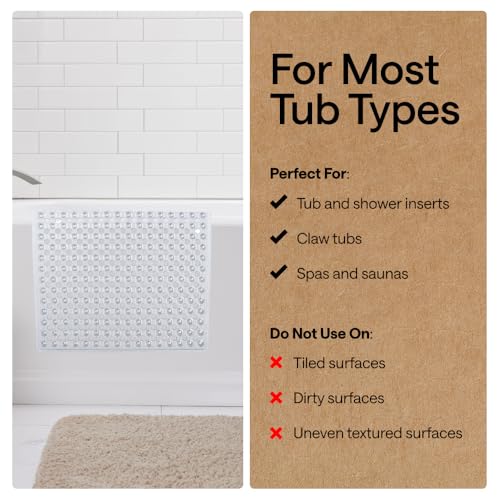
- Check surface compatibility. Suction cup mats are designed only for smooth, clean, non-textured, non-tiled surfaces and are not intended for newly refinished tubs or shower pans. If your tub has texture, raised patterns, or grout lines, review the manufacturer’s guidance and consider a different traction option that is rated for textured surfaces.
- Install with firm, even pressure and verify full coverage. Place the mat flat without folds or wrinkles, align it to cover the main standing area, and press down on each section to engage the cups and smooth out air pockets. Confirm that drain holes are open so water flows toward the drain instead of pooling underneath, and trim or reposition any edge that curls up.
- Add complementary supports and reduce hazards around the tub. Keep a properly installed grab bar or wall rail within easy reach for steadying, use a shower chair or stool if standing is tiring, and place a non-slip rug outside the tub for stepping out. Keep soap, shampoo, and razors within easy reach to avoid overreaching, and wipe up standing water promptly. For ideas on seated options, see best bath stool options for seniors after knee replacement as an example of when sitting support may help.
- Create a simple care routine to keep grip consistent. After each bath or shower, lift the mat, rinse both sides, and hang it over the tub edge to air dry. Weekly, machine wash if the care label allows and inspect for curling edges, cracked or flattened cups, or mildew buildup, and replace the mat if it no longer lies flat or holds suction.
When a Product Can Help
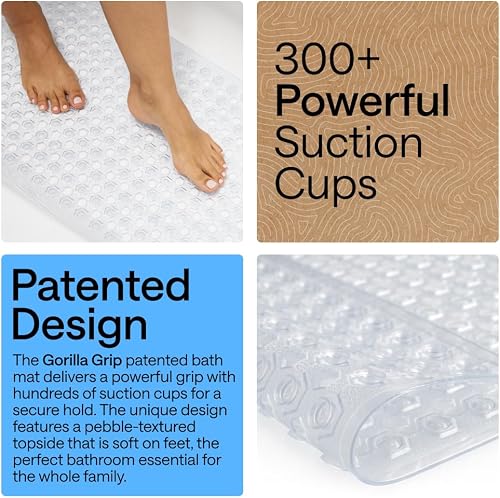
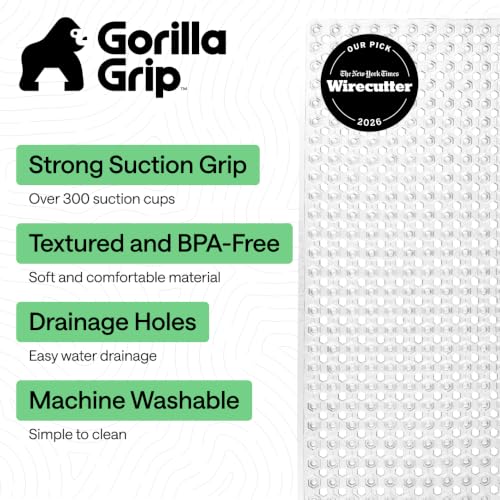
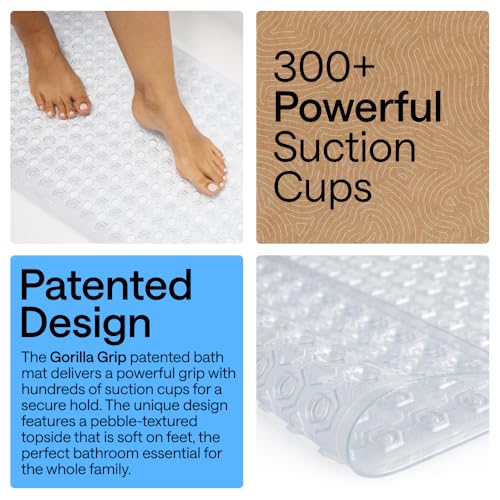
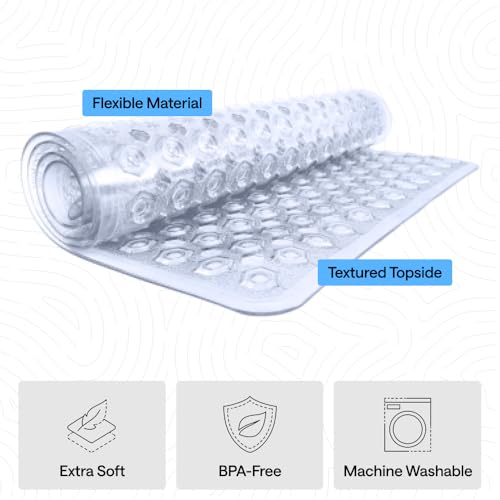
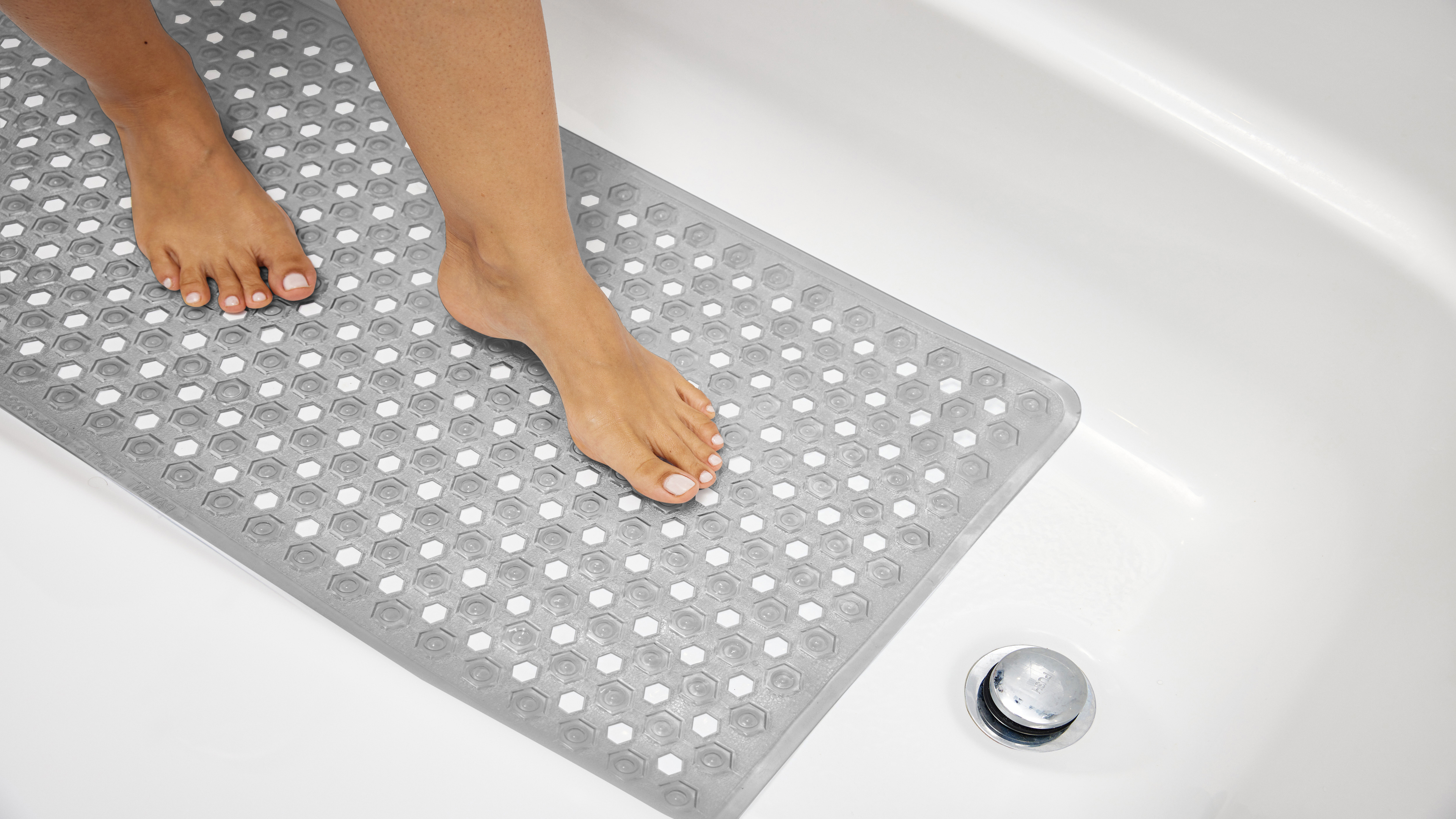
If cleaning and repositioning do not improve grip, or your current mat is too small, curled, thin, or lacks drainage, a replacement that matches your tub size and surface may help reduce the risk of slipping. One common option is a larger mat with many suction cups and open drainage holes that is rated for smooth tub floors and is easy to clean. For example, the GORILLA GRIP Bath Tub Shower Mat features a patented design with hundreds of suction cups to help secure the mat to a smooth, clean shower floor, a pebble-textured topside that is soft on feet and BPA-free, hundreds of drainage holes to help water flow toward the drain, and a generous 35 by 16 inch size that is machine washable and designed to hang dry, with guidance to install only on smooth, clean, non-textured, non-tiled surfaces.
This guide contains affiliate links, and we may earn a commission if you buy through them, at no extra cost to you.

Prime GORILLA GRIP Clear Bathtub Mat 35x16



As an Amazon Associate we earn from qualifying purchases. Product prices and availability are accurate as of the date/time indicated.
When to Talk to a Professional Instead
A bath mat is not ideal for a senior who has frequent near falls, needs to hold furniture or walls to stand, or has had a recent hip or knee procedure and cannot safely step over a tub wall. In these cases, a mat alone does not provide the support needed for transfers and standing balance, and trying another mat may not address the underlying risk.
This type of setup is also not a good fit if the bathroom has a textured or refinished tub that will not hold suction, or if the senior experiences dizziness, significant vision changes, or confusion in the bathroom. A clinician can assess whether a walk-in shower, properly installed grab bars, or a shower chair is a safer next step than another mat.
If you are unsure what level of support is needed, try reaching out to a physician, physical therapist, or occupational therapist for a home safety evaluation. They can review the layout, recommend placement of bars and seating, and help you decide when a mat should be paired with other supports or skipped entirely.
Frequently Asked Questions
Why won’t my bath mat suction cups stick?
Most often the tub surface is not smooth enough or has soap film, oil, or hard water residue that breaks the seal. Try cleaning both the tub and the cups thoroughly, rinsing well, and pressing firmly on a dry, smooth area to re-establish suction. If the tub is textured, tiled, or refinished, suction cups are generally not rated to hold and a different traction solution may be needed.
Can I use a suction cup mat on a textured or non-slip tub floor?
No, most suction cup mats are designed only for smooth, clean, non-textured surfaces and may not grip textured or tiled floors. Check the product instructions, which often note that they should not be used on textured, non-smooth, or newly refinished surfaces. For textured tubs, consider adhesive traction options that are rated for that surface and talk with a healthcare provider about added supports.
Is a non-slip bath mat enough to keep a senior safe in the shower?
A mat may help reduce the risk of slipping underfoot, but it does not provide balance support for standing or stepping in and out. Many caregivers pair a mat with grab bars, a shower bench or stool, and good lighting for more complete support. If balance is limited or falls have occurred, consult a healthcare provider or occupational therapist for a broader safety plan.
Browse more picks in our Shower & Tub Safety category, or see our related guide on Shower Benches We Recommend for Caregivers With Back Pain in 2026.







Write Your Review
No reviews yet. Be the first to share your experience!