

Quick Answer
If a toilet frame feels wobbly, too low, or hard to use during hip replacement recovery, the most common cause is poor fit rather than a faulty idea. Check that the height and width are adjusted to your toilet and to the user, and that all feet sit flat and lock securely without rocking. These small adjustments often make the frame feel steadier and easier to use while you follow your surgeon’s movement guidelines.
Why This Happens
Recovery after a hip replacement often calls for very specific positioning and steady support when sitting and standing. A frame that is too low forces a deeper bend, while one that is too high or too wide can make it hard to push up evenly with both arms.
Common reasons a frame feels unhelpful include height set incorrectly, width that does not match the toilet, feet that are not level on tile or grout, or a frame that shifts because it is not secured as the maker intended. Always check with a healthcare provider or physical therapist before making mobility changes for a senior in your care.
Home layout can also be a factor. A stand-alone frame may be a poor match for a very small bathroom, an unusually shaped toilet, or a soft bath mat that allows the legs to move. In these spaces, even a well-built frame can feel unsteady if the legs cannot sit flat and stable.
Finally, a basic frame alone may not address seat height. Many seniors find a low toilet difficult during early recovery because it requires more effort to sit and stand. If that is the case, your care team can advise whether a raised seat or another option from Toilet Safety & Commodes is more appropriate for your situation, and you can also review how to choose bedside commode for hip replacement recovery for related ideas.
Practical Steps to Try
- Check stability first. Tighten all knobs, buttons, and locks according to the instructions, confirm the width matches your toilet, and make sure all four feet touch the floor without rocking on grout lines, uneven tile, or a rug. Remove loose mats and keep the floor clean and dry so the feet can grip as designed.
- Adjust height and width to the person. Raise or lower the frame so the senior can place hands on the armrests with elbows slightly bent and push up without leaning far forward or to one side. Set the width so arms stay close to the body for a controlled sit and stand, and recheck the locks after each change.
- Clear the area and improve footing. Make sure there is enough space to approach the toilet straight on, keep toilet paper, wipes, and clothing within easy reach to avoid twisting, and use the non-slip rubber pads or suction features if your model includes them. If your frame came with extra feet or pads, install them as directed.
- Consider seat height and support needs. If the toilet is low and the senior must bend deeply to sit, note this for the care team and ask whether a raised seat or a different support style is appropriate for the recovery plan. Do not add pillows or cushions to the seat, as they can shift and may increase the risk of an unsteady sit or stand.
- Observe a few uses and take notes. Watch how the senior approaches, sits, and stands, and write down where hesitation or wobble occurs. Share those notes with a physician, physical therapist, or occupational therapist, who can suggest positioning changes or recommend a different type of support that fits the home and the recovery guidelines. For wall-based options, you can also explore Grab Bars & Rails as a complement to a frame.
When a Product Can Help
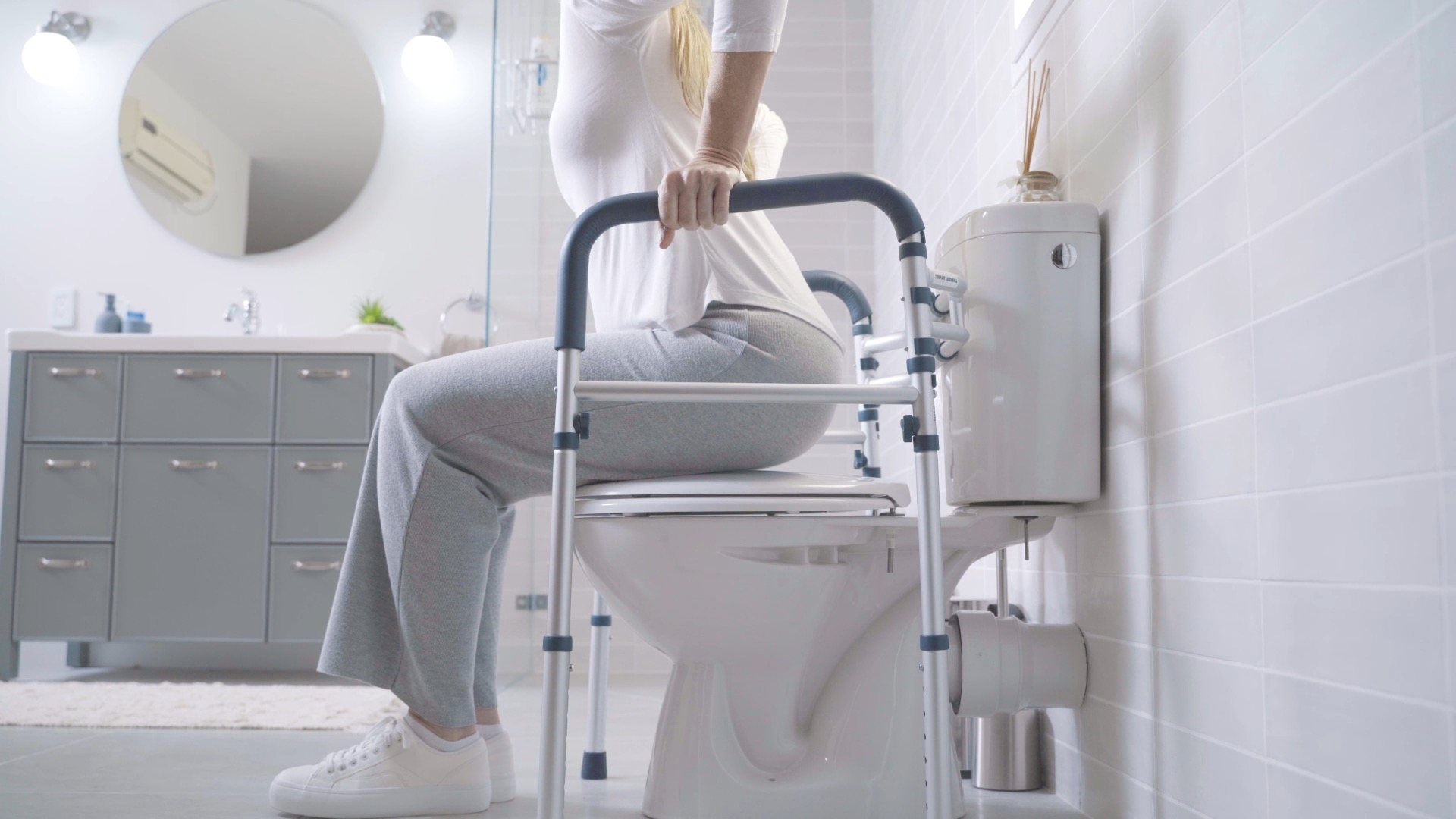
If tightening, leveling, and adjusting do not make the current frame feel steady and easy to use, one common option is to try a frame with more adjustability and a sturdier base. A model with adjustable height and width to fit different toilets, padded armrests for a comfortable grip, and non-slip feet may help reduce the risk of slipping while sitting and standing, and a lightweight design can make cleaning and repositioning simpler for caregivers.
This guide contains affiliate links, and we may earn a commission if you buy through them, at no extra cost to you.

Prime PELEGON Toilet Safety Rails 350 lb


As an Amazon Associate we earn from qualifying purchases. Product prices and availability are accurate as of the date/time indicated.
The PELEGON Toilet Safety Rails (350 lb) is one example that offers height adjustment from 24 to 30 inches and width adjustment from 19 to 24.5 inches to fit many toilets, with a lightweight frame and a design rated to hold up to 350 lb when installed as directed. This type of adjustability can be useful when your current frame cannot be set to a comfortable and stable position for the senior and the toilet you have.
When to Talk to a Professional Instead
A home adjustment is not the right choice when the senior has had a recent fall, reports sudden weakness, dizziness, or increased pain, or when the frame continues to wobble after you have tightened and leveled it. In those cases, pause use and seek guidance before trying another fix on your own.
This approach also is not ideal for bathrooms where all four feet cannot sit flat, where the toilet shape or base prevents a secure fit, or where the senior needs more support than armrests alone can provide. A bedside commode, a raised seat recommended by the care team, or properly installed wall grab bars may be more appropriate, and a professional can help you choose what fits the space and the person.
Contact a doctor, physical therapist, or occupational therapist promptly if you are unsure about allowed movements after hip replacement or if the senior still feels unsteady even after adjustments. They can review the home setup, confirm safe movement strategies, and recommend next steps that support independence without adding risk.
Frequently Asked Questions
Why does our toilet frame feel wobbly after hip replacement?
Most wobble comes from fit and floor contact, not the person’s effort. Check that the width matches the toilet, the height allows a comfortable push with both arms, and all feet sit flat on a firm, dry floor.
Should we add a raised toilet seat instead of just a frame?
A raised seat can help when the toilet is low and sitting requires a deep bend, which many clinicians advise limiting early after hip surgery. Ask the healthcare provider or therapist whether a raised seat, a frame, or a combination is appropriate for your recovery plan and toilet type.
What if the senior still feels unsteady even after adjusting the frame?
Try to note exactly when unsteadiness occurs, such as when turning, reaching, or standing, and share those details with the care team. They may suggest a different support option, a change in bathroom layout, or an in-home safety evaluation to find a steadier solution.
Browse more picks in our Toilet Safety & Commodes category, or see our related guide on Toilet Safety Rails vs Cameras for Seniors in 2026.










Write Your Review
No reviews yet. Be the first to share your experience!