

Keeping up with daily medications can feel more demanding as routines change with age, especially when several prescriptions are due at different times. For older adults who live independently and for family members who help from nearby or at a distance, a missed dose or uncertainty about whether a pill was taken can add daily stress.
This NOVA smart pill dispenser with alarm review for elderly looks closely at one product, the Betife Automatic Pill Dispenser,28-Day, and what its listed specifications suggest for home use in 2026. You will see how its Bluetooth app support, alarm and light reminders, and 28-day monthly timer may fit into a senior household, and where it may need extra planning. If you are exploring broader Kitchen Adaptive Tools to support independence, this single-product review can help you compare features more clearly.
This guide contains affiliate links, and we may earn a commission if you buy through them, at no extra cost to you.

Prime Betife Automatic Pill Dispenser


As an Amazon Associate we earn from qualifying purchases. Product prices and availability are accurate as of the date/time indicated.
What Stands Out
Smart Bluetooth App With History and Custom Names
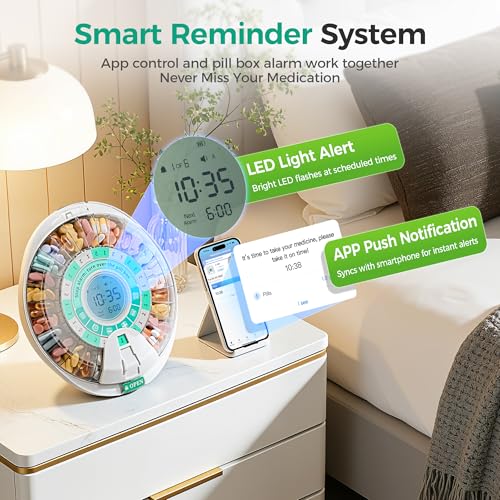
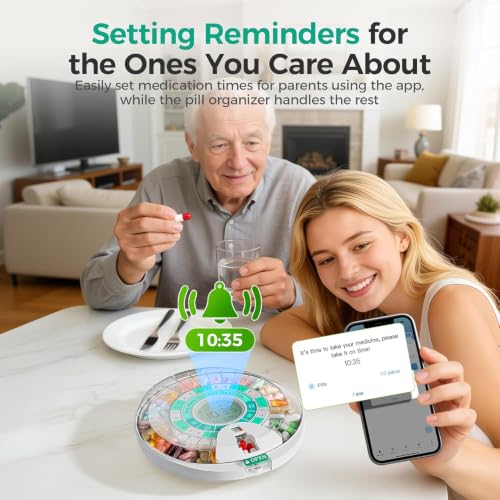
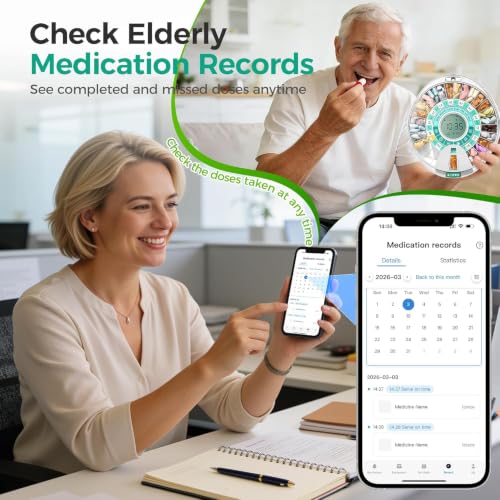
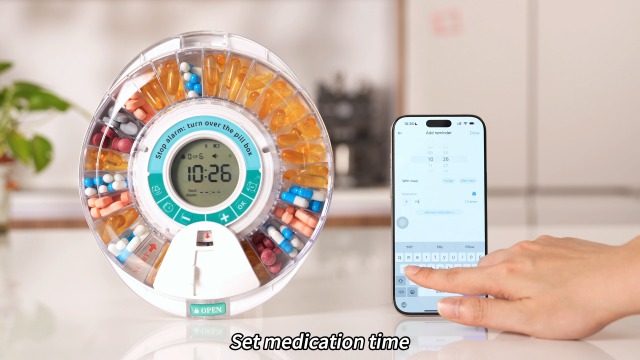
According to its product description, this dispenser offers Smart Bluetooth Control through a companion app that handles medication alarms, history, custom names and images, and tracking stats. That combination points to a setup where a caregiver can help personalize the schedule rather than relying only on buttons on the device.
For households where an adult child or spouse manages refills, the ability to assign custom names and images for each medication may reduce confusion. Instead of remembering which compartment holds which pill, the app display can label doses in a way that matches the prescription bottles you already use at home.
The history and tracking stats noted in the listing may also support calmer check-ins. A caregiver who does not live in the same home can review whether a scheduled dose window was acknowledged, which can make phone calls more focused on support rather than repeated reminders.
The listing also highlights Easy Setup and App Support as core ideas. For older adults who prefer help from family, the option to have a relative assist with initial app pairing at the kitchen table may make the first week smoother than learning a complex on-device menu alone.
If low vision is part of your household, you may want to pair any dispenser choice with other supportive tools. For example, our guide to the grabber reacher tool for seniors with low vision discusses complementary aids that can reduce bending and reaching while you keep medications in a consistent, well-lit spot.
6 Alarms With Sound and Light Reminders
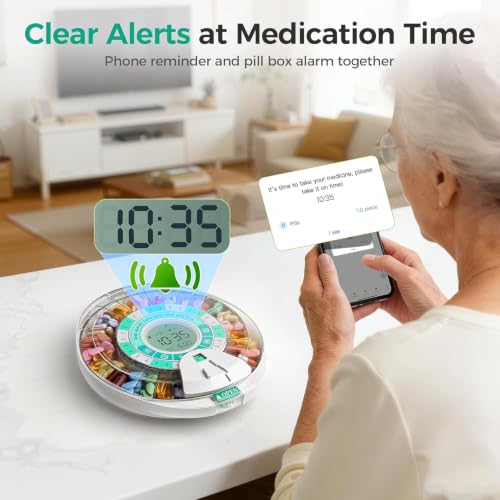
The product data lists 6 alarms combined with light reminders, which suggests coverage for several daily dosing windows. For many older adults who take morning, midday, evening, and bedtime medications, having up to six distinct alerts can match a typical prescription schedule without crowding all reminders into one or two times.
Sound plus light is a thoughtful pairing for aging in place. An audible tone can prompt action when you are in another room, while a visual cue can help if hearing is limited or if background noise from a television or kitchen appliance makes tones harder to notice.
Because the alarms are tied to the dispenser itself, the reminder is linked to the place where the medication is stored. That may help reduce the risk of forgetting whether a reminder was for pills or for another task, since the light draws attention directly to the device.
For caregivers, predictable alarms can also create a steadier daily rhythm. When doses are due at the same times each day, it becomes easier to build habits around meals, hydration, and rest, which many families find helpful for overall routine.
28-Day Monthly Timer Design for Routine Management
The 28-day structure is central to this model, described as a Monthly Timer Dispenser. Rather than refilling every few days, the design supports a once-a-month approach where you can organize up to four weeks of doses in advance, which many caregivers prefer for planning.
A monthly view can also make it easier to notice patterns. If a particular day of the week often shows a missed window, you can consider whether that day involves appointments, outings, or other activities that compete for attention, and then adjust reminder timing with the app.
The listing frames this as Electronic Medication Management for Seniors, which suggests the device is intended to dispense at scheduled times rather than acting as a simple open box. That timed approach may help reduce the risk of taking a dose too early or too late when the schedule is followed as directed.
Keeping the dispenser in a stable, familiar location, such as a kitchen counter away from heat and moisture, can support consistent use. Pairing that placement with other kitchen routines, like the way you organize daily essentials, can make the dispenser part of a natural flow rather than an extra chore. See our related review of best kitchen reacher tools for seniors with arthritis for ideas on reducing strain while keeping items within easy reach.
Setup and Everyday Handling Considerations
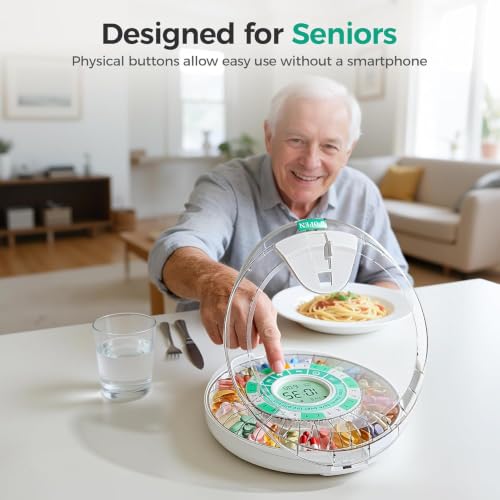
Ease of setup is emphasized in the product name and description, which is an important factor for older adults who may not want a complicated programming process. The combination of on-device controls and Bluetooth app options suggests you can choose the method that feels more comfortable for your household.
For seniors who are comfortable with a smartphone, the app path may feel familiar, with visual prompts for alarms and labels. For those who prefer not to use an app, having a straightforward on-device option can still allow basic scheduling with support from family during the initial configuration.
Everyday handling also matters. A dispenser that sits securely on a flat surface and presents the scheduled compartment clearly can support confident use, especially for hands that benefit from larger, easy-to-see openings. While the listing does not specify compartment dimensions, its focus on electronic management suggests a design intended for pills, tablets, and capsules commonly used at home.
Finally, the emphasis on a monthly timer means fewer refill sessions to manage. For many families, consolidating refill work into one focused time each month, with a checklist and good lighting, may help reduce errors compared with refilling several small boxes throughout the week.
Where It Comes Up Short
The same features that make this dispenser appealing also create trade-offs to consider. Because the key benefits, such as custom names, images, history, and tracking stats, are tied to Smart Bluetooth Control, households that do not use a smartphone or prefer not to install an app may not experience the full value described in the listing. In those cases, you would rely on the base alarm and light functions without the richer labeling and review options.
Capacity and schedule fit also deserve a close look. A 28-day, 6-alarm structure works well for many once-daily or twice-daily regimens, but homes with highly variable schedules, frequent dose changes, or prescriptions that require splitting pills across many small time windows may need to plan carefully. It can help to write out your current weekly schedule and compare it with the dispenser’s compartment layout before deciding, and to keep your pharmacist’s instructions nearby when you program any device. For context on how other home supports fit together, you might also review How High Should Overbed Table Be for Elderly when thinking about where and how you will place and access daily essentials.
Who Should Buy This
This dispenser may be a good fit if you or a loved one wants a monthly, alarm-based system with app support for labeling and history, and you have up to six daily dosing times to cover. It aligns well with households where a family member can help with initial Bluetooth setup, personalize medication names and images, and then let sound and light reminders support the older adult’s daily routine in 2026. If you value a single monthly refill rhythm and a clear, timed presentation of doses, the specifications suggest this model was designed with that workflow in mind.
Who Should Skip It
This option is not ideal for seniors who do not want any app involvement and prefer a fully mechanical, no-connectivity solution, or for households that need more than six distinct alarm windows per day. It is also not a good fit if prescriptions change very frequently and you would need to reprogram compartments every few days, or if the person taking medications has difficulty responding to sound and light cues without in-person assistance. In those situations, a simpler non-connected organizer or a device with a different alarm capacity and hands-on caregiver support may be more appropriate, and you may want to explore other button hooks for stroke recovery and daily living aids that match the specific mobility or vision needs at home.
Frequently Asked Questions
Does the Betife Automatic Pill Dispenser,28-Day require a smartphone to work?
Based on the product description, the dispenser offers Smart Bluetooth Control and app support for alarms, history, and custom names, but it is also described as having Easy Setup and on-device alarms with light reminders. That suggests you can use basic alarm functions without the app, though the richer labeling and tracking features depend on Bluetooth and the companion app.
How do the 6 alarms and light reminders help an older adult remember doses?
The listing notes 6 alarms paired with light reminders, which can prompt action at scheduled times throughout the day. Sound may alert someone in another room, while the light draws attention to the dispenser itself, and together they may help reduce the risk of missing a scheduled window when the device is placed in a consistent, visible location.
Is a 28-day dispenser the right choice for complex medication schedules?
A 28-day monthly timer can simplify refills by organizing up to four weeks at once, which many caregivers find convenient. If the schedule involves many daily time points beyond six alarms, frequent dose changes, or special instructions from a clinician, compare your written schedule with the dispenser’s layout and ask your healthcare provider or pharmacist whether a timed dispenser matches your specific needs.
Browse more picks in our Kitchen Adaptive Tools category, or see our related guide on Kitchen Reacher Tools for Arthritic Hands in 2026.







Write Your Review
No reviews yet. Be the first to share your experience!