

Quick Answer
If adaptive utensils not working well for a senior with arthritis is the problem, the most common cause is a poor match between the handle size, weight, and angle and the person’s grip and wrist comfort. Try adjusting the bend angle slightly, securing the bowl or plate with a non-slip mat, and checking whether a thicker, textured grip feels more secure before you buy anything new.
Why This Happens
Arthritis can change how tightly a hand can close, how long a grip can be held, and how far the wrist can turn without discomfort. A utensil that is too thin, too heavy, or held at an awkward angle can make scooping and lifting food harder instead of easier.
Always check with a healthcare provider or occupational therapist before making changes that affect daily eating tasks for a senior in your care. They can suggest general strategies that match the person’s hand strength and daily routine without providing medical advice here.
Stability on the table matters as much as the utensil itself. If the handle surface is smooth or the plate slides when pressure is applied, the senior has to work harder to keep food in place, which can increase spills and fatigue.
Another common issue is using one utensil style for every food type. A spoon that works for soup may not help with cutting or spearing, and a fork that is very light may not give enough feedback for a hand that needs more steadiness.
Fatigue during the meal can also play a role. A handle that feels fine for the first few bites may feel less secure as hand muscles tire, especially if the utensil requires a tight squeeze to maintain control.
Practical Steps to Try
Try these general household steps in order, starting with the simplest. Pause and try a different option if any change causes discomfort.
- Check how the handle fits the hand. Have the senior hold the utensil in a natural eating position and notice whether fingers can wrap comfortably without straining. A thicker, contoured, non-slip grip often feels more secure than a narrow, smooth handle, especially with limited finger dexterity.
- Adjust the angle in small increments. If the utensil has a bendable shaft, try a gentle bend so food travels to the mouth with less wrist turning. Small adjustments are often more comfortable than a sharp angle, and you can try different angles for spoon and fork.
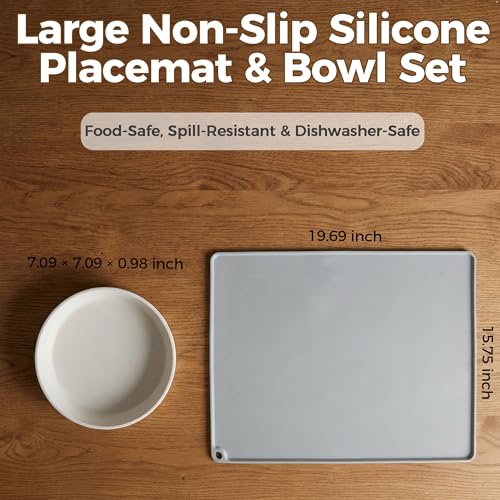
- Make the dish stay put. Place a food-grade silicone non-slip placemat or mat under the bowl or plate so it does not slide across the table. A bowl with higher sides or a plate with a low rim can also make scooping easier with less precise movement.
- Compare light versus slightly weighted balance. Some seniors feel steadier with a very lightweight utensil that reduces arm fatigue, while others prefer a bit of added weight for stability. If possible, try both styles for a few meals and note which feels more controlled without adding strain.
- Simplify the meal setup and posture. Cut food into smaller pieces before serving, keep the plate close with elbows near the body, and ensure the table height allows a relaxed arm position. For related kitchen ideas that support easier reach and less strain, you may find this guide helpful: best kitchen reacher tools for seniors with arthritis.
If you try these adjustments for several meals and still notice frequent spills or the need for hand-over-hand help, it may be time to consider a set that combines several supportive features at once rather than fixing one piece at a time.
When a Product Can Help
A product may help when home adjustments are not enough and the main issues are grip security, wrist angle, and dish stability together. In that case, look for a set that offers built-up non-slip handles, a bendable shaft to fine tune the angle, and a bowl and placemat designed to stay in place.
This guide contains affiliate links, and we may earn a commission if you buy through them, at no extra cost to you.

Prime RyroBlayze 9-Piece Bendable Adaptive Utensils Set







As an Amazon Associate we earn from qualifying purchases. Product prices and availability are accurate as of the date/time indicated.
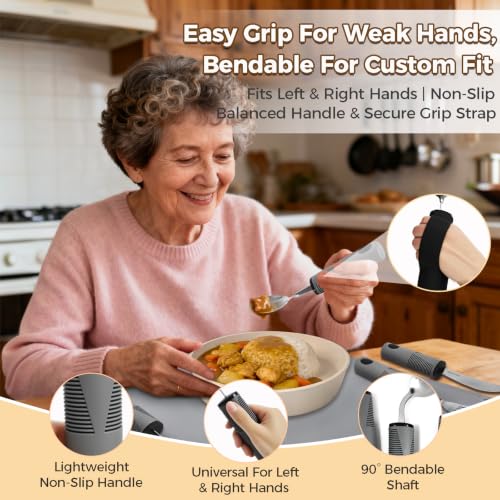
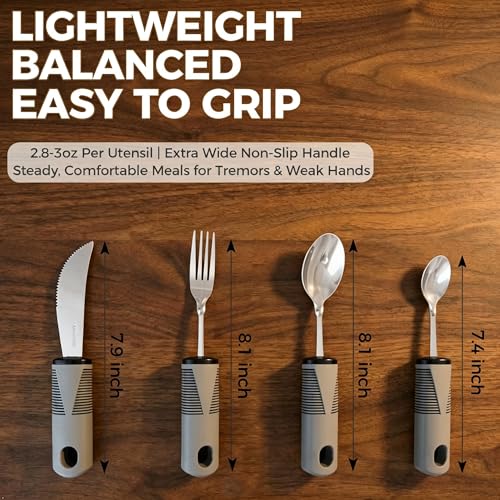
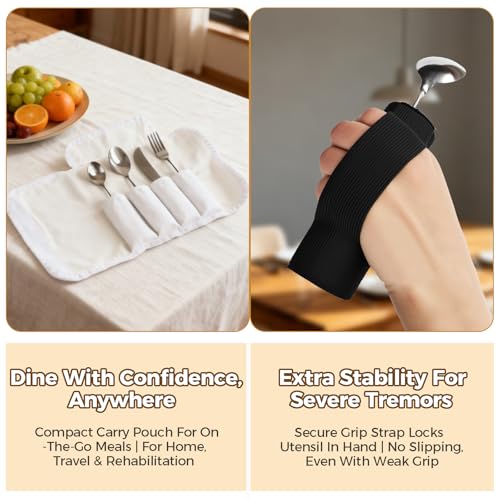
One practical option to consider is the 9 Pcs Bendable Adaptive Utensils Set, which is described as including lightweight built-up utensils with a stabilizing design, bendable spoons, fork and knife, plus a food-grade silicone non-slip bowl and large placemat with fastening straps to help reduce sliding. The set is also described as using BPA-free stainless steel and silicone with dishwasher-safe cleaning and a portable storage bag for use at home or away.
This type of complete collection can be convenient when you want to address multiple small frustrations at once, from grip to spill control, while keeping a look closer to regular silverware to support mealtime dignity. You can explore more everyday kitchen supports in the Kitchen Adaptive Tools section and compare with guides like best jar opener for seniors with balance issues for broader context.
When to Talk to a Professional Instead
This approach is not ideal for seniors who have sudden changes in hand strength, increased pain, frequent coughing or choking during meals, or noticeable weight loss from avoiding food. It is also not a good fit when the senior needs significant help with swallowing or has had a recent change in health that affects eating.
In those situations, a new utensil alone is not the right choice. Talk with a physician, occupational therapist, or healthcare provider who can evaluate daily living needs and suggest safer strategies, referrals, or other supports that go beyond household products.
A professional can also help you decide whether the current table height, chair support, or overall kitchen layout is making mealtimes harder. Bring notes about which foods are most difficult, when fatigue appears, and which adjustments you have already tried, so the discussion is focused on practical next steps.
Frequently Asked Questions
Why do my adaptive utensils feel too heavy or too light?
Weight preference varies from person to person and can change during a single meal as the hand tires. Try a lightweight option with a built-up grip first, then compare it to a slightly weighted handle for a few days to see which feels more controlled without adding strain.
Should I choose a fixed angled utensil or a bendable one for arthritis?
A bendable shaft lets you try small angle changes to reduce wrist turning, which many caregivers find useful when comfort varies day to day. A fixed angle can be simpler if the senior prefers a consistent position and does not want to adjust it.
What helps most with spills besides the utensil itself?
Securing the dish is often as important as the handle. A non-slip placemat, a bowl with higher sides, and fastening straps or a stable base can help keep food in place so less precision is needed for each scoop.
Browse more picks in our Kitchen Adaptive Tools category, or see our related guide on Kitchen Reacher Tools for Arthritic Hands in 2026.








Write Your Review
No reviews yet. Be the first to share your experience!