

Stepping over a high bathtub wall is one of the most demanding moments in the daily routine for many older adults, especially when leg strength, balance, or joint flexibility has changed. Caregivers searching for a Medline bath lift review for elderly loved ones often want a safer way to enter and exit the tub without a full bathroom remodel. This review focuses on one widely used option and explains who it may help most.
This article examines the Medline Transfer Bench for Bathtubs and Showers based on its official specifications and the features listed by the manufacturer, not on hands-on use. You will see how its height settings, reversible backrest, and stability features are designed to support bathing independence. Always check with a healthcare provider or occupational therapist before making mobility changes for a senior in your care.
This guide contains affiliate links, and we may earn a commission if you buy through them, at no extra cost to you.

Medline Transfer Bench for Bathtubs and Showers


As an Amazon Associate we earn from qualifying purchases. Product prices and availability are accurate as of the date/time indicated.
What Stands Out
Heavy-Duty 400 lb Weight Capacity and Rust-Resistant Frame
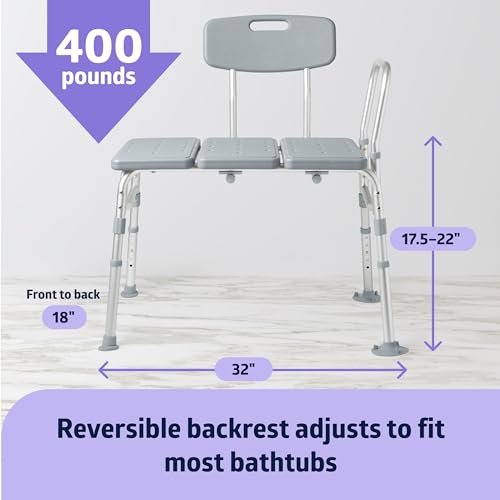
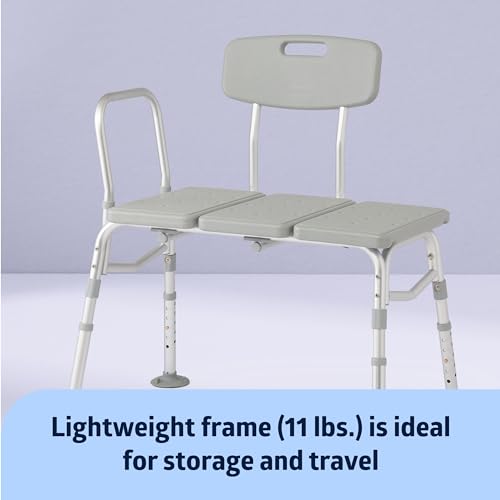
The Medline Transfer Bench for Bathtubs and Showers is built around a high-strength, rust-resistant aluminum frame with steel components, and the manufacturer rates it to support up to 400 lb. That rating is notably higher than many basic shower stools and may help reduce the risk of instability for larger adults or those who need to lean heavily while sliding. At about 11 lb total weight, the bench remains light enough for caregivers to reposition when needed.
Seat dimensions are listed as 16 inches deep by 26.5 inches wide, with an overall width of 32 inches and overall depth of 18 inches. The overall height with the backrest is 32.5 to 36.5 inches, which helps it span a standard bathtub wall while keeping a low profile in the bathroom. This wide seating surface gives more room to sit and slide than a narrow stool, which many older adults find reassuring.
For households comparing options in Shower & Tub Safety, the combination of a 400 lb rating and aluminum construction offers a balance of strength and corrosion resistance for a humid environment. Unlike a powered lift, this bench relies on simple mechanical stability rather than motors or batteries, which keeps maintenance straightforward. Families who want a durable, non-powered solution often prioritize this type of frame.
When viewed alongside other seating options such as the invacare bath stool review for elderly, the Medline bench stands out for spanning the tub wall instead of sitting entirely inside it. That outside-inside placement is what allows a seated slide rather than a step-over, which can be meaningful for those with limited hip or knee range of motion.
Adjustable Height and Reversible Backrest for Left or Right Tub Layouts
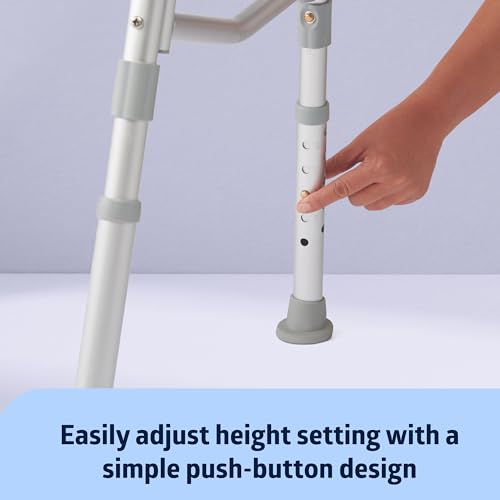
Height adjustment is handled with a push-button design that lets you set the seat from 17.5 to 22 inches in small increments. This range helps match different tub heights and user leg lengths, so feet can rest more naturally on the floor or tub base while seated. Proper seat height may help reduce the need to strain when standing or sitting, which caregivers often monitor closely.
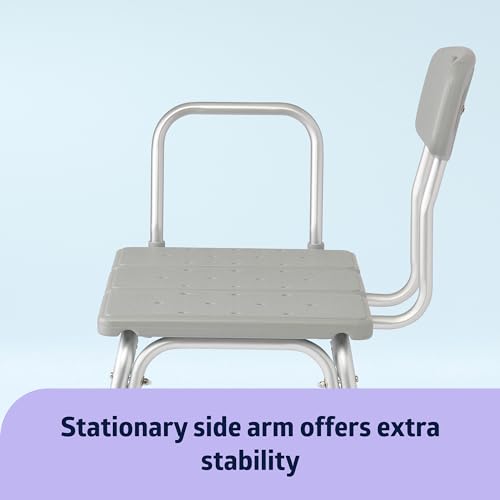
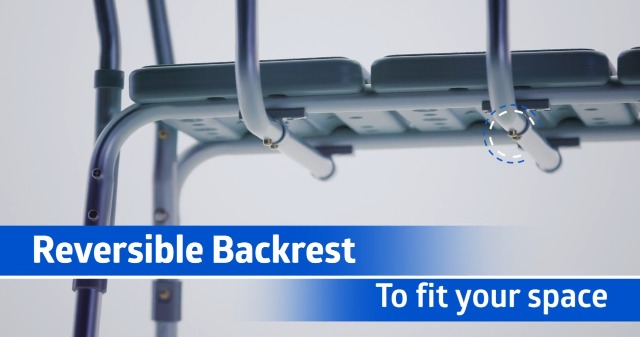
The backrest is reversible and can be installed on either side of the seat to accommodate left or right facing tubs. That flexibility matters in real homes where plumbing, doors, or grab bar placement may dictate which side offers more wall support. The bench also includes a stationary arm rest on one side to provide a steady place to push against when repositioning.
Together, these adjustments make the bench adaptable without tools or complex hardware. Seniors who share a bathroom with family members can have the height reset quickly, and caregivers can reconfigure the backrest if the bench is moved to another bathroom. This adaptability is a key reason the model is often considered for aging-in-place plans where layouts vary.
If you are weighing this bench against chairs designed for specific recovery needs, resources like best shower chair for elderly with hip replacement recovery can provide useful context on features that support careful movement. The Medline bench does not replace clinical guidance for post-surgical precautions, but its reversible design helps align the open side with the strongest support.
Slip-Resistant Feet and Suction Cup Stability
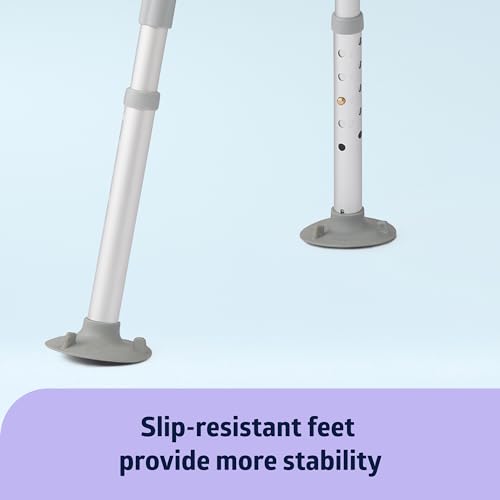
Stability comes from two different foot systems working together. Outside the tub, slip-resistant feet help limit sliding on tile or vinyl flooring, while inside the tub, wide suction cup feet add grip against the tub surface. This dual approach is intended to keep the bench steady during the lateral slide that defines a transfer bench.
For older adults who worry about the bench shifting mid-transfer, the suction cups provide an extra point of contact that a standard four-leg stool does not offer. The wide base also helps distribute weight more evenly across the tub floor, which may help reduce the risk of tipping when weight shifts toward the arm rest. Caregivers should still confirm that suction cups are clean and fully engaged before each use.
It is important to remember that no bench removes all fall risk, and correct placement is essential for stability. The bench must be level, with all feet in contact, and the tub surface should be free of heavy soap residue that could affect grip. When set up as directed, the foot system supports a more controlled seated transfer than stepping over the wall while standing.
Households exploring broader Bathroom Safety strategies often pair a bench like this with wall-mounted grab bars or handheld showers for added control. While the bench provides a stable seat, additional supports can help with balance during the initial sit and final stand.
Tool-Free Assembly With Simple Push-Button Design
Assembly is described as tool-free with locking push-button connections, which means legs, backrest, and arm rest attach without wrenches or screwdrivers. For caregivers who may not be handy, this reduces setup time and avoids the need to search for tools. Clear push-button locks also make it easier to confirm that each leg is secured at the same height.
The push-button system extends to height adjustment, so changing the seat level does not require disassembly. This can be helpful when the bench is shared between a taller caregiver who demonstrates use and a shorter senior who will use it daily. Consistent leg height on both sides of the tub wall is critical for a level seat.
Overall dimensions and the 11 lb frame weight make the bench manageable to move for cleaning or storage, though its 32-inch overall width means it will occupy most of a standard tub opening. Families who need to keep the tub available for other household members appreciate that it can be lifted out without tools. Simple assembly also makes it easier to recheck connections during routine safety checks.
Where It Comes Up Short
While the name in the keyword suggests a powered lift, this product is a manual transfer bench and does not raise or lower the user with a motor. Seniors who cannot slide their weight laterally or who need powered assistance to stand from a low position will need a different category of device, such as a battery-powered bath lift. The bench also has a stationary arm rest on only one side, so it does not offer two-sided arm support during the transfer.
Fit can be another limitation. The 32-inch overall width and 18-inch depth require a standard bathtub with enough wall clearance and a relatively flat tub floor for suction cups to engage. It is not designed for walk-in showers without a wall to straddle, and very narrow or unusually shaped tubs may not accommodate it well. As with any transfer bench, users need sufficient upper body strength and caregiver guidance to slide safely, and the bench should be evaluated alongside other options like the best bath stool for seniors after knee replacement if space is extremely tight.
Who Should Buy This
This bench is a strong match for seniors who can sit and slide with minimal assistance but find stepping over the tub wall difficult, and for caregivers who want a sturdy, adjustable, non-powered solution that spans the tub. Households with a standard combined tub and shower, a need for a 400 lb rating, and a preference for tool-free setup often find it fits well. If your bathroom has a conventional tub, a flat floor area for suction cups, and you want reversible backrest placement to match your plumbing layout, the listed features align closely with those needs. For additional context on seating for recovery, you may also review best shower chair for stroke recovery to compare support styles.
Who Should Skip It
This bench is not ideal for seniors who need a powered lift to be raised from the tub floor, who cannot bear weight to slide, or who live in homes with only a walk-in shower and no tub wall to straddle. It is also not a good fit for bathrooms where the tub is unusually narrow, has a curved floor that prevents suction cups from sealing, or where two arm rests are required for bilateral support. In those cases, a powered bath lift or a different shower chair configuration may be more appropriate, and a physical therapist can help assess the safest alternative.
If the user has significant cognitive changes that make following a step-by-step slide sequence difficult, or if the household cannot ensure the bench is level and all feet are fully engaged before each use, this model is not recommended for unsupervised use. A caregiver should be present to guide transfers and to confirm height settings remain even on both sides of the tub.
Frequently Asked Questions
Is the Medline Transfer Bench for Bathtubs and Showers the same as a powered bath lift for elderly users?
No, it is a manual transfer bench, not a powered bath lift. It helps by letting you sit outside the tub and slide across the seat to the inside, so you do not have to step over the wall while standing. If you need motorized raising and lowering, a battery-powered lift is a different product category.
How does the height adjustment and reversible backrest work on this bench?
Height is adjusted with push-button locks on each leg, allowing a seat height range of 17.5 to 22 inches to match your tub and leg length. The backrest can be installed on either side of the seat, so you can set it to face the plumbing wall or the open bathroom side. The arm rest remains on one side to provide a steady push point.
Will this transfer bench fit my bathtub and shower setup?
The bench is designed for a standard bathtub that the frame can straddle, with overall dimensions of 32 inches wide by 18 inches deep. You need a flat tub floor for the wide suction cup feet to grip and enough wall clearance for the legs outside the tub to sit level. Measure your tub width, wall height, and floor space, and confirm all four feet will contact stable surfaces before choosing this model.
Browse more picks in our Shower & Tub Safety category, or see our related guide on Bath Stools We Recommend for Elderly Safety in 2026.









Write Your Review
No reviews yet. Be the first to share your experience!