

Quick Answer
If your elderly parent struggles with a shower chair, the most common fix is to adjust the height and level all four legs so the seat sits at about knee height with feet flat on the floor. Before you replace it, try stabilizing the base, improving how they get on and off with grab bars and armrests, and confirming the chair fits the shower or tub space.
Why This Happens
A shower chair often feels unstable or uncomfortable because it is set at the wrong height or on an uneven surface. Even a small tilt can make your parent feel like they are sliding forward or have to strain to stand up.
Always check with a healthcare provider, physician, or occupational therapist before making major mobility or bathroom safety changes for a senior in your care. They can confirm what type of support is appropriate and whether a different seating style is needed for your home.
Space mismatch is another frequent issue. A standard shower chair may be too wide for a narrow stall or too small for a larger user, and a model without armrests or a back can feel insecure when reaching or turning. For ideas on matching the seat to the space and caregiver needs, see this guide to choosing a shower bench when a caregiver has a bad back.
Weight capacity and condition also matter. A chair that is rated for less than your parent needs, or one with worn rubber tips, rust, or loose hardware, may flex or wobble more than expected. You can explore more general options in our Shower & Tub Safety category.
Finally, routine and environment play a role. Slippery floors, a handheld shower that is out of reach, or having to step over a high tub wall to sit down can make any chair feel unsafe, even if the chair itself is sound. Fear after a near slip can also make your parent tense and less steady while seated.
Practical Steps to Try
- Adjust height and level the chair carefully. Set the seat so your parent’s feet rest flat on the floor with knees slightly above hips, and adjust each leg in small increments until all four feet contact the floor evenly. Lock each extension securely, sit and gently shift weight to check for wobble, then recheck after moving the chair to its usual spot.
- Secure the base on a clean, non-slip surface. Clean soap scum from rubber tips or suction feet, confirm the tub or shower floor is flat, and use a non-slip bath mat under the chair only if the manufacturer allows it. This simple cleaning and placement step may help reduce the risk of sliding and improve confidence while seated.
- Improve how your parent gets on and off the chair. Install properly anchored grab bars on the wall studs, keep the shower controls and handheld sprayer within arm’s reach, and encourage a slow, straight sit and stand using the armrests for support. Avoid using towel bars or suction-only handles for support, and keep the path into the shower clear and dry.
- Add comfort and positioning support without replacing the whole chair. Try a quick-drain cushion designed for shower chairs, reposition the chair so the back is against the wall for extra stability, and keep soap and shampoo at seat height to avoid twisting. If your parent still slides forward or feels unsupported, note whether a chair with a back and padded armrests would be a better match.
- Check if you have the right style for the bathroom layout. A basic shower chair can be hard to use if your parent must step over a high tub wall or cannot stand long enough to turn around. In that case, a transfer bench that extends outside the tub may be easier, as discussed in our article on shower chair for stroke recovery setups, and a clinician can help you decide.
Try one change at a time and ask your parent how each adjustment feels. Small, gradual changes make it easier to tell what actually helps and what still needs attention.
When a Product Can Help
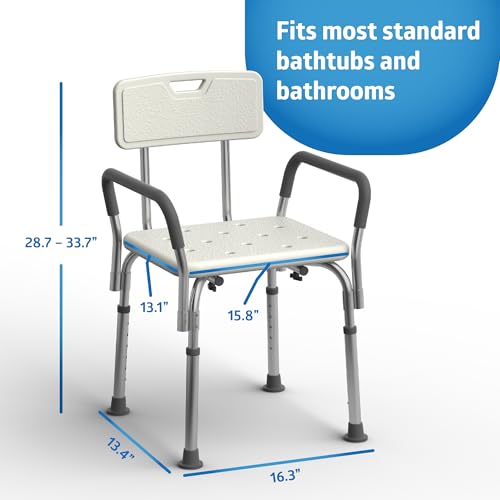
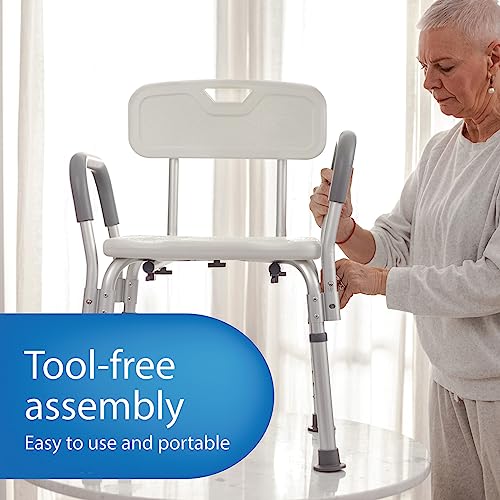
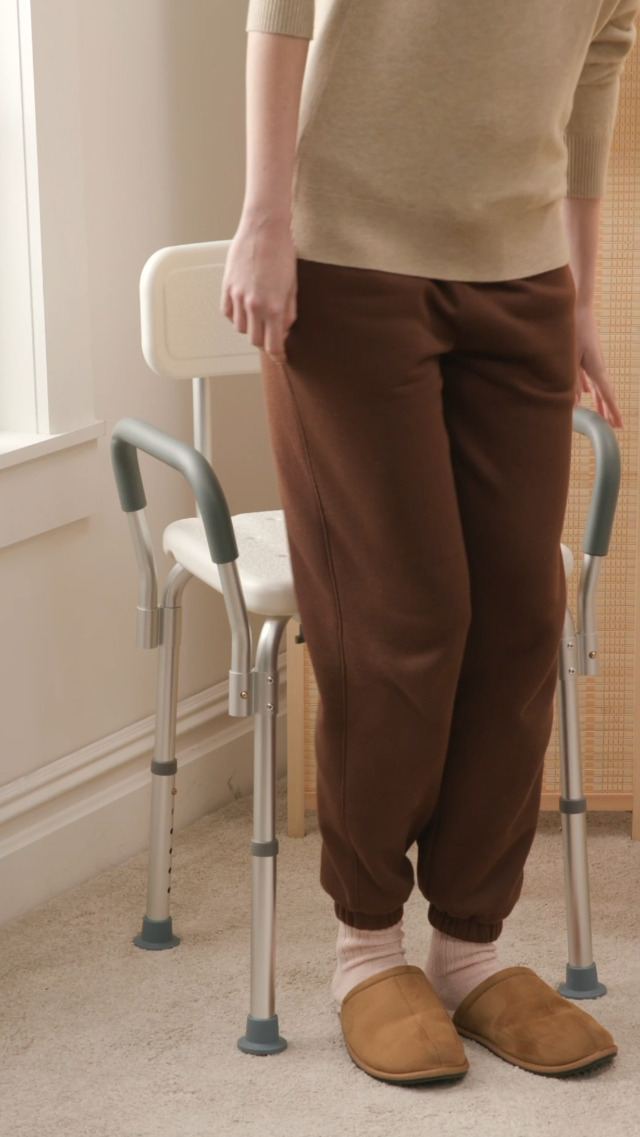
If adjustments do not resolve the struggle, a replacement with a better fit may be a reasonable next step. One common option is a chair that offers more support for sitting and standing, with padded armrests and a back, slip-resistant soles, and adjustable height to fit most bathrooms. For example, the Medline Shower Chair Seat with Padded Armrests is described as having a lightweight, rust-resistant aluminum frame, a 350 lb weight capacity, adjustable seat height in 1 inch increments, and tool-free assembly with a step-by-step manual, which may help simplify setup and daily use while supporting independence.
This guide contains affiliate links, and we may earn a commission if you buy through them, at no extra cost to you.

Medline Shower Chair with Padded Armrests




As an Amazon Associate we earn from qualifying purchases. Product prices and availability are accurate as of the date/time indicated.
When to Talk to a Professional Instead
A home adjustment is not ideal for every situation, and some signs mean you should pause and get professional guidance. If your parent has had recent surgery, new weakness on one side, frequent dizziness, or a fall in the bathroom, talk with a doctor, physical therapist, or occupational therapist before trying more fixes on your own.
This type of standard shower chair is also not a good fit when the bathroom layout or the person’s needs go beyond simple seated support. It is not recommended for very narrow showers where the legs cannot sit flat, for users who cannot sit upright without support, or when a caregiver must do most of the lifting. A clinician can recommend alternatives such as a transfer bench, wall-mounted seat, or other bathroom safety plan.
If the chair shows cracks, bent legs, rust that does not clean off, or hardware that will not stay locked, stop using it and seek advice. A professional can evaluate the home layout, your parent’s strength and balance, and the safest way to bathe with the support you have.
Frequently Asked Questions
Why does our shower chair wobble even though it looks level?
Check that each leg is locked at the same height setting and that all four feet sit firmly on a flat surface. Soap buildup, worn rubber tips, or a sloped tub floor can create wobble, so clean the feet and try repositioning the chair before you consider a new one.
How can we make the chair more comfortable without replacing it?
Try adjusting the height so feet are flat and the back is supported, and add a manufacturer-approved cushion with drain holes if needed. Keep toiletries within easy reach at seat height and position the chair so your parent does not have to twist to wash.
When should we replace the chair instead of adjusting it?
Consider a replacement if the chair is the wrong size for the shower, lacks needed armrests or back support, shows rust or cracks, or still feels unstable after leveling and securing the base. If you are unsure, a healthcare provider or occupational therapist can help assess the safest next option for your parent.
Browse more picks in our Shower & Tub Safety category, or see our related guide on Shower Benches We Recommend for Caregivers With Back Pain in 2026.










Write Your Review
No reviews yet. Be the first to share your experience!