

Mealtimes can become a source of frustration when tremors, limited hand strength, or one sided weakness make it hard to keep food on a plate. If you are searching for an Invacare non-spill bowl review for elderly needs, you may be comparing options that promise less spilling and more independence at the table.
This review looks closely at the Vive Spill-Proof Scoop Plate, 9″ (2 Pack), based on its listed specifications and what caregivers and owners commonly report, to help you decide if it fits your household. Always check with a healthcare provider or occupational therapist before making adaptive dining changes for a senior in your care.
This guide contains affiliate links, and we may earn a commission if you buy through them, at no extra cost to you.
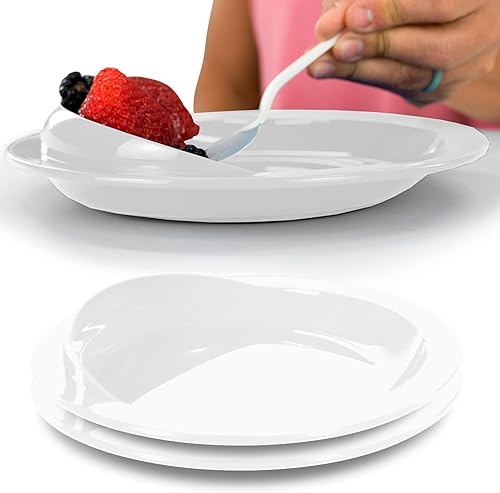
Prime Vive Spill-Proof Scoop Plate 9" 2 Pack


As an Amazon Associate we earn from qualifying purchases. Product prices and availability are accurate as of the date/time indicated.
What Stands Out
High, Sloped Rim Helps Guide Food Onto Utensils
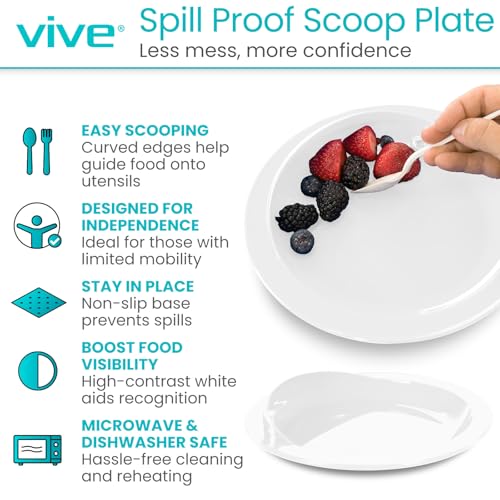
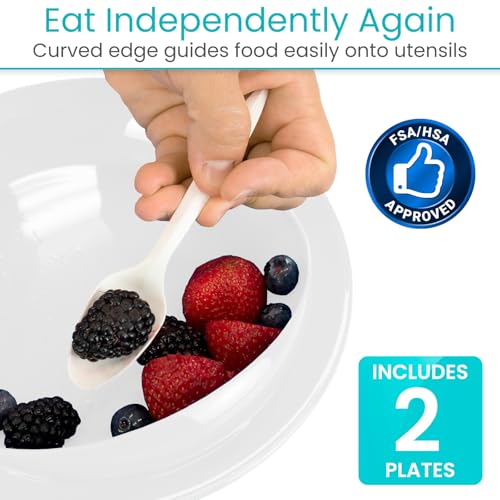
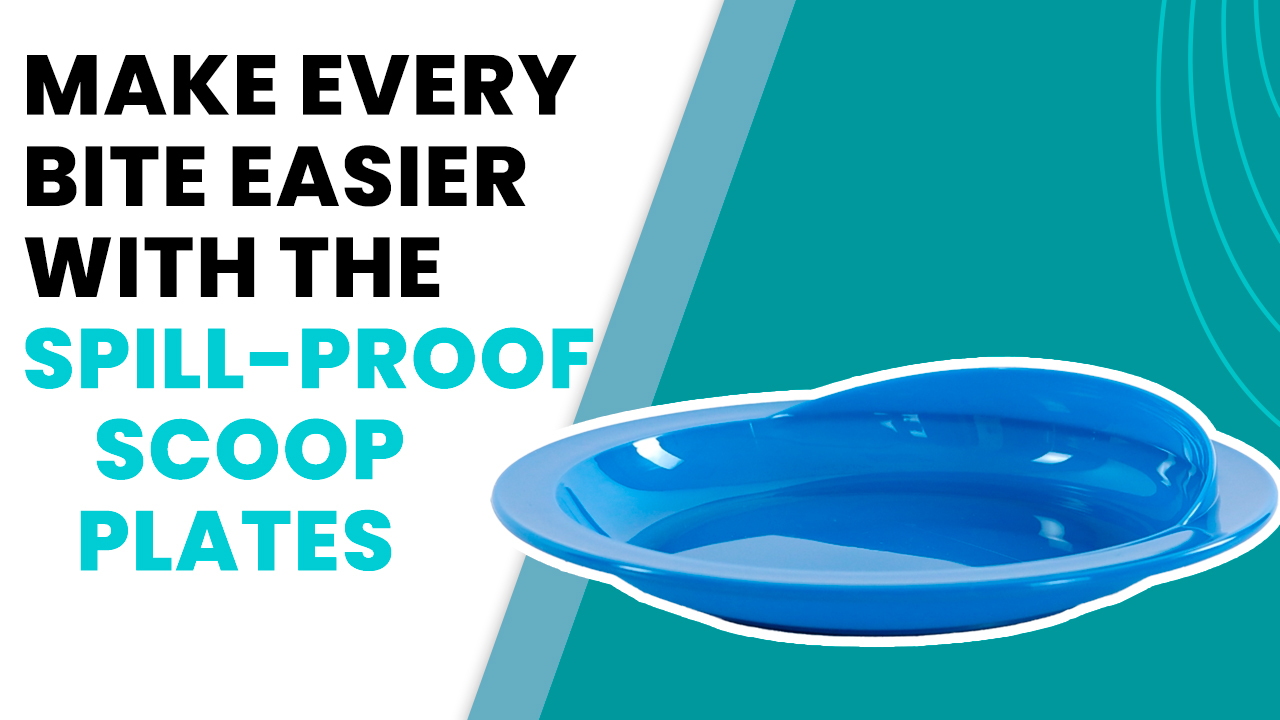
The defining feature of this plate is its high, sloped wall that curves inward. According to the product description, this rim is designed to act as a backstop so you can push food against it and scoop with one hand.
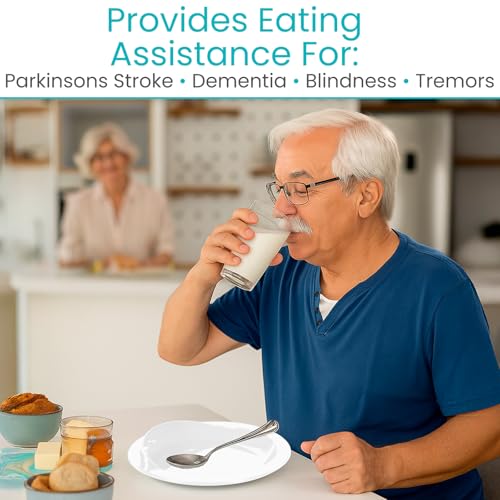
For seniors with Parkinson’s related tremors, post stroke weakness, or arthritis that limits grip, that wall may help reduce the need to chase peas or rice around a flat plate. The design supports more controlled scooping without requiring a second hand to steady the dish.
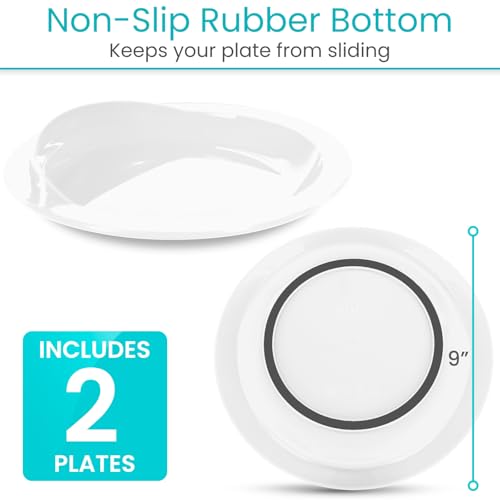
The plate measures 9 inches across, which offers a familiar dinner plate size while still keeping portions contained. Caregivers often note that a standard size feels less institutional than smaller adaptive dishes, which can help preserve dignity at family meals.
Because the set includes two plates, you can keep one in use while the other is in the dishwasher. This may help reduce daily cleanup stress for busy caregivers.
You can learn more about other supportive tools in our guide to best kitchen reacher tools for seniors with arthritis, which covers related aids for limited reach and grip.
The bright blue color also helps caregivers quickly identify the adaptive plate among regular dishes, which may help ensure the right plate is used at each meal.
Non-Slip Base Adds Stability Without Suction Cups
Stability is a common concern when a senior eats with one hand or with an unsteady grip. This plate uses a wide base with a nonslip ring on the bottom, as listed in its specifications, to help keep it from sliding on the table.
Unlike suction base bowls that require a smooth, nonporous surface to create a seal, this padded ring works on a wider range of table surfaces. That may be helpful if your dining table has a wood grain, textured placemat, or tablecloth.
The non-slip approach also means less force is needed to release the plate after a meal. Some seniors and caregivers prefer this over strong suction cups that can require extra hand strength to dislodge.
The product details do not list a specific weight or force rating for the non-slip function, so it is best to view it as a stability aid that may help reduce sliding rather than a lock in place guarantee.
If you use an overbed setup for meals, you may also want to review How High Should Overbed Table Be for Elderly? 2026 Height Guide to ensure the plate and table height work together comfortably.
Caregivers commonly report that placing the plate on a non-slip placemat can further support stability, especially if the table surface is very smooth or slightly uneven.
Food-Grade Polypropylene That Is Microwave and Dishwasher Safe
The plates are made from food-grade polypropylene and are described as BPA free and sturdy for daily use. This material choice is common for adaptive dinnerware because it resists chipping and is lighter than ceramic.
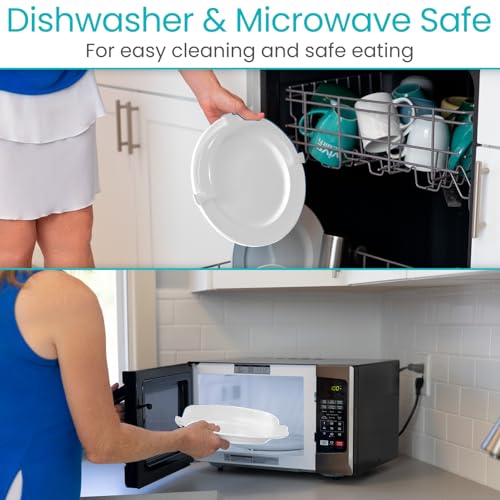
Both microwave and top rack dishwasher safe use is listed, which supports simple reheating and cleanup. For older adults who live alone or for caregivers managing multiple tasks, easy cleaning may help encourage regular use.
Polypropylene is also odorless and heat resistant according to the specifications. That may help reduce concerns about lingering food smells or warping after repeated washing.
The plates are noted to withstand frequent use, yet they remain lightweight enough for seniors with reduced arm strength to handle. This balance of durability and light weight is often valued in shared households where dishes are used several times a day.
For a broader view of daily living aids beyond the kitchen, see button hooks for stroke recovery, which highlights other one handed tools that pair well with adaptive plates.
The 60 day guarantee noted in the listing may provide added peace of mind when trying an adaptive plate for the first time, allowing time to see if the design suits the senior’s routine.
High-Contrast Blue Color to Support Food Recognition
Color contrast can play a role in how easily a senior sees food on a plate, especially with low vision. This plate comes in a bright blue that the maker describes as clinically supported to provide high contrast for better food recognition.
Light colored foods such as mashed potatoes, rice, or chicken may stand out more clearly against blue than against white. That visibility may help seniors with visual changes scoop more confidently and maintain appetite.
The color is consistent across the set, so there is no need to guess which plate offers the contrast benefit. Caregivers commonly report that a distinct plate color also helps cue mealtime and reduce confusion for those with dementia.
While color alone does not replace good lighting or other vision supports, it is a simple, non electronic feature that may help make meals feel calmer and more manageable.
If low vision is a primary concern, our review of grabber reacher tool for seniors with low vision offers additional context on choosing high contrast aids around the home.
Pairing the plate with good overhead lighting and a plain table covering may further enhance contrast and help the senior focus on the food.
Where It Comes Up Short
This design focuses on scooping and containing food, but it does not include a suction base or a lid. If you need a bowl for soups, cereals with milk, or very liquid foods, a deeper scoop bowl with a suction cup may help keep the vessel steadier, and this plate alone may not be the right choice for those meals.
The 9 inch size and high wall, while helpful for many, can feel bulky on a small tray or crowded overbed table. Seniors who prefer a compact, low profile dish or who eat very small portions might find the wall gets in the way when cutting food, and households that want a single piece for both plate and bowl functions will need to consider a mixed set instead.
Who Should Buy This
This two pack may be a good fit for households where a senior wants to eat independently despite tremors, limited dexterity, or use of one hand after a stroke. The high wall, non-slip base, and familiar plate size work together to support scooping without requiring complex setup.
Caregivers who value easy cleanup and microwave safe convenience may also appreciate this option. The lightweight polypropylene and dishwasher safe design may help reduce daily workload while keeping mealtimes dignified.
If you are outfitting a shared kitchen for an aging parent who still joins family meals at the table, this plate offers a discreet adaptive look rather than a medical appearance. You can explore more options in our Kitchen Adaptive Tools category for complementary aids.
Who Should Skip It
This plate is not ideal for seniors who primarily need a deep bowl for liquids or who rely on strong suction to keep dishes fixed to a smooth surface. The non-slip ring may help reduce sliding, but it does not create the firm hold that a suction cup base provides on glass or laminate.
It is also not a good fit if the senior has significant visual field loss that makes a high wall hard to judge, or if the dining setup is a very small tray where a compact dish is needed. In those cases, a lower profile plate or a dedicated scoop bowl with suction may be more comfortable.
Households looking for a single versatile piece that handles both solid meals and soups might want to consider a plate and bowl combo set instead of two identical plates.
Frequently Asked Questions
Is the Vive Spill-Proof Scoop Plate dishwasher and microwave safe?
Yes, the listing describes the plates as made from food-grade polypropylene and safe for both microwave reheating and top rack dishwasher cleaning. This may help simplify daily care for seniors and caregivers who need quick, low effort cleanup.
Does this plate stay in place without a suction cup?
The plate uses a wide base with a nonslip ring rather than a suction cup. That design may help reduce sliding on many table surfaces, including textured ones, but it does not lock to the table like a suction base bowl would on a smooth surface.
Can this plate help a senior with Parkinson’s or stroke related weakness eat more independently?
The high, sloped rim is designed to act as a wall for one handed scooping, which many caregivers report may help seniors with tremors or one sided weakness manage meals with less spilling. It is an adaptive aid that may support independence, but it does not replace guidance from a physician or occupational therapist for individual needs.
Browse more picks in our Kitchen Adaptive Tools category, or see our related guide on Kitchen Reacher Tools for Arthritic Hands in 2026.


Write Your Review
No reviews yet. Be the first to share your experience!