

Quick Answer
If you are wondering how to make a stair lift safer for a senior with all for elderly needs in mind, start with the basics that cause most problems: use the seat belt every time, keep the track and footrest clear, confirm the seat locks in place for transfers, and improve lighting at the top and bottom landings. Keep hands on the armrests, keep feet fully on the footrest, and do a slow empty run to check that the lift starts, stops, and swivels smoothly. These quick checks may help reduce the risk of slips or missteps while you decide if extra support is needed.
Why This Happens
A stair lift can feel unsafe even when it is working as designed, often because the setup no longer matches the person or the staircase. A loose seat belt, a footrest that does not fold correctly, or a track with dust and objects in the way can make the ride feel unstable.
Transfers are often the riskiest moment, not the ride itself. If the seat does not swivel and lock fully at the landing, or if the senior has to reach, twist, or step over a gap to get on and off, balance can be harder to maintain. Always check with a healthcare provider or physical therapist before making mobility changes for a senior in your care.
Home environment also plays a big role. Dim lighting, clutter on the stairs, loose rugs at the landings, or a missing second handrail can make a lift that is mechanically fine feel insecure. You can learn more about proper setup in How High Should Stair Lift Be for Elderly? 2026 Height Guide.
Finally, needs can change over time. Changes in strength, vision, or confidence, or a lift that was chosen for a different staircase or body size, may mean the current lift is not the right fit anymore. If the lift was self installed or has not been serviced recently, mounting hardware, battery charge, and safety sensors should be reviewed.
Practical Steps to Try
- Check fit and function before each use. Confirm the seat belt buckles easily, the swivel locks at the landing, the footrest is flat and the safety sensor is not blocked, and the battery indicator shows a full charge. Try one slow trip without a rider to listen for unusual sounds and to confirm smooth starts and stops.
- Make transfers as stable as possible. Park the lift fully at the top or bottom landing, lock the swivel so the seat faces the landing, and use both armrests for support. Keep feet fully on the footrest during the ride and keep a caregiver nearby for the on and off steps if balance is limited.
- Improve the staircase environment. Clear all objects from the stairs and landings, secure any loose carpet or rugs, add bright, even lighting at both ends, and keep a sturdy handrail on the side opposite the lift rail. Adding high contrast tape at the top and bottom steps can help with depth perception.
- Confirm the lift matches the user and the stairs. Review the lift manual for its rated limits and recommended user height range, and check that the seat height lets feet rest comfortably without dangling or crowding. If the staircase is very narrow, steep, or curved, a straight rail lift may not be the right choice for that layout.
- Create a simple safety routine. Post a short checklist near the lift for buckling up, locking the swivel, and folding the footrest, keep a phone or call button within reach at both landings, and plan what to do if the lift stops mid track, including how to call for help and how to use the manual override if the model has one.
When a Product Can Help
A home fix is sometimes not enough when the senior needs extra balance support at the exact step where they get on and off the lift, or at a few entry steps where a full lift is not practical. In those cases one common option is a freestanding stair assist device that can be placed at the top or bottom landing to give an extra handhold alongside an existing wall handrail, rather than replacing the lift itself. For broader mobility planning, you may also find hearing amplifier vs stair lift for elderly helpful for comparing support options.
This guide contains affiliate links, and we may earn a commission if you buy through them, at no extra cost to you.

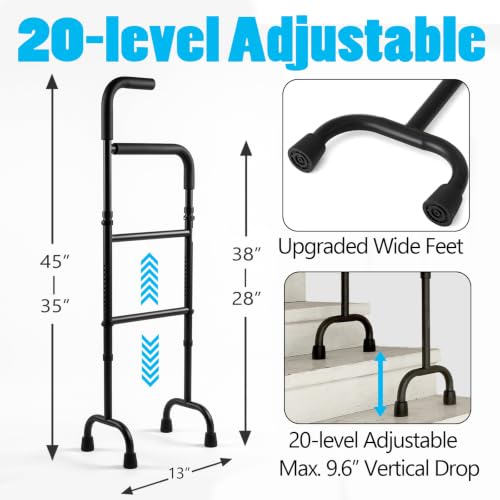
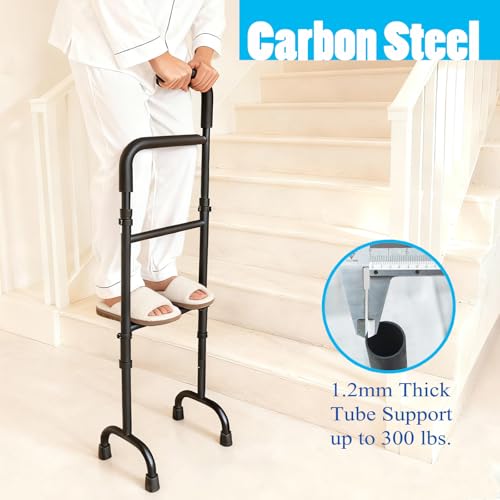
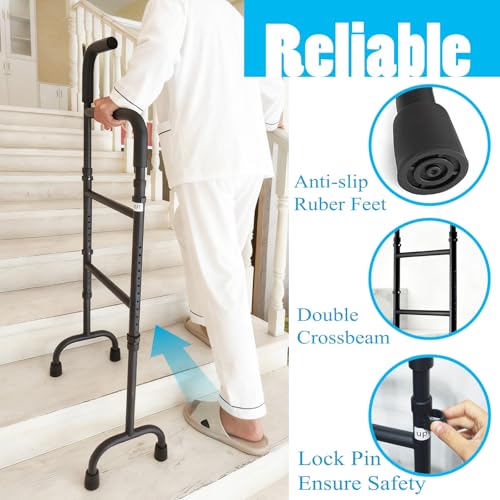
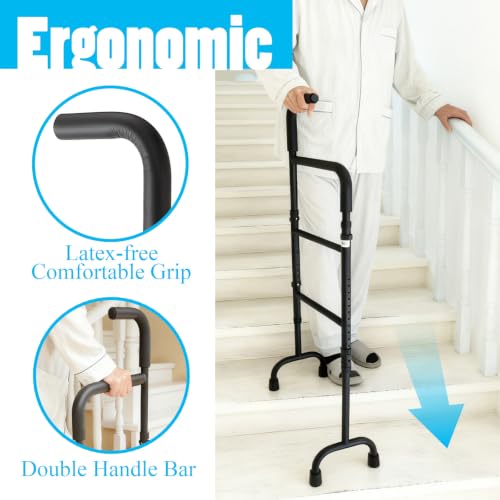
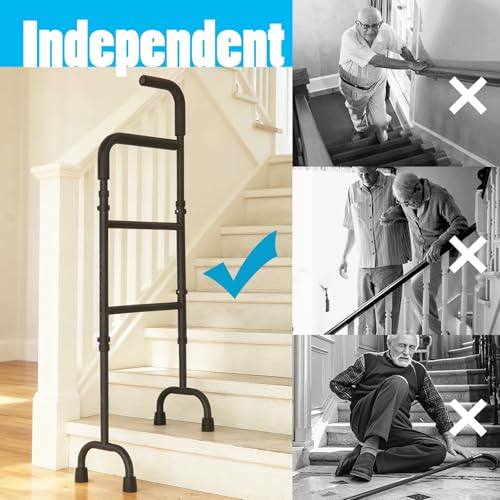
Prime SAMTROY 20-Level Adjustable Stair Climbing Assist


As an Amazon Associate we earn from qualifying purchases. Product prices and availability are accurate as of the date/time indicated.
The 20-Level Adjustable Stair Climbing Assist Cane is described as a portable freestanding aid with a 20 level pin lock height adjustment, a heavy duty carbon steel frame with a wide quad base, rubberized anti slip tips, and soft EVA foam handles. It is designed to stand upright on its own at the top or bottom of stairs and is intended to be used together with a wall mounted handrail for added stability. As with any stair aid, check the product specifications for proper assembly and use, and have a caregiver present during initial use if mobility is severely limited.
When to Talk to a Professional Instead
Some situations are not ideal for a do it yourself fix and should be reviewed by a professional. If the lift wobbles, the rail feels loose at the wall, the seat does not lock, or the lift stops or beeps repeatedly, stop use and contact the lift installer or manufacturer for service.
This approach is also not a good fit when a senior has frequent falls, significant confusion, sudden changes in balance, or recent surgery that affects movement. In those cases a physician, physical therapist, or occupational therapist can assess whether the current lift is still appropriate or whether a different transfer method is needed.
A professional review is also wise if the staircase itself is the issue, such as a curved or very narrow stairway, uneven steps, or structural concerns. For related transfer safety ideas, see NOVA gait belt review for elderly and talk to a qualified installer about whether the rail, seat, or landing setup needs adjustment.
Frequently Asked Questions
Why does my stair lift feel wobbly or jerky?
Common causes include a track that needs cleaning, a footrest that is not fully lowered, a low battery, or mounting hardware that has loosened over time. Try a slow empty run, check the manual for cleaning and charging guidance, and contact the installer if movement still feels uneven.
Do I still need a handrail if we have a stair lift?
Yes, keeping a secure wall mounted handrail gives extra support during transfers and for anyone who still uses the stairs on foot. A handrail on the side opposite the lift rail may help reduce the risk of missteps at the landings.
How can I help a senior feel more confident using the stair lift?
Use a consistent routine, keep the seat belt fastened, lock the swivel for every transfer, and have a caregiver stand by until the senior feels comfortable. Good lighting, clear landings, and a calm, unhurried pace also support confidence without adding pressure.
Browse more picks in our Stair Lifts & Transfers category, or see our related guide on Stair Lift Height Guide for Elderly in 2026.







Write Your Review
No reviews yet. Be the first to share your experience!