

Cutting food at the table can become a quiet barrier to independence for many older adults. When grip strength fades, hand tremors appear, or a stroke limits use to one hand, a standard dinner knife often requires too much force, too much coordination, or a sawing motion that feels unsteady.
This review focuses on one adaptive option for that exact situation, the Essential Medical Supply Power of Red Rocker Knife for the Drive Medical easy grip kitchen knives review for elderly. Based on its published specifications, materials, and design details, plus commonly reported caregiver observations, we outline who may benefit most and where trade offs exist. Always check with a healthcare provider or occupational therapist before making adaptive utensil changes for a senior in your care.
This guide contains affiliate links, and we may earn a commission if you buy through them, at no extra cost to you.

Prime Essential Medical Supply Power of Red Rocker Knife


As an Amazon Associate we earn from qualifying purchases. Product prices and availability are accurate as of the date/time indicated.
What Stands Out
Curved Rocker Blade for a Simple Rocking Motion
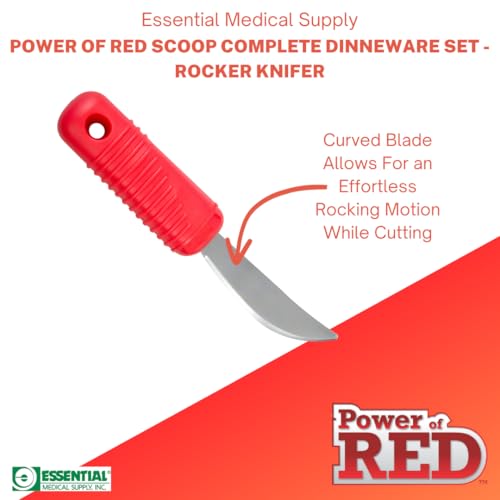
The defining feature in the product description is the curved rocker blade. Instead of pushing and pulling like a traditional knife, you press down and rock gently to slice. That motion is described as requiring less sawing and less bilateral coordination, which may help reduce effort for seniors with limited hand strength.
For households where one hand is stronger than the other, the design is intended to allow cutting without needing a fork to stabilize food. The description notes it is meant for use with a rocking motion, not a slicing motion, which may help seniors who find a standard straight blade hard to control. Caregivers often report that this approach supports more consistent, seated cutting at the plate.
This blade approach also aligns with needs seen in other Kitchen Adaptive Tools that prioritize one handed use and reduced wrist strain. If you or a loved one values staying at the family table rather than pre cutting food in the kitchen, a rocker style may help preserve that routine with greater confidence.
Large Textured Handle Built for Stability and Control
The handle is described as large, textured, and ergonomically shaped to provide a comfortable grip. According to the specifications, ribs align to the inside of the palm, which may help distribute pressure and add stability for hands affected by arthritis, Parkinson’s, or general weakness. The handle is designed to work for both left handed and right handed users.
Stability is a central theme in the listing. The blade and handle combination is presented as helping to steady hand movements, which may help reduce the risk of slipping during meals. That focus on control is similar to what many families look for when comparing adaptive kitchen tools for seniors with balance issues, where a secure hold matters more than cutting speed.
The handle is not weighted, though the listing notes it weighs more than traditional silverware. That modest added heft, combined with the textured surface, may help provide feedback without feeling cumbersome. For seniors who struggle with thin, smooth utensils, the built up profile can be easier to grasp and maintain through a meal.
Power of Red High Contrast Design for Visual Recognition
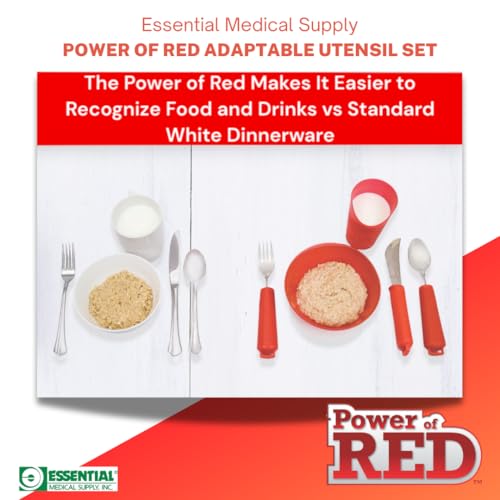
Color is more than style in this product line. The Power of Red concept is based on research suggesting that red dinnerware may help individuals with Alzheimer’s and dementia better distinguish food from the table surface. The bright red handle and blade contrast is intended to make the utensil itself easier to locate and recognize.
For seniors with low vision or cognitive changes, high contrast cues may support orientation at mealtime. A red utensil against a light plate or tablecloth stands out quickly, which may help reduce hesitation and support independent use. Caregivers often report that consistent color coding across plates, cups, and utensils helps establish a familiar routine.
While color alone does not address grip or strength, it complements the physical design. When paired with other supportive strategies, such as good lighting and uncluttered place settings, the visual contrast may help make meals feel calmer and more predictable for both the senior and the caregiver.
Durable Stainless Steel and Dishwasher Safe Care
Material and maintenance matter for daily use. The knife is made from stainless steel, which the manufacturer describes as durable and built for repeated use. Stainless steel also supports a clean, smooth edge that can be maintained over time, and the product is listed as dishwasher safe for convenient cleaning.
Easy care is important for caregivers managing multiple adaptive items. Being able to place the utensil in the dishwasher without special handling may help encourage regular use and hygiene. The construction is also described with smooth edges intended to reduce the chance of accidental cuts when the utensil is handled outside of cutting.
For families building a broader set of daily living aids for stroke recovery and aging in place, low maintenance tools tend to get used more consistently. A utensil that cleans easily and stores safely is more likely to remain part of the everyday table setting rather than being set aside.
Where It Comes Up Short
No single utensil solves every mealtime challenge, and this rocker knife has clear trade offs. It is sold as a single knife, not a full flatware set, so families looking for a matched fork and spoon will need to source those separately. If you prefer a coordinated adaptive set for all courses, that adds an extra step.
The rocking technique, while simpler for many, can require a brief learning period. Seniors accustomed to a traditional sawing motion may need gentle practice and supervision at first to find the right pressure and angle. The product is intended for a rocking motion only, so it is not designed to function like a standard straight edged table knife for all foods.
The high contrast red color, helpful for recognition, may not suit every household aesthetic or existing dishware. Some seniors may prefer neutral or metallic finishes, and strong color contrast is most useful when the table and plate are light. In addition, the utensil is not weighted, which some users with pronounced tremors prefer for added steadiness.
Finally, published caregiver feedback for this exact model is limited, with only a small number of reviews available at the time of this analysis. That makes it harder to gauge long term durability across many homes. Evaluating the listed specifications and intended use, rather than relying on volume of feedback, is the most reliable way to set expectations.
Who Should Buy This
This knife may be a strong fit for seniors who want to continue cutting soft to moderately firm foods at the table with one hand or with limited grip strength, and for caregivers supporting loved ones with hand tremors, arthritis, Parkinson’s, or dementia related visual changes. If your priority is a simple, rocking motion, a large textured handle that supports palm alignment, and a high contrast utensil that is easy to spot and clean, the design aligns well with those everyday goals while supporting greater mealtime independence.
Who Should Skip It
This option is not ideal for seniors who need a weighted utensil to help dampen significant tremors, or for those who primarily need to cut very hard or crusty foods that require a serrated or chef style blade. It is also not the right choice if you are seeking a complete adaptive flatware set in one purchase, or if a senior strongly prefers a traditional slicing motion and does not want to learn a rocking technique.
Households that need extensive one handed meal preparation beyond the table, such as chopping raw vegetables or breaking down larger portions, may find a dedicated adaptive prep knife or a different handle orientation more suitable. In those cases, exploring other rocker or T handle designs alongside this model may help clarify which grip angle and blade length feels most secure for the individual.
Frequently Asked Questions
How does the Essential Medical Supply Power of Red Rocker Knife work for elderly users with limited grip strength?
It uses a curved blade that cuts with a gentle rocking motion rather than a back and forth sawing motion. The large, textured handle with palm aligned ribs is designed to provide a more secure hold, which may help reduce effort and improve control for seniors with arthritis, hand tremors, or limited grip strength.
Is the Power of Red color just for style, or does it serve a purpose for seniors with dementia or low vision?
The red finish is intended as a high contrast visual cue. Based on the product description, the Power of Red line is informed by studies suggesting red dinnerware may help individuals with Alzheimer’s and dementia more easily recognize food and utensils against the table, which may support orientation and independence at mealtime.
Is this rocker knife dishwasher safe and suitable for left handed or right handed use?
Yes, the listing describes the knife as made from stainless steel and dishwasher safe for easy cleaning. It is also designed to be used by both left handed and right handed individuals, with a handle that supports either hand and a blade intended for a rocking motion at the plate.
Browse more picks in our Kitchen Adaptive Tools category, or see our related guide on Kitchen Reacher Tools for Arthritic Hands in 2026.







Write Your Review
No reviews yet. Be the first to share your experience!