

Quick Answer
If adaptive utensils not working well for a senior with stroke recovery leaves you frustrated, the utensil alone is rarely the whole issue. A mismatch in handle size, weight, angle, and how the plate and seating are set up can make even a well designed utensil hard to use. Try adjusting grip support, stabilizing the dish, and checking seating position before you buy a new set, and use the steps below to pinpoint what may help.
Why This Happens
Stroke recovery often changes strength and control on one side, which affects how a senior can hold, lift, and guide a spoon or fork. You may notice the hand tires quickly, the wrist does not turn easily, or food slides off before it reaches the mouth. Always check with a healthcare provider or occupational therapist before making changes that affect daily eating safety for a senior in your care.
A common reason utensils do not work well is a mismatch between the handle and the person’s current grip ability. A handle that is too narrow, too smooth, or too heavy can be hard to hold steady, while a very light handle may not provide enough stability for a shaky hand. If the shaft does not bend or angle, the senior may have to twist the wrist in an uncomfortable way to bring food to the mouth.
The setup around the utensil matters as much as the utensil itself. A lightweight plate that slides, a bowl that is too deep, or food that is hard to scoop can make any utensil feel ineffective. Seating that is too low or a table that is too high can also change the arm angle and reduce control. For ideas on table height and positioning, you may find How High Should Overbed Table Be for Elderly? 2026 Height Guide helpful.
Expectations can also play a role. Adaptive utensils are designed to support independence, not to replace the gradual process of relearning movement. If progress seems slow, it does not mean the tool has failed, it may mean the combination of tool, dish, and technique needs a small adjustment. A related resource on one handed daily tasks is button hooks for stroke recovery which shows how small adaptive changes work together.
Practical Steps to Try
- Watch a full meal and note where the difficulty happens. Does the utensil slip from the hand, does the wrist need to bend sharply, does food fall off, or does the arm tire quickly. Check that the senior is seated upright with feet supported and the table at a height where the elbow can rest comfortably without reaching up or hunching.
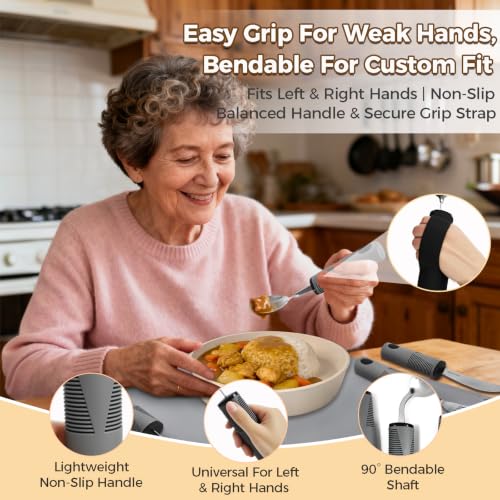
- Try improving the grip without buying a whole new set. A built up foam sleeve or a soft strap can help keep the utensil in the hand if grip strength is limited. If the utensil has a bendable shaft, try a gentle angle that lets the spoon approach the mouth with less wrist turn, then check if that angle feels more natural over a few bites.
- Stabilize the dish and the work surface. A non slip placemat or silicone bowl that stays in place may help reduce spills and let the senior focus on scooping rather than holding the plate. A plate with a raised edge or a small lip can make it easier to push food onto the spoon without chasing it around the plate.
- Adjust the food and the pace. Softer foods that cling to the spoon, smaller portions on the plate, and a spoon that matches the bite size can make self feeding feel more manageable. Allow extra time, offer rest breaks, and try using the stronger hand to assist the weaker hand if that is comfortable and the care team has suggested it.
- Consider weight and balance carefully. Some seniors do better with a lightweight utensil that reduces fatigue, while others benefit from a little added weight that steadies movement. If you try a different weight, introduce one utensil at a time and see how the senior responds over several meals. For broader kitchen setup ideas, see best kitchen reacher tools for seniors with arthritis for examples of how adaptive tools fit into daily routines.
When a Product Can Help
If small adjustments do not provide enough support, a more complete adaptive set may help as one part of a broader mealtime setup. Look for a set that offers a thick non slip grip, a bendable or angled shaft, and accessories that keep the dish steady, so you are addressing grip, wrist position, and stability together rather than one issue at a time.
This guide contains affiliate links, and we may earn a commission if you buy through them, at no extra cost to you.

Prime RyroBlayze 9-Piece Bendable Adaptive Utensils Set




As an Amazon Associate we earn from qualifying purchases. Product prices and availability are accurate as of the date/time indicated.
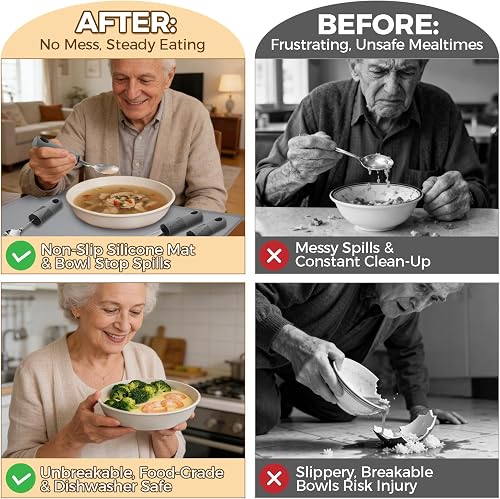
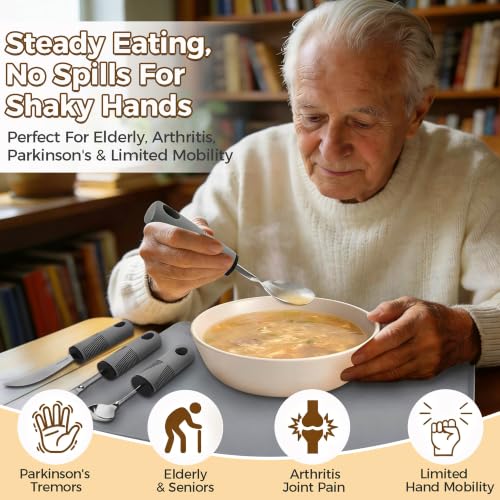
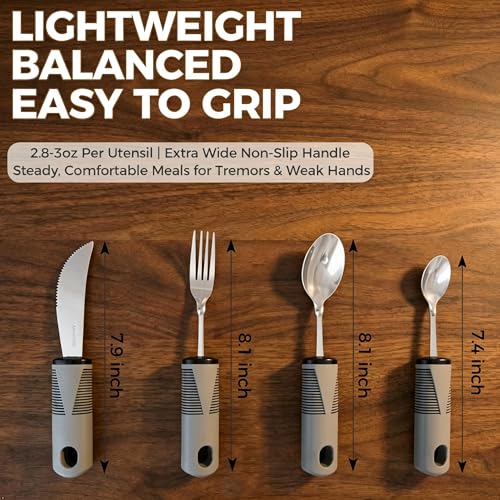
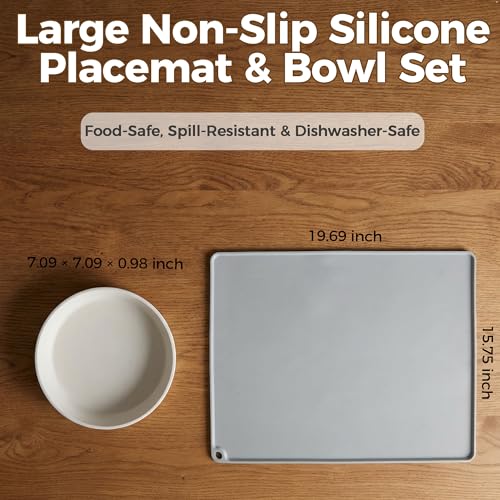
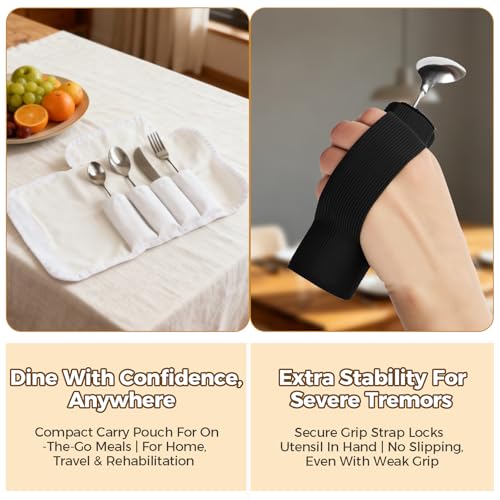
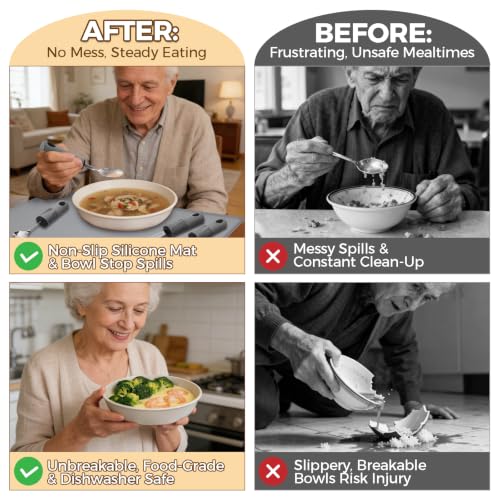
The 9 Pcs Bendable Adaptive Utensils Set, for example, is described as a lightweight set with built up non slip handles and a balanced stabilizing design, plus bendable spoons, a fork, a knife, a food grade silicone bowl and placemat, fastening straps, and a storage bag. Its features are presented as supporting independent dining with dishwasher safe, BPA free materials and smooth edges, which may help caregivers support mealtime dignity without adding extra heavy weight.
When to Talk to a Professional Instead
A home adjustment is not always the right next step. If the senior is coughing or choking while eating, losing weight, showing signs of swallowing difficulty, or experiencing new weakness or pain, pause home changes and seek professional guidance promptly.
This type of complete set is not ideal for every situation. It is not a good fit if the senior needs a one handed cutting solution that requires a specialized rocker knife, if swallowing support is the main concern, or if the care team has recommended a different feeding approach that does not involve self feeding with standard utensils.
An occupational therapist, physical therapist, or physician can evaluate hand function, seating, and safe swallowing strategies and suggest the right combination of tools and techniques. Bring the current utensils, plate, and placemat to the appointment so the provider can see what you have already tried and can advise on next options.
Frequently Asked Questions
Why do adaptive utensils still feel hard to use after a stroke?
Often the handle size, weight, or angle does not match the senior’s current grip and wrist movement, or the plate slides while scooping. Try a built up grip, a gentle bend in the shaft, and a non slip mat under the dish, and check seating height to reduce strain.
Should we choose weighted or lightweight utensils for stroke recovery?
It depends on the senior’s needs and what your care team advises. Lightweight utensils may help reduce fatigue, while a modest amount of weight may help steady a shaky hand. Try one option for several meals and note comfort, control, and tiredness before deciding.
What else besides utensils helps with independent eating?
Stability and positioning often help as much as the utensil. A non slip placemat, a bowl or plate with a raised edge, and a table height that lets the arm rest comfortably can make scooping easier. An occupational therapist can also suggest techniques and tools that fit the senior’s specific abilities.
Browse more picks in our Kitchen Adaptive Tools category, or see our related guide on Kitchen Reacher Tools for Arthritic Hands in 2026.









Write Your Review
No reviews yet. Be the first to share your experience!