

Quick Answer
If your adaptive utensils are not working well for a senior who uses a wheelchair, the most common issue is not the utensil itself but the fit between hand, angle, and table height. Wheelchair seating changes arm position, reach, and how the elbow rests, so a spoon that works at a standard table may feel awkward, tip, or slip. Before you replace the set, try adjusting the bend angle, adding a non slip base, and checking table height so the forearm can rest comfortably while eating.
Why This Happens
Adaptive utensils often feel ineffective for wheelchair users because the dining setup was designed for a different posture. When the chair has armrests, a higher seat, or a lap tray, the wrist angle and distance to the plate change. Always check with an occupational therapist or healthcare provider before making major seating or feeding changes for a senior in your care, especially if swallowing or posture is a concern.
A second common cause is grip size and weight that do not match the person’s hand strength. A handle that is too thin requires constant squeezing, while one that is too thick or too heavy can tire the hand quickly. Foam covers or built up handles may help steady control, but if the grip still slips when hands are damp or the utensil twists, it may not be the right shape for that person.
Wheelchair dining height is another frequent mismatch. A table that is too high forces the shoulder up, and a table that is too low forces hunching, both make control harder. If elbows cannot rest near table level with relaxed shoulders, even a bendable utensil will feel hard to guide. See How High Should Overbed Table Be for Elderly? 2026 Height Guide for ideas on matching surface height to seated posture.
Finally, the plate and placemat matter as much as the utensil. A lightweight plate that slides, a bowl that tips, or a slick tray can create spills that look like utensil failure. Seniors using a wheelchair may have less ability to stabilize a dish with the other hand, so a non slip placemat or a bowl with a wider base may help reduce sliding and allow the dominant hand to focus on scooping.
Practical Steps to Try
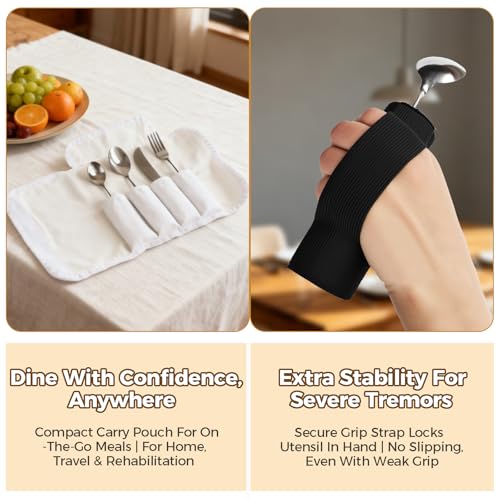
- Check the handle fit with the hand at rest. Have the senior hold the utensil as they naturally would, then see if fingers can wrap without straining and if the handle stays put when gently tugged. If it rotates or requires a tight fist, try a thicker non slip grip or add a fastening strap that keeps the utensil aligned without forcing the wrist.
- Adjust the bend angle in small increments. Many adaptive forks and spoons allow you to angle the head so food comes straight to the mouth without bending the wrist sharply. Bend it a little, try a few bites of soft food, then adjust again. If the neck feels stiff or the angle springs back, try a different utensil that holds its shape more reliably.
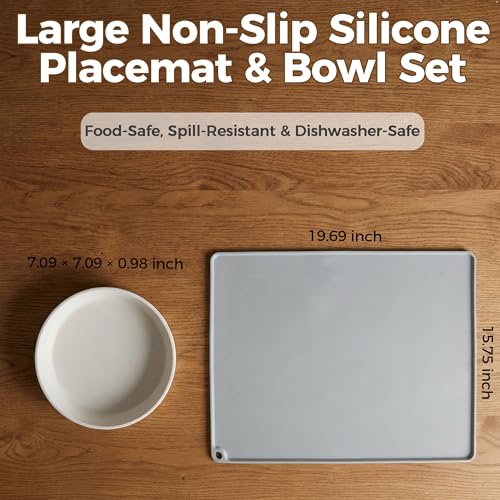
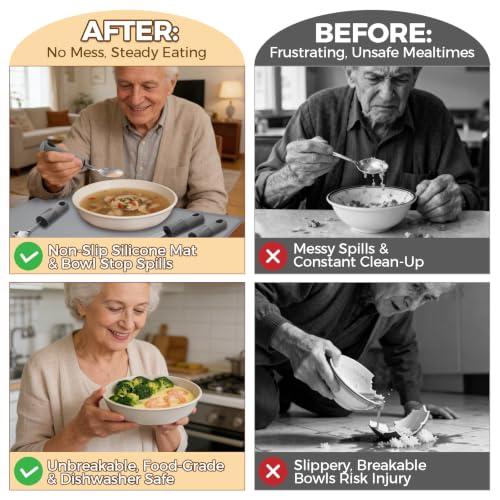
- Make the dish stay put. Place a food grade silicone placemat or non slip mat under the plate, and consider a bowl with a low, wide base that resists tipping. This lets the person scoop against the side of the bowl instead of chasing food across a sliding plate, which is especially helpful when only one hand is free.
- Match the eating surface to the wheelchair. Aim for a table or overbed table where forearms can rest lightly with shoulders relaxed and elbows close to body height. If the tray is too high or too far away, pull it closer or adjust height so the plate sits near the midline. You may also find ideas in Kitchen Adaptive Tools for other small changes that support independence at mealtimes.
- Simplify the meal setup and conserve energy. Cut foods into bite size pieces before serving, offer a spoon with a deeper bowl for soups or cereals, and allow extra time without rushing. If opening jars or containers before the meal adds fatigue, a stable opener like those in best jar opener for seniors with balance issues may help save energy for eating itself.
When a Product Can Help
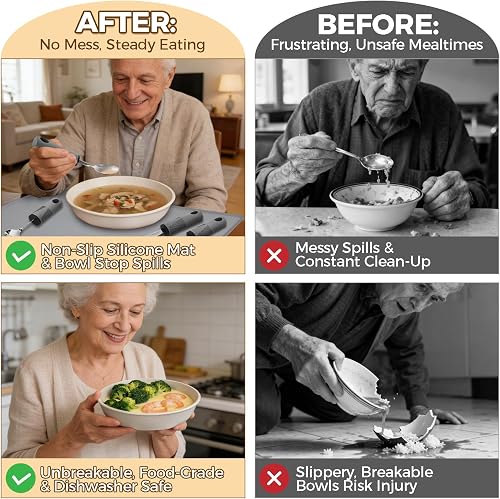
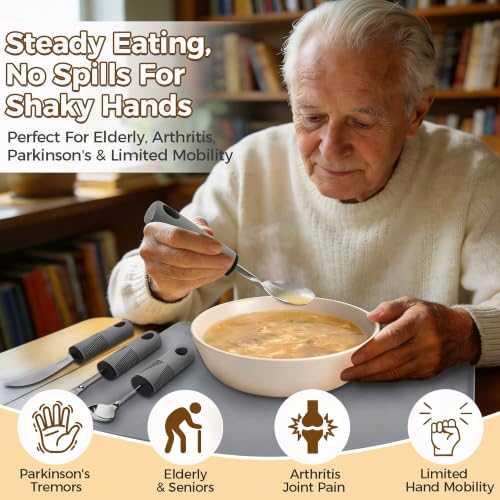
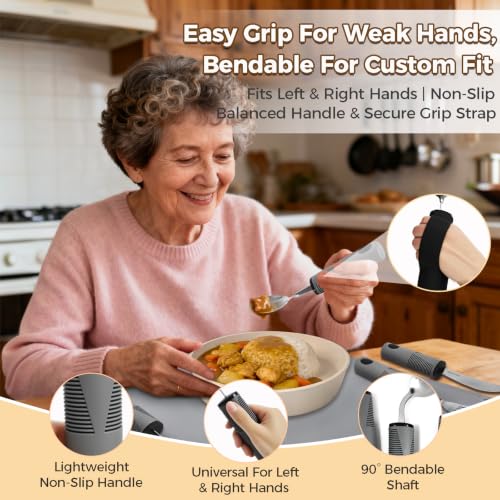
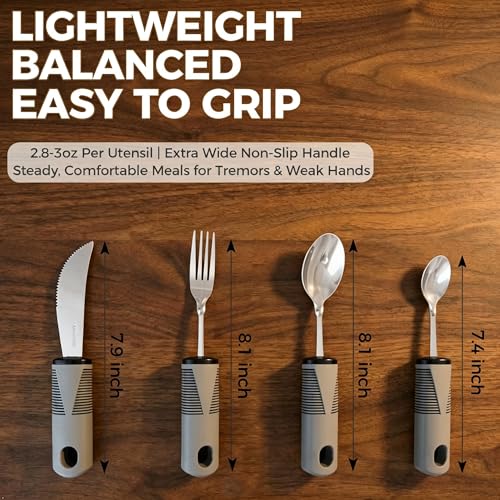
If you have tried adjusting angle, grip, and table height and mealtimes still feel tiring or messy, a coordinated set designed for limited grip and varied angles may help reduce frustration. Look for a lightweight built up handle with a non slip surface, a bendable shaft that holds its angle, and accessories like a non slip bowl and placemat that work together to keep food steady. One practical option that bundles those features is the 9 Pcs Bendable Adaptive Utensils Set, which includes bendable spoons and fork, fastening straps, and a silicone bowl and placemat to support stable, independent dining.
This guide contains affiliate links, and we may earn a commission if you buy through them, at no extra cost to you.

Prime RyroBlayze 9-Piece Bendable Adaptive Utensils Set




As an Amazon Associate we earn from qualifying purchases. Product prices and availability are accurate as of the date/time indicated.
When to Talk to a Professional Instead
Some situations call for professional guidance rather than another home adjustment. If the senior coughs frequently while eating, pockets food in the cheek, loses weight, or shows increasing fatigue, contact a physician or occupational therapist promptly. These signs may indicate a need for a swallowing or seating evaluation that a utensil alone cannot address.
A standard adaptive utensil set is not ideal for seniors with significant postural changes, severe hand contractures, or rapidly changing needs after a stroke or other health event. In those cases, a therapist can assess hand function, wheelchair positioning, and whether a custom grip, different weight, or alternative approach would be safer and more comfortable.
This type of set is also not the right choice if the person cannot safely bring food to the mouth without leaning far forward, if the wheelchair tray blocks a natural elbow position, or if caregiver assistance is needed for every bite for safety. A physical therapist or healthcare provider can review seating, trunk support, and mealtime positioning to help reduce strain and support safer eating posture.
If you notice skin pressure from armrests, pain in the shoulder or wrist, or the senior avoids meals due to frustration, pause and seek professional input before continuing to modify utensils at home. A short consultation may help you choose tools that match ability now and can be adapted as needs change.
Frequently Asked Questions
Why do adaptive utensils slip or twist for wheelchair users?
Wheelchair armrests and tray height change the wrist angle, so the utensil may approach the mouth at an awkward angle and rotate in the hand. A built up non slip handle and a bendable shaft that holds its angle may help keep the utensil aligned without extra squeezing.
Should we choose weighted or lightweight utensils for a senior in a wheelchair?
Lightweight utensils with a thick, non slip grip are often easier to manage when shoulder and arm movement is limited by the chair. Added weight can steady some tremors for some people, but it can also increase fatigue if the arm must be held up without a rest, so check with an occupational therapist about what fits the person’s strength and endurance.
What else besides utensils helps elderly wheelchair users eat more independently?
A non slip placemat, a stable bowl with a wide base, and a table height that lets forearms rest with relaxed shoulders often make the biggest difference. Preparing bite size foods and keeping the plate close to the midline may also help reduce reaching and spills during meals.
Browse more picks in our Kitchen Adaptive Tools category, or see our related guide on Kitchen Reacher Tools for Arthritic Hands in 2026.








Write Your Review
No reviews yet. Be the first to share your experience!