

Quick Answer
To make a car handle assist safer for a senior with arthritis, make sure the handle locks fully into the U-shaped door latch with no wobble, use a textured non-slip grip that fits the whole palm, and keep wrists neutral while pushing up rather than pulling hard with fingers.
If the handle twists, digs into joints, or forces a tight pinch grip, try a thicker foam cover, repositioning your hand, and adding a second support point like the car frame or a support strap before you consider a different product.
Why This Happens
A standard car handle assist can be uncomfortable for arthritis because most handles are narrow, hard, and require a strong squeeze. Cold metal or hard plastic concentrates pressure on knuckles and finger joints, which may make it harder to hold on securely.
Wobble is another common issue. If the metal tongue is not fully seated in the door striker, or the latch shape on your vehicle is slightly different, the handle can rock or rotate when weight is applied. That movement forces the hand and wrist to work harder to stay stable.
Position also matters. Reaching across the body, bending the wrist sharply, or pulling at an angle puts more strain on small joints than pushing straight up from a stable base. Always check with a healthcare provider, physician, or occupational therapist before making mobility changes for a senior in your care, especially if arthritis affects grip strength or balance.
Finally, wear and environment play a role. A smooth grip that is wet, dusty, or worn can slip, and a handle stored in a hot or cold car may be uncomfortable to hold. These small factors reduce confidence and control during transfers.
Practical Steps to Try
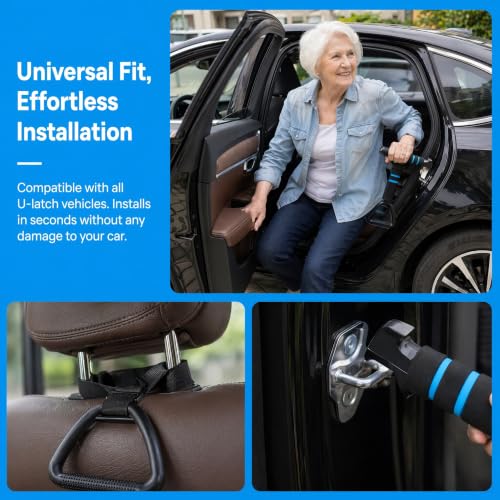
- Confirm a solid latch fit every time. Open the door fully, insert the handle’s steel tongue straight into the U-shaped striker until it seats with an audible click, then gently try to wiggle it. If it moves, remove and reinsert. Never use a handle that feels loose, and never hang your full body weight from it. Use it for balance and leverage while feet stay planted.
- Make the grip easier on arthritic hands. Look for a handle with a textured, non-slip sleeve that fills the palm without requiring a tight finger curl. You can also try thin, grippy gloves for added cushion and traction. Avoid wrapping the handle with thick tape that makes it too wide to close your hand comfortably, and keep the grip clean and dry.
- Adjust hand and body position to reduce joint strain. Place the whole palm over the top of the handle with fingers wrapped lightly, keep the wrist straight, and push down through the palm to stand rather than pulling with fingertips. Position feet shoulder width apart, scoot to the edge of the seat first, and use your other hand on the seat or dashboard for a second point of contact.
- Stabilize the transfer environment. Park on level ground, lock the doors that are not in use, and ensure the seat is not reclined far back. If the vehicle is high, a swivel cushion for the car may help reduce twisting, but check that it does not make the seat too slippery. Keep the handle within easy reach in the door pocket or glove box so you are not leaning to retrieve it.
- Check the handle and straps for wear regularly. Look for cracks in the housing, compression of the foam, or fraying on any support straps. Replace any part that looks worn or that no longer holds firmly. For ideas on what to look for in a stable design, you can review a car handle assist review for elderly to compare grip shapes and latch compatibility.
When a Product Can Help
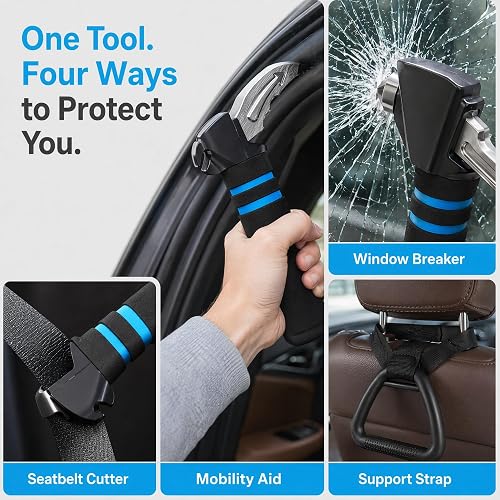
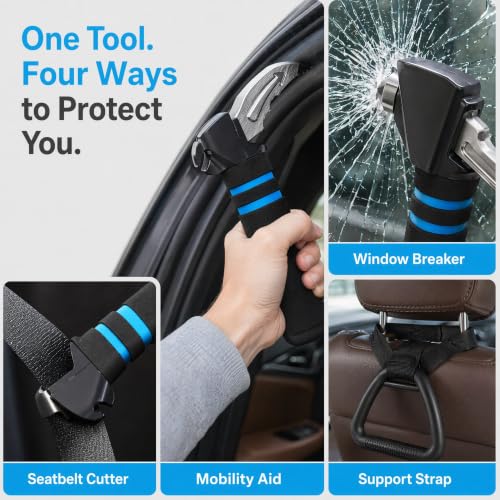
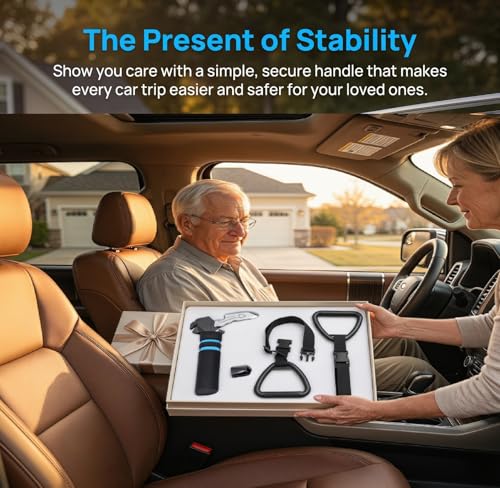
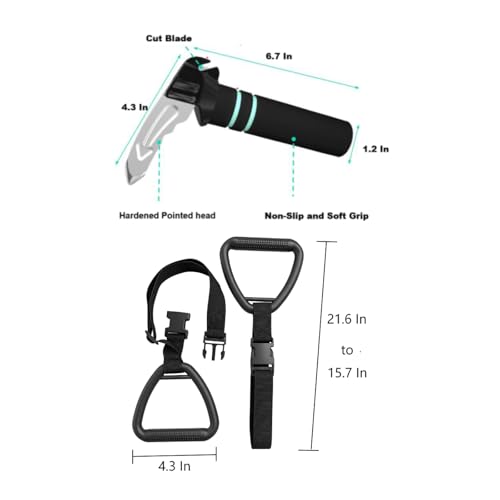
A product change is worth considering when the current handle is too narrow, too hard, or lacks a secure feel even after you have checked the fit and positioning. One common option is a kit that combines a rigid handle with adjustable support straps to give a second handhold at a more comfortable height.
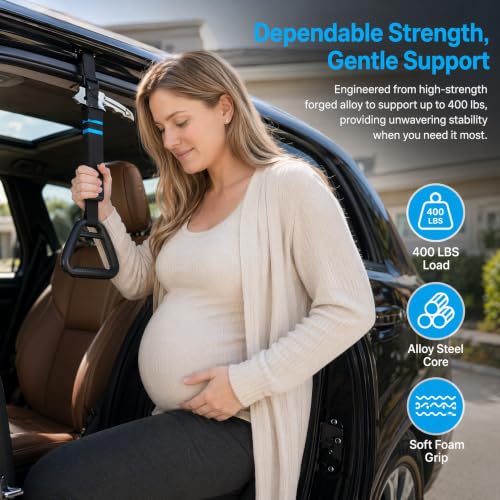
If that matches your situation, a kit with a textured non-slip grip designed to be comfortable for weak or arthritic hands and a reinforced steel core rated to support up to 400 lb when used as directed may help reduce strain on knees and hips while providing steadier leverage. It is designed to fit most U-shaped door latches and stores compactly for everyday use.
This guide contains affiliate links, and we may earn a commission if you buy through them, at no extra cost to you.

Prime SLIMSTAR Car Door Handle Assist Kit for Seniors




As an Amazon Associate we earn from qualifying purchases. Product prices and availability are accurate as of the date/time indicated.
Use any handle only as a balance aid, not as a full weight-bearing bar, and always follow the included instructions for proper insertion and foot placement.
When to Talk to a Professional Instead
This type of handle assist is not ideal for seniors with severe hand deformity, recent hand or wrist surgery, or significant shoulder instability where even a light push causes pain or where grip cannot be maintained safely. It is also not a good fit if the senior needs to be lifted, has frequent near falls, or the vehicle door or latch is damaged.
In those cases, skip this home fix and talk with a physician, physical therapist, or occupational therapist instead. They can evaluate transfer technique, recommend adaptive equipment matched to the person’s abilities, and suggest vehicle modifications or alternative transportation options that may help reduce the risk of strain or falls.
If you notice increasing joint swelling, numbness, or loss of strength, pause use and seek professional guidance before trying another handle style.
Frequently Asked Questions
Why does a car handle assist hurt arthritic hands more than expected?
Narrow or hard grips concentrate pressure on finger joints and require a strong pinch. A thicker, textured grip that lets the palm share the load and a straight wrist position may feel more comfortable and secure.
Can I add padding to make the handle softer?
You can try a thin foam sleeve or grippy gloves designed for arthritic hands, but avoid bulky wraps that make the handle too wide to hold or that cover the latch tongue. Any added material should not interfere with full insertion into the striker.
What if the handle still feels wobbly even when it clicks in?
Remove it and check for debris in the latch, then reinsert it straight and fully. If wobble continues, that vehicle latch may not be compatible, or the handle may be worn. Do not use it for support and consider consulting the vehicle manual or a professional about compatible aids.
Browse more picks in our Car & Travel Aids category, or see our related guide on Car Mattresses for Seniors with Low Vision in 2026.










Write Your Review
No reviews yet. Be the first to share your experience!