

Quick Answer
If your overbed table keeps coming loose for a senior aging in place, the most common cause is a loose height lock, loose base hardware, or unlocked wheels combined with weight on the edge of the top. Try tightening all knobs and bolts, locking the casters, centering items on the table, and resetting the height adjustment before you consider a replacement.
Why This Happens
Most overbed tables use an H-shaped base, a vertical column, and a height adjustment handle. Any play in those connection points can make the whole top feel wobbly, even if the tabletop itself is fine.
Height mechanisms often loosen with daily up and down movement. If the handle or clamp is not fully engaged, the column can slip a little each time weight is added, which feels like the table is coming loose.
Wheels and floor surface also matter. When casters are not locked, or the base is not fully under the bed, the table can drift and rock. Uneven rugs, thick carpet, or a bed frame lip that blocks the base can add to the wobble. For more on correct positioning, see How High Should Overbed Table Be for Elderly? 2026 Height Guide.
Overloading one side of the top is another common reason. Leaning heavily on the edge, placing a heavy bag on one corner, or using the table to push up from bed puts sideways force on the column and base that these tables are not designed to support.
Practical Steps to Try
Work through these steps in order, starting with the simplest. Stop and reassess if anything feels unstable or if hardware will not stay tight.
- Tighten every connection point. Check the screws and bolts where the base meets the column and where the column meets the tabletop. Use the included tools to snug them firmly, then check the height lock handle or lever to make sure it clicks or clamps fully. Do not force stripped hardware, replace it instead.
- Lock the wheels and reposition the base. Roll the base fully under the bed or chair so the H-frame is centered, then engage all locking casters. Try the table on a hard, flat floor first to see if thick carpet or a rug was adding movement.
- Reset the height and balance the load. Lower the table to the lowest useful height, which may help reduce wobble, and keep heavier items centered on the top rather than on the edge. Avoid sitting on, leaning on, or using the table to pull yourself up. You can find more background on table options in essential medical supply overbed table review for elderly.
- Check for wear, cracks, or bent parts. Look under the top and along the column for cracks in the laminate, bent metal, or missing washers. If the column tilts even when hardware is tight, the frame may be worn and a home fix may not hold.
- Reduce daily strain on the table. Try keeping the table in one place for meals and reading instead of rolling it constantly, and clear it before adjusting height. A consistent spot with locked wheels may help reduce loosening over time.
If these steps help for a day but the table loosens again quickly, the mechanism may be worn or mismatched to the bed and floor setup. That is often a sign to consider a different design rather than repeated tightening.
When a Product Can Help
A replacement can be a practical next step when tightening and repositioning do not hold, or when the current table is the wrong size for the bed, recliner, or wheelchair. A newer overbed table with a more secure height system and a stable base may help reduce wobble and keep daily items within easy reach.
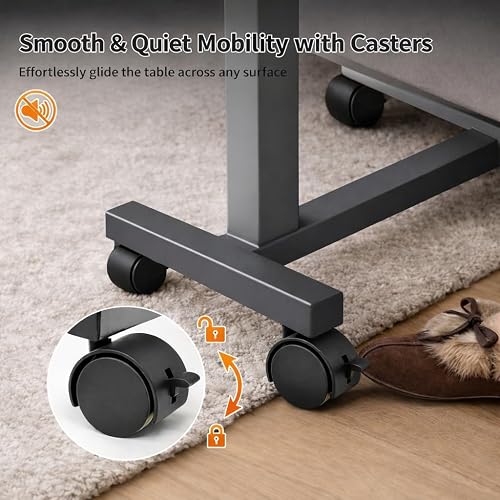
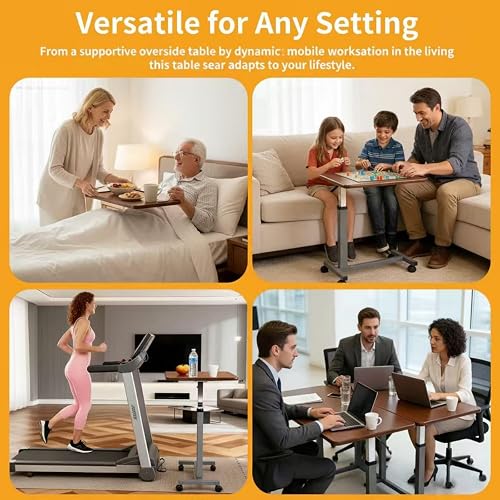
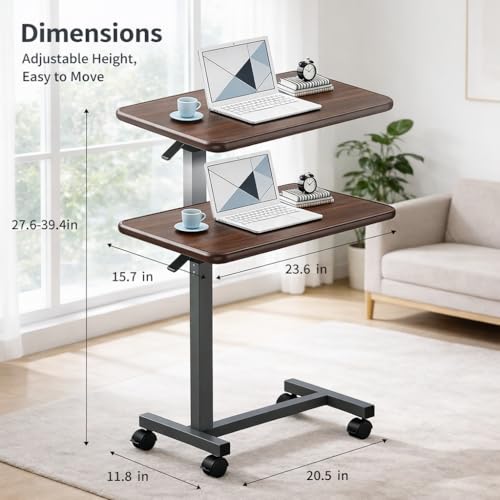
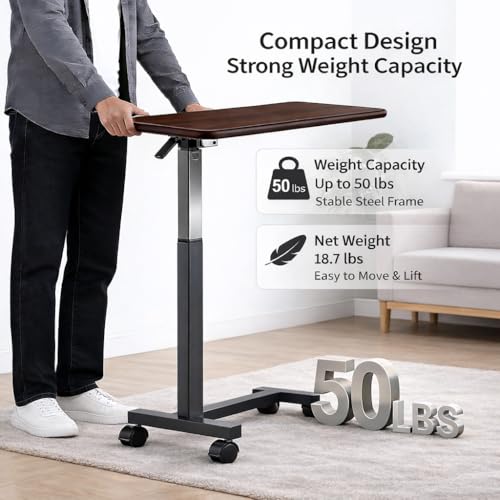
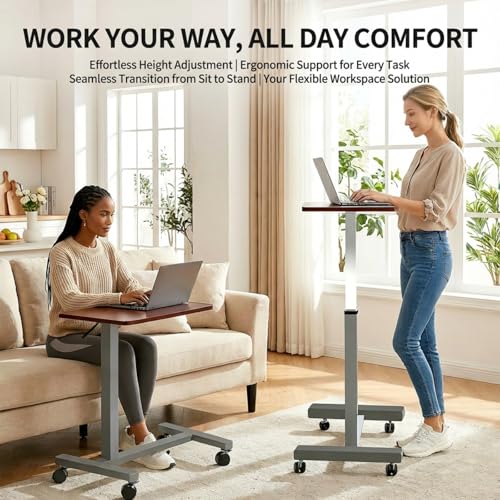
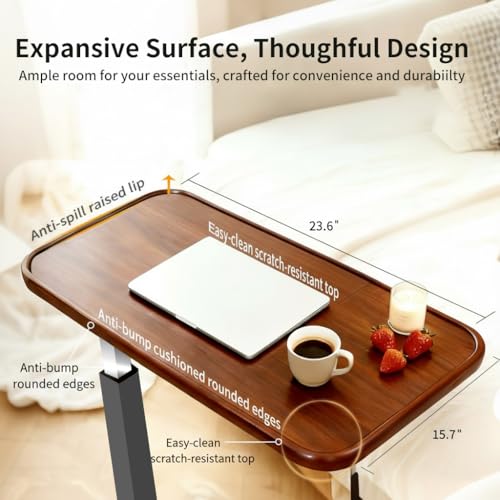
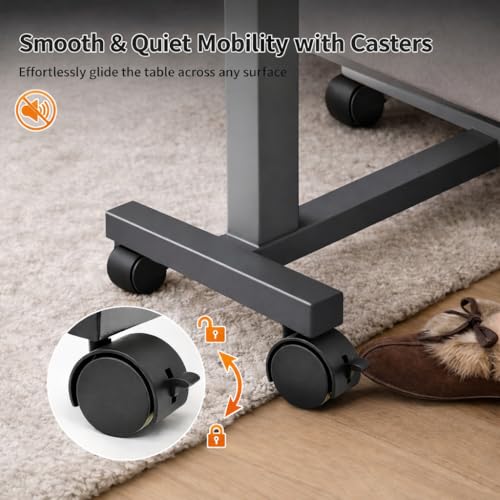
One common option is a table with a one-touch pneumatic height adjustment and a reinforced H-shaped steel frame. For example, the Dressing & Grooming Aids category includes options like this that list features such as a 27.6 inch to 39.4 inch height range, four 360 degree swivel casters with locks, a spill-resistant top with raised lip and rounded edges, and a rated load capacity of 50 lbs according to its specifications. That combination may help with smooth, one-handed adjustment and more stable placement over a bed or chair.
This guide contains affiliate links, and we may earn a commission if you buy through them, at no extra cost to you.

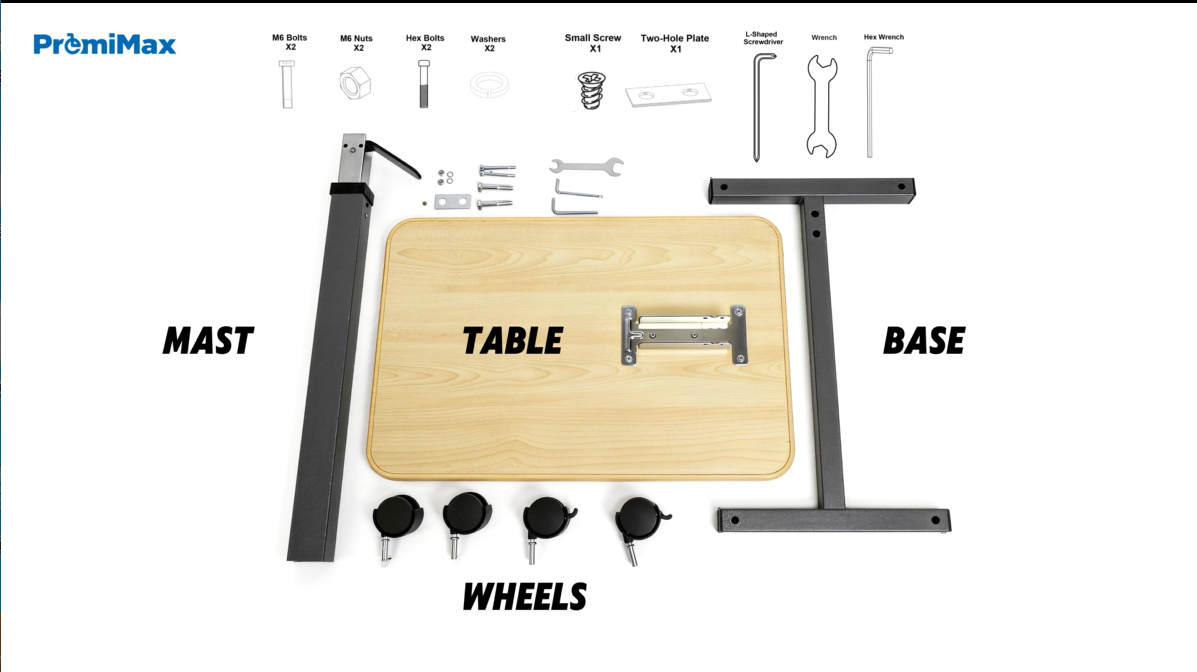
Prime Premimax Pneumatic Overbed Table with Wheels




As an Amazon Associate we earn from qualifying purchases. Product prices and availability are accurate as of the date/time indicated.
If you try a new table, check that the base fits under your specific bed frame and that the top height works for the senior while seated or lying down. Keep the assembly instructions and tools handy so you can recheck hardware after the first week of use.
When to Talk to a Professional Instead
A home fix is not ideal for every situation. This type of overbed table is not ideal for seniors who need to lean heavily on furniture to stand, who have had recent surgery, or who feel unsteady when reaching across the table.
If the table is being used for balance support, if it tips even with light use, or if the senior has fallen or nearly fallen while using it, pause and talk with a physician, physical therapist, or occupational therapist. They can suggest safer support options and check whether the bed height, chair setup, or room layout needs a professional review.
You should also seek professional guidance if hardware is stripped, the column is bent, or the table cannot be made stable without forcing parts. A clinician or durable medical equipment specialist may help identify a more suitable surface or assistive device for that home layout.
Frequently Asked Questions
Why does my overbed table wobble when I lean on it?
Most overbed tables are designed to hold meals, books, and laptops, not body weight. Leaning on the edge creates sideways force on the column. Try keeping weight centered, lowering the height, and locking the wheels, and avoid using the table for support when standing.
Can I fix a loose height adjustment that keeps slipping?
Try fully releasing the handle, raising and lowering the top through its full range, then re-clamping at the desired height. Check that knobs and bolts at the column are snug and that nothing is bent. If it still slips under a normal load, the gas spring or clamp may be worn and replacement is often more reliable than repeated fixes.
Should I replace the table if it keeps coming loose after tightening?
If you have tightened hardware, locked casters, centered the base under the bed, and the table still loosens within days, it may be mismatched to the space or worn out. In that case, trying a different frame design with a reinforced base and a secure locking system may help reduce ongoing wobble.
Browse more picks in our Dressing & Grooming Aids category, or see our related guide on Button Hooks We Recommend for Stroke Recovery in 2026.








Write Your Review
No reviews yet. Be the first to share your experience!