

Quick Answer
If your gait belt keeps coming loose, it is usually a fit or threading issue, not a broken belt. Try rethreading the buckle completely, tightening it so it is snug over clothing at the waist, and checking that it is flat with no twists, then reassess how it feels during the transfer.
Why This Happens
A loose gait belt often comes down to a few common causes. The buckle may not be fully threaded, the belt may be sitting too high or too low on the waist, or clothing fabric is letting it slide. Always check with a healthcare provider or physical therapist before making mobility changes for a senior in your care.
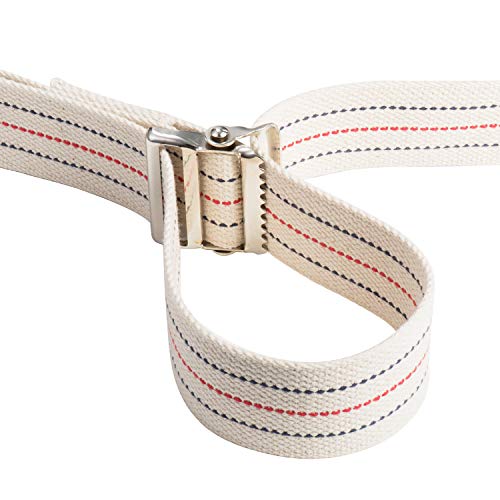
Many belts use a metal buckle that needs to be looped back through correctly to lock. If the tail is simply pulled through without that second pass, the belt may seem tight at first but then creep loose when you pull on it. A quick rethread often helps it stay put.
Fit and placement also matter. A belt worn over a bulky sweater, a silky blouse, or low on the hips can shift more easily than one placed snugly around the natural waist over a stable layer. For general context on transfer equipment, you can review NOVA gait belt review for elderly to see how different designs address this.
Finally, wear and sizing can play a role. Cotton webbing can soften with washing, and a belt that is too long leaves excess tail that gets tugged unintentionally. If the belt is consistently at the very end of its adjustment range, it may not be the right length for that person.
Practical Steps to Try
- Rethread the buckle from scratch. Remove the belt, lay it flat, and thread it through the buckle exactly as the instructions show, making sure the tail doubles back and locks. Pull firmly on both sides to confirm it holds before you use it for support.
- Check placement and snugness. Place the belt around the natural waist, not the hips or ribs, over a close-fitting layer if possible. You should be able to slide a flat hand, but not a fist, between the belt and the body, and the belt should feel snug without restricting breathing.
- Flatten and center the belt. Smooth out any twists, make sure the width is fully flat against clothing, and center the buckle at the front. Tuck excess tail through the elastic loop if your belt has one so it does not catch on hands or furniture during a move.
- Use a consistent grip and stance. Grip the belt from underneath with palms up, keep your body close, and move slowly. If you need to adjust height for stairs or different surfaces, see How High Should Stair Lift Be for Elderly? 2026 Height Guide for ideas on matching equipment to the home layout.
- Inspect for wear and correct size. Look for frayed edges, stretched webbing, or a buckle that no longer locks crisply. If the belt is too short or too long for the person’s waist, try a different length that allows a secure, centered fit without excess tail. For broader mobility planning, Stair Lifts & Transfers offers related guidance.
When a Product Can Help
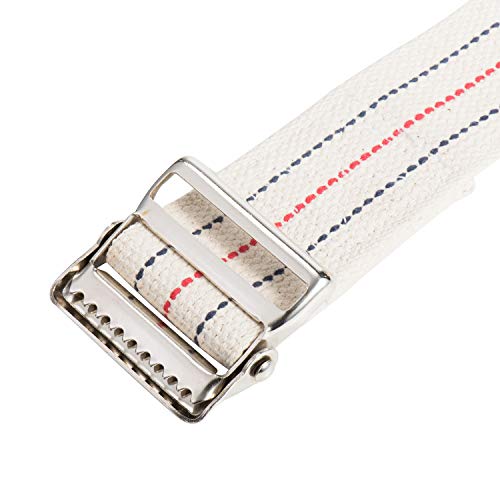
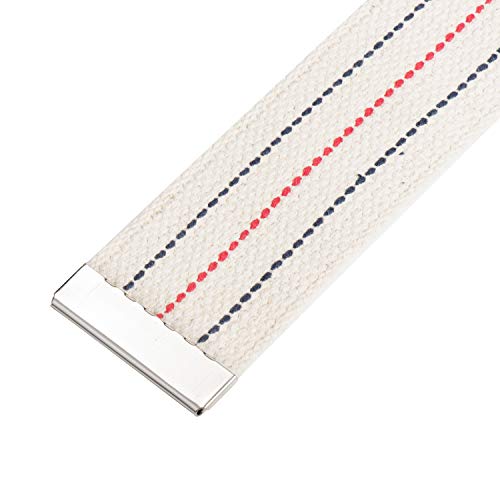
If rethreading and repositioning do not keep the belt stable, a different belt design may be a more practical option than continuing to adjust the same one. A belt with a secure metal buckle, durable cotton webbing, and a clear locking path can be easier to fasten consistently, especially for family caregivers who use it daily.
This guide contains affiliate links, and we may earn a commission if you buy through them, at no extra cost to you.

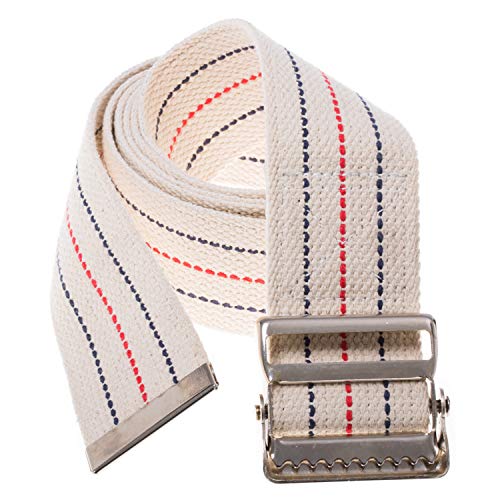
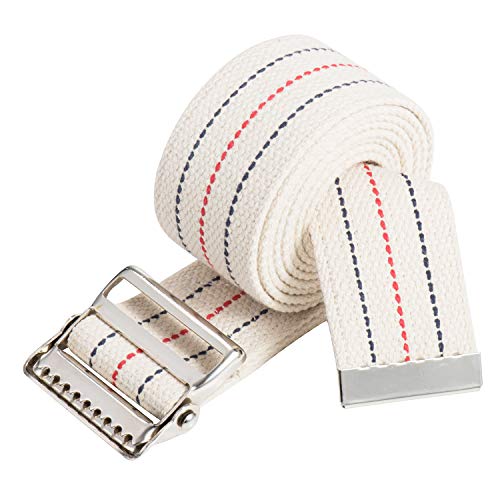
Prime COW&COW Gait Belt with Metal Buckle 60 Inch


As an Amazon Associate we earn from qualifying purchases. Product prices and availability are accurate as of the date/time indicated.
One common option is the COW&COW Transfer and Gait Belt with Metal Buckle, which features a nickel-chrome plated steel buckle designed to provide a secure closure and quickly release, 2-inch wide cotton webbing, adjustable length up to 60 inches, and webbing rated to hold up to 350 lbs. It is machine washable and can hang to drip dry, which may help maintain its shape with regular use.
When to Talk to a Professional Instead
A gait belt is a caregiver assist aid, not a lifting device, and it is not ideal for situations where a senior needs to be fully lifted, has severe pain with standing, or cannot bear weight even with help. In those cases, trying to tighten the belt more will not make the transfer safer.
This approach is also not the right choice if the belt leaves marks, causes discomfort over a surgical site, or if the person has conditions that affect skin integrity or trunk stability. A physician, physical therapist, or occupational therapist can suggest safer transfer methods and whether a different aid is needed.
If falls are becoming more frequent, or you notice new unsteadiness, confusion, or weakness, pause and seek professional guidance rather than troubleshooting the belt alone. A healthcare provider can review medications, strength, and home setup and may recommend an evaluation for more supportive equipment. You can also explore Mobility Aids for general next steps to discuss with your care team.
Frequently Asked Questions
Why does my gait belt loosen when I pull on it?
It is often not fully locked at the buckle. Try removing it and rethreading so the tail loops back through the buckle to create friction. Then pull to confirm it holds before each use.
How tight should a gait belt be for an older adult?
It should be snug at the natural waist over clothing, flat with no twists, and allow a flat hand to slide underneath but not a loose fist. If the person reports discomfort, breathing difficulty, or skin irritation, loosen it and consult a healthcare provider about fit and alternatives.
Should I use a gait belt over a thick sweater or dress?
Thick or slippery fabrics can let the belt slide. Try placing it over a more fitted, non-slippery layer and keep it centered at the waist. If clothing still causes slipping, consider changing the layer or trying a belt length that fits more securely.
Browse more picks in our Stair Lifts & Transfers category, or see our related guide on Stair Lift Height Guide for Elderly in 2026.








Write Your Review
No reviews yet. Be the first to share your experience!