

Quick Answer
If your toilet frame feels unstable, too low, or hard on arthritic hands and wrists, the most common cause is a poor fit for the person and the toilet, not a lack of effort. Try confirming the frame is level and steady, adjusting its height and width so your loved one can push up without deep bending, and looking at grip comfort before you buy anything new.
Why This Happens
A freestanding frame that slides, rocks, or sits at the wrong height can force extra strain on hands, wrists, and shoulders. Always check with a healthcare provider or occupational therapist before making mobility changes for a senior in your care.
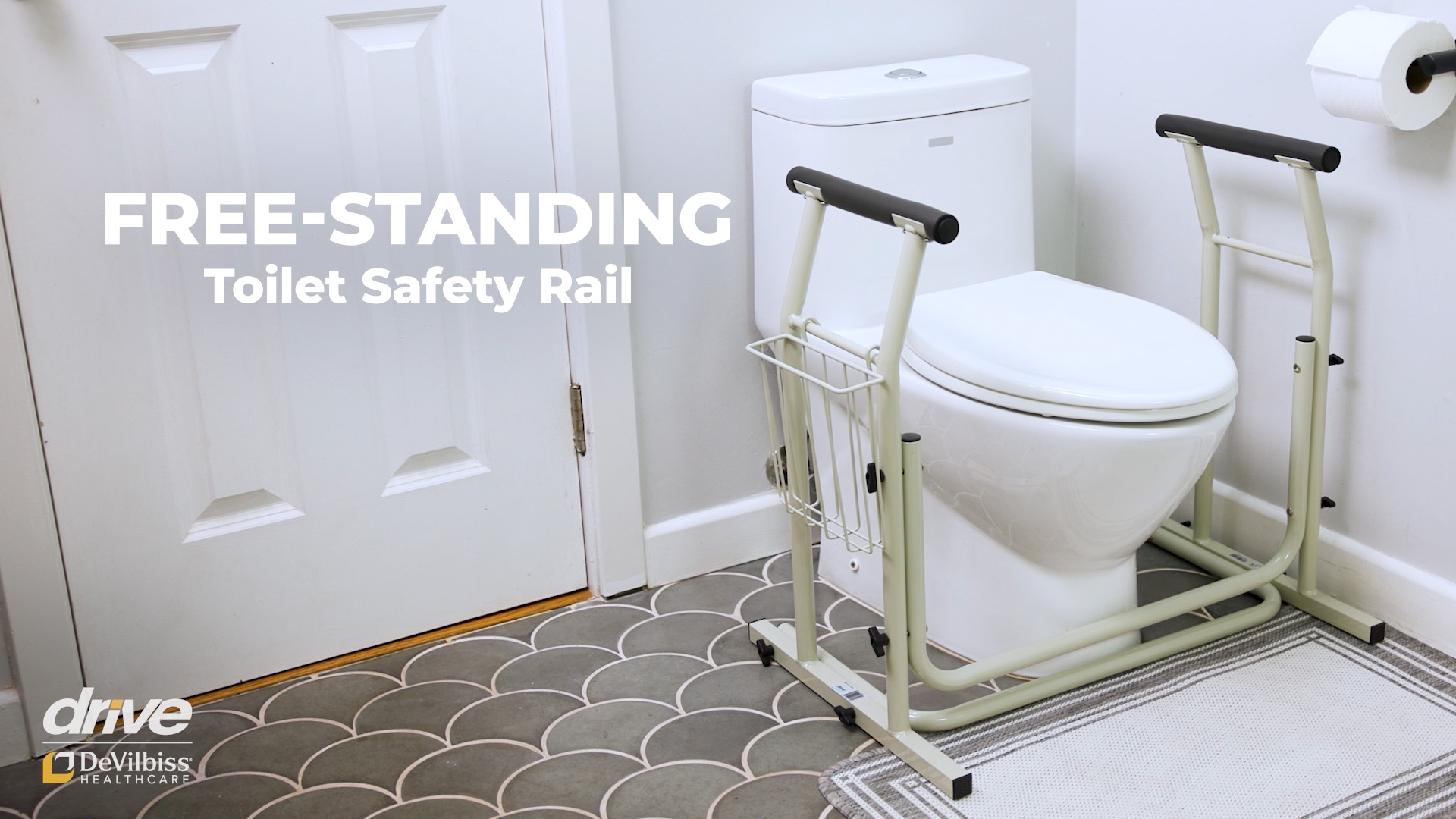
Many frames are freestanding, so they rely on even floor contact and correct width around the toilet. If the legs are uneven, the rubber feet are worn, or the frame is too narrow or wide for your toilet, it may wobble when weight shifts to one side.
Height matters a lot for arthritis. A frame set too low requires a deeper squat and more push force, while one set too high can leave feet unsupported and make balance feel off. Both can make joints feel more stressed during the sit to stand motion.
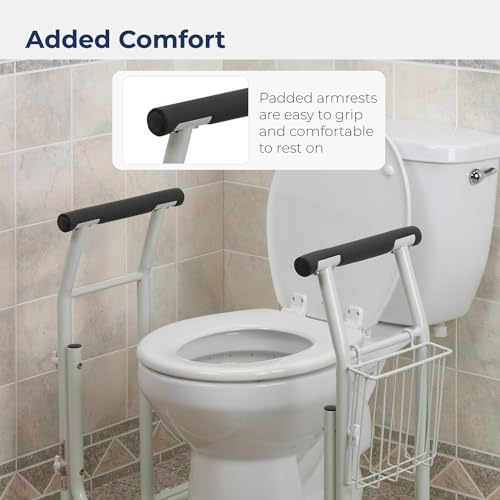
Grip design also plays a role. Thin, hard, or cold handles can be uncomfortable to squeeze and may be harder to hold with limited hand strength or stiffness. Padded armrests and non slip grips may help reduce the need for a tight grasp, which is why many caregivers look at options in Toilet Safety & Commodes that are described with comfort features.
Practical Steps to Try
- Check stability first. With the frame empty, try gently rocking it side to side and front to back. Make sure all four feet touch the floor evenly, the rubber tips are intact, and no leg is bent. If your bathroom has a textured tile or bath mat under the legs, try moving the frame to a flat, dry area and see if it feels steadier.
- Adjust height and width for a natural push. Have your loved one sit and place hands on the armrests. Elbows should be slightly bent, not locked or deeply flexed. If the frame allows width adjustment, try setting it so arms can push straight down without shoulders shrugging up or elbows flaring wide. Small changes can make standing feel less effortful.
- Look at grip comfort without altering safety. Check if the existing armrests have soft padding and a non slip surface. If grips are thin or hard, consider whether a model with padded armrests would be easier to hold. Avoid wrapping handles with towels or tape that could slip, come loose, or reduce grip security.
- Confirm fit around your toilet. Some frames are designed to fit around both standard and elongated bowls, while others need specific bolt spacing or base depth. Measure the space around the toilet and check the product description for compatibility. A frame that crowds the bowl or sits too far forward can feel unsteady and force awkward reaching.
- Consider whether extra height would help. For some seniors with arthritis, lowering and raising from a low toilet is the hardest part. One common option is to discuss a raised toilet seat with a clinician, or to explore whether a wall mounted grab bar in addition to a frame may help reduce risk when used correctly. You can learn more about complementary options in Grab Bars & Rails and review related ideas like best raised toilet seat for low vision seniors reviewed for general guidance on seat height and support.
When a Product Can Help
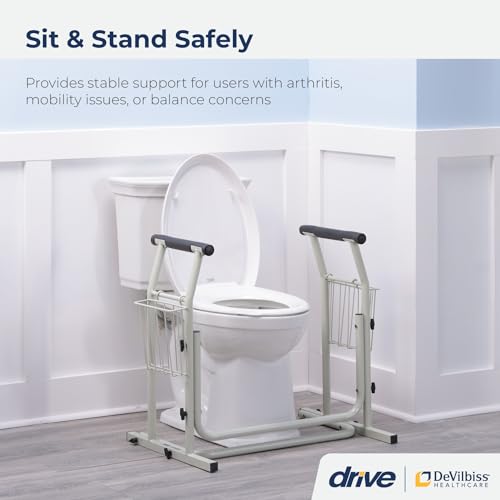
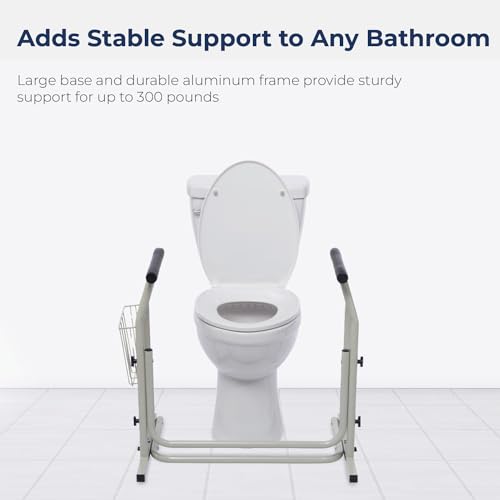
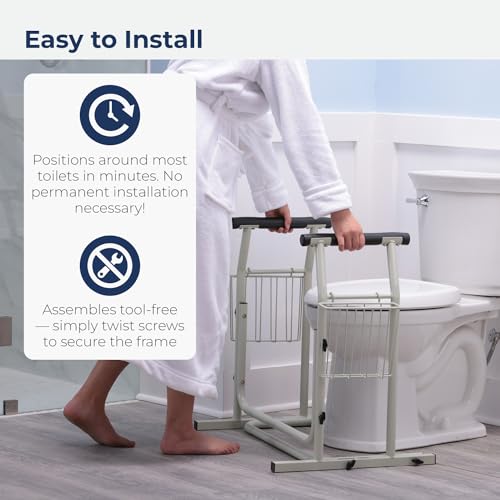
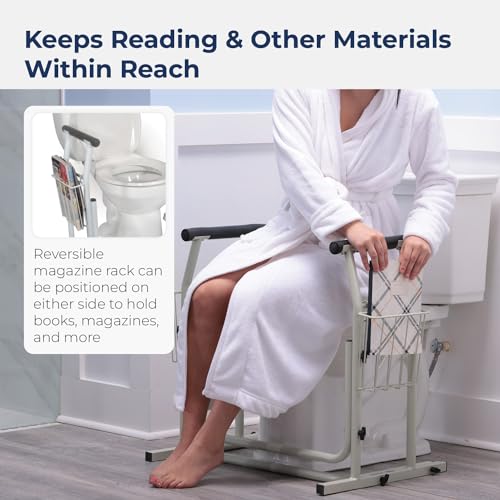
If adjustments do not make the current frame feel steady and comfortable to use, a different design may be a reasonable next step. One practical option to discuss with your family is a simple freestanding frame with padded armrests that is described as fitting around standard and elongated toilets and that may help reduce the risk of slips when used as directed. For caregivers looking for that style, this is one example to review with a clinician:
This guide contains affiliate links, and we may earn a commission if you buy through them, at no extra cost to you.

Prime Drive Medical Freestanding Toilet Safety Frame


As an Amazon Associate we earn from qualifying purchases. Product prices and availability are accurate as of the date/time indicated.
When to Talk to a Professional Instead
A freestanding toilet frame is not ideal for every senior or every bathroom, and it is not the right choice if your loved one has frequent loss of balance, significant leg weakness, recent surgery, or pain that makes weight bearing difficult. In those cases, a home fix may not be enough.
Talk with a physician, physical therapist, or occupational therapist if you notice increased unsteadiness, joint swelling that does not ease with rest, or a need to pull heavily on the frame to stand. They can assess the bathroom layout, recommend a safer configuration, and suggest whether a different type of support, such as a properly installed wall bar or a bedside commode for temporary recovery, would be more appropriate.
Frequently Asked Questions
Why does our toilet frame hurt arthritic hands?
Hard, narrow, or unpadded handles can require a tighter grip and put more pressure on finger joints. Try checking if the armrests are padded and non slip, and whether the height allows pushing with the palms rather than gripping tightly.
Can we make a freestanding frame feel more stable?
Try confirming all feet make full floor contact, the frame is centered around the toilet, and the width is adjusted so it does not rub the bowl. If it still rocks or slides, it may not be compatible with your toilet shape or flooring, and a clinician can help you choose a better fit.
Should we choose a toilet frame or a raised seat for arthritis?
Both aim to support independence in different ways, and the better choice depends on whether height or arm support is the bigger challenge. A frame offers armrests for pushing up, while a raised seat reduces how far to lower and lift. Ask a healthcare provider or occupational therapist which combination may help reduce strain for your situation.
Browse more picks in our Toilet Safety & Commodes category, or see our related guide on Toilet Safety Rails vs Cameras for Seniors in 2026.





Write Your Review
No reviews yet. Be the first to share your experience!