

Quick Answer: What to Check First When a Toilet Frame Is Not Working Well
If a toilet frame feels wobbly, too low, too narrow, or just not supportive enough, the most common cause is a mismatch in fit, height, or floor contact, not a flaw in the idea of using a frame itself. Try checking that all legs touch the floor evenly, adjusting the height so the senior can push up without leaning far forward, and confirming the width fits your toilet without pinching or shifting.
If those quick adjustments do not improve steadiness, you may need a different style of support, such as a frame with a different mounting method or a raised seat with arms, rather than forcing the current frame to work.
Why Toilet Frames Often Feel Unstable or Unhelpful
Toilet frames are simple supports, but bathrooms vary a lot in toilet shape, floor surface, and available space. Always check with a healthcare provider, physician, occupational therapist, or physical therapist before making mobility changes for a senior in your care, especially if balance or strength has changed recently.
One common reason a frame does not help is uneven contact with the floor. If one leg is slightly off the ground, or suction cups or rubber feet are not sitting flat, the whole frame can rock when weight is applied. This often happens on textured tile, grout lines, or a slightly sloped floor.
Another reason is height and width set incorrectly for the person and the toilet. A frame set too low requires more effort to stand, while one set too high can leave feet dangling or arms strained. If the width is too narrow for an elongated bowl or too wide for a compact bathroom, the frame may shift or feel cramped.
Finally, the frame style itself may not be the right match for the need. Stand-alone frames that surround the toilet work well for many people, but they rely on floor friction and user symmetry. If a senior tends to lean heavily to one side, needs more continuous support, or has a toilet with an unusual base or seat connection, a different approach may be more appropriate. For ideas on how other toilet supports compare, you can review this overview of raised toilet seats for seniors and related options.
Practical Steps to Try
- Check stability on the floor first. With the frame in place, press down firmly on each armrest and watch for rocking. Make sure all four feet or legs are flat, rubber pads are clean and not worn, and any suction cups are pressed firmly to a smooth, dry surface. Reposition the frame so feet are not sitting on grout lines or a floor mat.
- Adjust height and width to the person, not just the toilet. Try raising or lowering the legs in small increments so elbows are slightly bent when hands are on the grips and the senior can push up without hunching forward. Adjust width so the frame clears the toilet bowl with a little room on each side but does not wobble side to side. Tighten all locking buttons or clamps after each change.
- Confirm compatibility with your toilet. Some frames attach to the toilet bolts and need a standard two-hole seat with enough base depth, while stand-alone frames need clearance around the base. Measure bolt spacing and the space beside the toilet, and check the product description for fit notes. If the frame was designed for a different toilet shape, it may never feel secure.
- Look at the surrounding setup. Remove loose rugs, ensure adequate lighting, and keep frequently used items within easy reach so the senior does not twist while holding the frame. If the toilet itself is very low, one common option is to consider a raised seat with integrated arms in addition to or instead of a floor-standing frame. You can learn more about general bathroom support choices in the Bathroom Safety section.
- Observe how the frame is actually used. Watch, with permission, whether the senior pulls unevenly on one side, leans far forward, or needs to reposition feet before standing. Small changes like placing feet flat and hip-width apart, keeping the frame centered, or adding a non-slip mat under the feet area may help the current setup feel more supportive. If unsteadiness continues, pause and seek professional guidance rather than continuing to adjust on your own.
When a Product Can Help
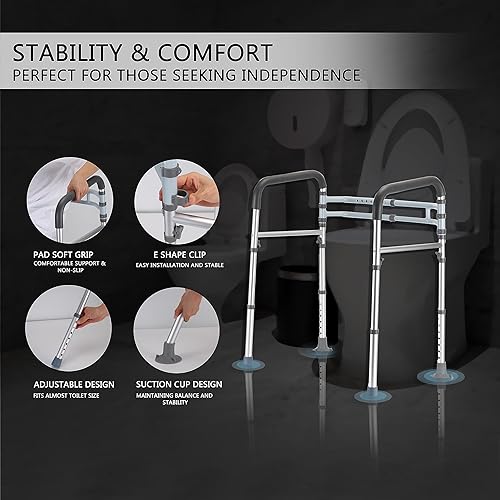
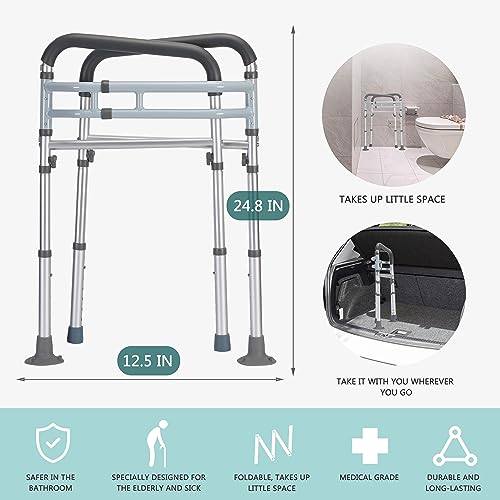
A different product may help when the current frame cannot be adjusted to fit the toilet, the floor, and the person at the same time, or when you need a more stable, easy-to-adjust option. In that case, one common option is a stand-alone aluminum frame with adjustable height and width, padded non-slip grips, and foldable legs for storage and cleaning.
This guide contains affiliate links, and we may earn a commission if you buy through them, at no extra cost to you.

Prime Lianjindun Toilet Safety Rails 350 lbs






As an Amazon Associate we earn from qualifying purchases. Product prices and availability are accurate as of the date/time indicated.
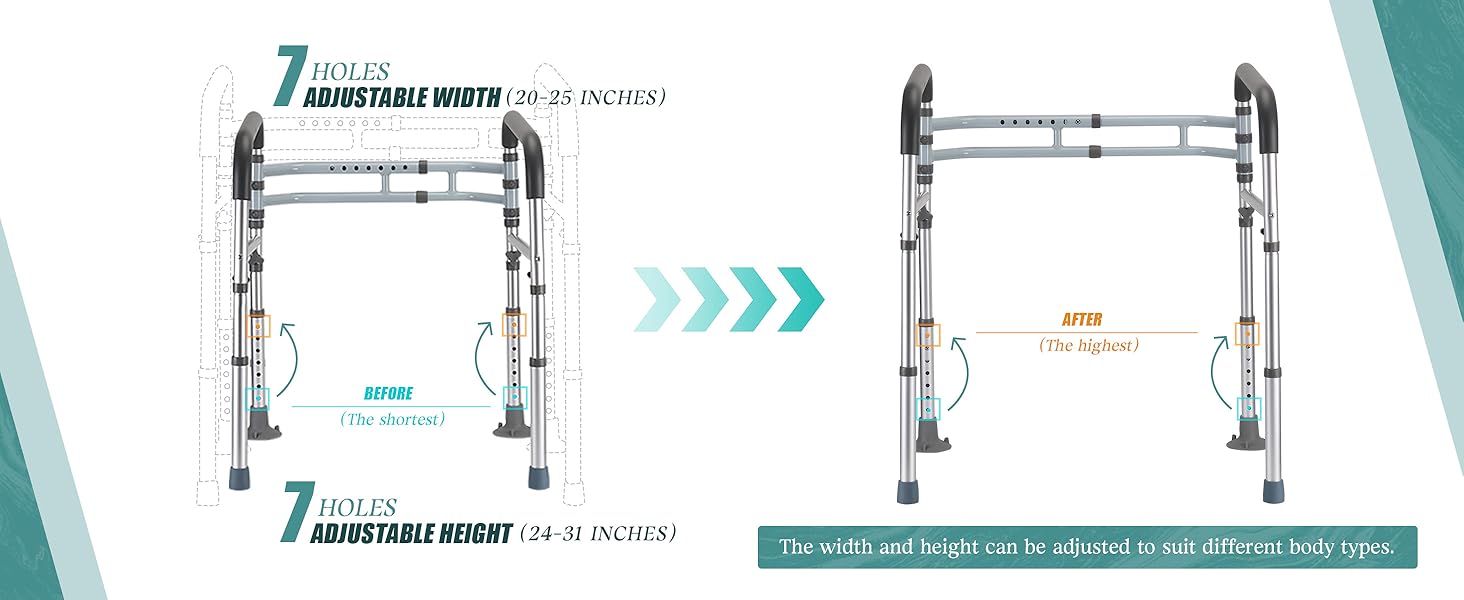
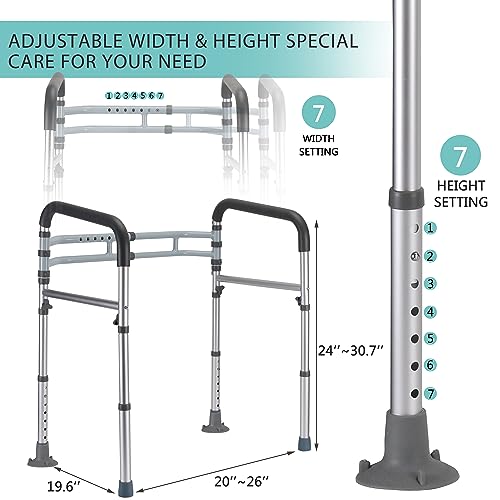
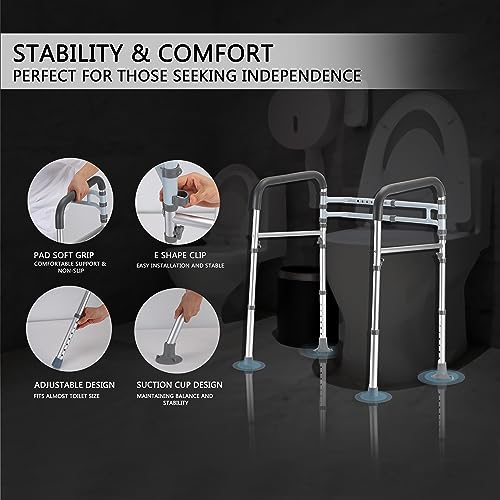
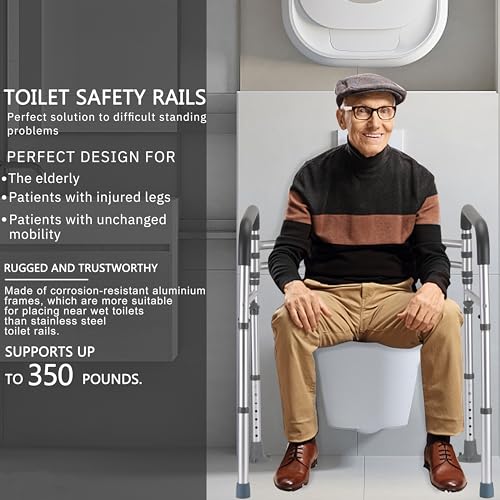
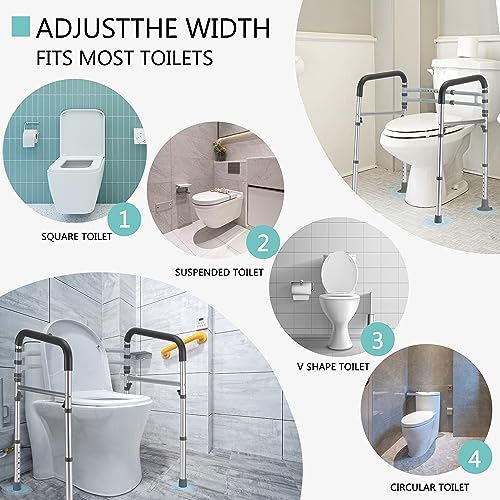
For example, the Toilet Safety & Commodes category includes the Lianjindun Toilet Safety Rails, 350 lbs, which is described as having a corrosion-resistant aluminum frame rated to hold up to 350 pounds, height adjustment from 24 to 31 inches and width adjustment from 20 to 25 inches to fit most toilets, soft foam grips, and rubber feet with extra suction cups. Its tool-free assembly and foldable design are noted as helpful for caregivers who need to clean around the toilet or store the frame when not in use, and it may help reduce the risk of slips when getting on and off the toilet when used as directed.
When to Talk to a Professional Instead
Home adjustments are not always enough, and a frame is not ideal for every situation. This type of stand-alone frame is not ideal for seniors who have had a recent fall from the toilet, who lean heavily to one side, who cannot bear weight through their arms, or who have a toilet area too tight to place the frame legs safely without blocking the doorway or walker access.
It is also not the right choice if the senior has new or worsening dizziness, significant leg weakness, or confusion that makes it hard to use the frame consistently. In those cases, a wall-mounted grab bar, a different commode setup, or a broader home safety evaluation may be more appropriate than another frame.
Consider contacting a physician, physical therapist, or occupational therapist for a brief home safety check. They can assess balance, transfer technique, and bathroom layout, and suggest supports that match the senior’s current abilities. If you are weighing other monitoring or support tools alongside toilet safety, this comparison of camera monitoring versus toilet safety rails may help frame that conversation with a professional.
Frequently Asked Questions
Why does our toilet frame wobble even after tightening everything?
Most wobble comes from floor contact or width setting, not loose screws. Try repositioning the legs so all feet sit flat on smooth flooring, clean the rubber pads, and readjust width so the frame does not press against the bowl.
Should we add a raised toilet seat if the frame alone is not enough?
One common option is to combine a modest height increase with arm support, which can reduce how far a senior must lower and lift. Check toilet compatibility, ensure the seat locks securely, and ask a healthcare provider if a higher seat is suitable for the person’s hip or knee needs.
What if the senior still feels unsteady even with a properly fitted frame?
Pause use and seek professional input rather than continuing to try new products on your own. An occupational therapist or physical therapist can evaluate transfers, suggest a different support style, and review overall bathroom safety.
Browse more picks in our Toilet Safety & Commodes category, or see our related guide on Toilet Safety Rails vs Cameras for Seniors in 2026.








Write Your Review
No reviews yet. Be the first to share your experience!