

Quick Answer: How to Make a Threshold Ramp Safer With Hearing Loss
To make a threshold ramp safer for a senior with hearing loss, replace sound cues with visual and tactile cues. Secure the ramp so it sits flush and does not shift, add high-contrast markings and reflective strips, improve lighting at the entrance, and use a textured non-slip surface with edge guides.
Why This Happens
Most threshold ramps rely on subtle sounds to signal a problem, like a scrape, a wobble, or a caregiver calling out a warning. When hearing is limited, those cues are easy to miss, so the senior depends more on what they can see and feel underfoot. If the ramp blends into the floor color or sits in dim light, it is harder to judge the edge and slope.
Stability issues also make a ramp feel unsafe. A ramp that is not fully flush, that slides on smooth tile, or that has a slope that is too steep for the height can create a bump or a sudden tip. Always check with a healthcare provider, physician, or occupational therapist before making mobility changes for a senior in your care, especially when balance or vision changes are also present.
Home layout adds another challenge. Narrow door frames, sliding door tracks, and raised thresholds can block the ramp plate or create a lip that catches a walker or wheelchair footrest. You can learn more about entrance choices in our Outdoor & Entrance Safety guide and in our overview of wheelchair ramps for seniors with hearing loss.
Finally, communication gaps increase risk. A senior who does not hear a quick “wait” or “stop” may start to cross while someone is opening the door from the other side. Visual signals, clear sight lines, and consistent routines may help reduce that uncertainty.
Practical Steps to Try
- Check stability and placement first. Try placing the ramp so the front extension plate is fully flush with the ground and the top rests evenly on the threshold. Look for rocking, gaps, or sliding, and confirm the surface is dry and free of leaves or grit. If the ramp moves when you press on the edges, reposition it or add a manufacturer-recommended non-slip backing.
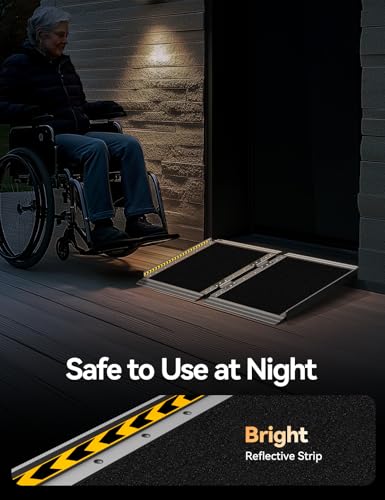
- Add strong visual contrast and lighting. Try adding reflective tape or high-contrast strips along both edges and the top lip so the ramp edge is obvious day and night. Add a motion sensor light or a bright porch light that illuminates the entire transition, and keep the color of the ramp distinct from the floor. This helps when hearing cannot be relied on for warnings.
- Improve traction and edge guidance. Try choosing or enhancing a textured, non-slip aluminum or rubber surface and raised side baffles or guide rails that can be felt through a cane, walker, or foot. Keep the surface clean and dry, and check that the rails do not block the door swing. For ideas on hardware that supports visibility at the door, see door lever handles for seniors with hearing loss.
- Create visual communication routines. Try establishing a clear visual signal before crossing, such as eye contact, a hand gesture, or a light tap on the shoulder, rather than a verbal cue alone. Keep the line of sight open by using a door viewer or sidelight, and consider a vibrating pager or flashing doorbell to alert the senior that someone is approaching the entrance.
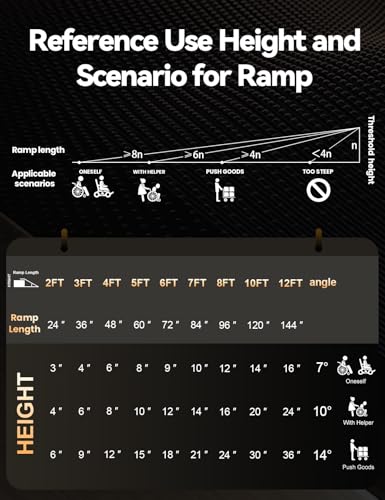
- Confirm slope, width, and clearance. Try measuring the rise and the available length to keep the slope gentle and the width wide enough for the mobility device. Check that the wheelbase fits within the ramp width and that sliding door tracks remain clear. If the rise is more than a few inches or the doorway is very narrow, a longer ramp or a different configuration may be needed.
When a Product Can Help
A product may help when the current ramp is too short, too narrow, lacks edge protection, or has a smooth surface that feels uncertain underfoot. One common option is to look for a portable ramp with built-in visual and tactile features rather than trying to add them all yourself.
This guide contains affiliate links, and we may earn a commission if you buy through them, at no extra cost to you.

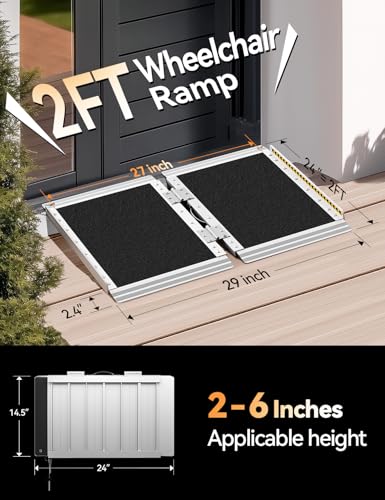
Prime FACHNUO 2FT Portable Aluminum Wheelchair Ramp


As an Amazon Associate we earn from qualifying purchases. Product prices and availability are accurate as of the date/time indicated.
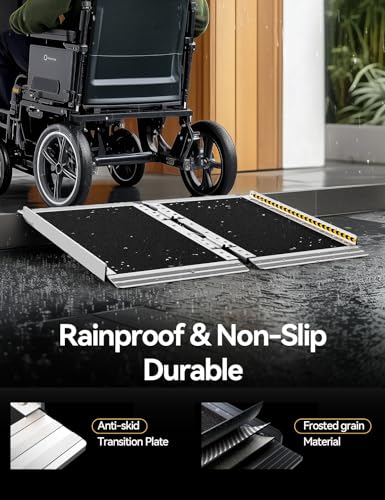
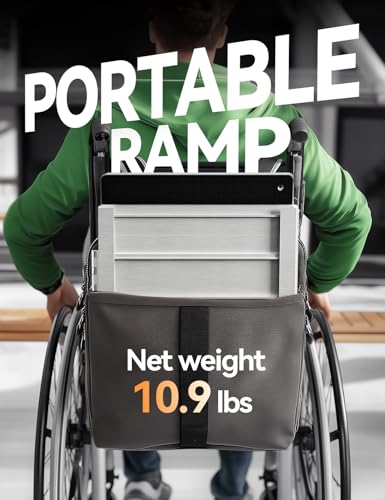
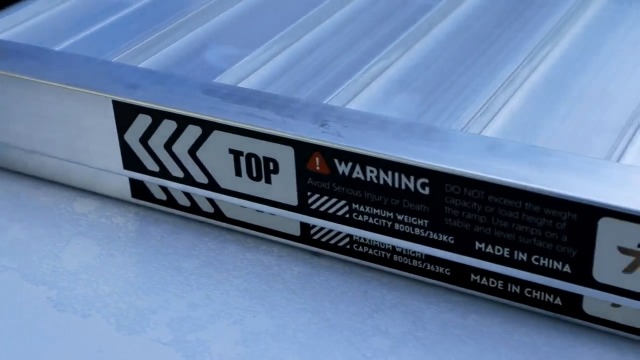
The FACHNUO 2FT Portable Wheelchair Ramp for Home is one practical option to consider. According to its description, it offers a textured, non-slip aluminum surface, extended guide rails at both ends to help prevent going off the edge, and reflective strips for better visibility in low light. It is rated to hold up to 800 pounds, folds with a built-in handle for storage, and is designed for rises from 2 to 6 inches, though the listing notes that for wheelchair use a rise of 4 inches or less is recommended. As with any ramp, check that the extension plate sits flush and that side walls do not interfere with the door.
This type of ramp may help reduce the risk of slips and edge misses by making the transition easier to see and feel, but it does not remove all fall risk. Try it only if the dimensions match your doorway and the senior can use it comfortably with their walker, scooter, or wheelchair.
When to Talk to a Professional Instead
If the threshold is high, the doorway is uneven, or the senior has frequent near-falls, new confusion, or significant vision and balance changes, a home fix alone is not enough. A physician, physical therapist, or occupational therapist can assess gait, device fit, and whether a different ramp length, a permanent install, or another entrance is more appropriate.
A portable folding ramp is not ideal for seniors who need a very gentle slope for a high rise, for homes with limited space beside a sliding door track where the extension plate would block the door, or for wheelchairs with a wheelbase wider than the ramp surface. In those cases, skip this style and ask a professional about a longer, wider, or custom solution.
Also seek prompt professional guidance if the ramp has caused a fall, if the senior leans heavily on door frames for support, or if hearing loss makes it hard to hear smoke alarms or caregivers at the entrance. A professional can help align lighting, alerting devices, and mobility support together.
Frequently Asked Questions
How can I make a threshold ramp more noticeable without sound?
Try high-contrast edge markings, reflective strips, and bright, even lighting over the entire threshold. Keeping the ramp color distinct from the floor and adding a motion light may help the senior see the edge and slope clearly.
What is the safest way to keep a threshold ramp from slipping?
Check that the ramp is rated for the device weight, sits flush at both ends, and has a non-slip surface and stable base. Clean the surface regularly, keep it dry, and reposition it if you notice any rocking or movement before each use.
Do I need a different ramp if my loved one uses a walker or wheelchair and has hearing loss?
Try confirming the ramp width fits the wheelbase or walker legs with room to spare and that guide rails do not catch the device. If the fit is tight, the slope feels steep, or the door cannot open fully, ask a healthcare provider or therapist about a longer or wider option that matches the entrance.
Browse more picks in our Outdoor & Entrance Safety category, or see our related guide on Door Lever Handles for Seniors Outdoors in 2026.





Write Your Review
No reviews yet. Be the first to share your experience!