

Quick Answer
To make a button hook safer for a senior with osteoporosis, reduce the force and twisting needed to use it. Sit down at a stable surface, use a wide, non-slip handle that lets you pull with a gentle, straight motion, and check that the wire loop glides smoothly without snagging fabric.
If the tool still requires a hard tug, slips in the hand, or forces an awkward wrist bend, pause and adjust the setup rather than forcing the button through. Small setup changes often make the task calmer and more controlled.
Why This Happens
Most button hooks are simple tools, so safety issues usually come from fit and technique, not from the button itself. A narrow handle, a thin or rough wire loop, or a need to pinch tightly can make the hand work harder than needed.
Posture matters too. Standing, reaching across the body, or twisting the wrist to line up a buttonhole can create unsteady pulling. For someone with osteoporosis, any extra strain, sudden jerk, or loss of balance while dressing is worth avoiding. Always check with a healthcare provider or occupational therapist before making mobility or daily living changes for a senior in your care.
Clothing and fabric also play a role. Stiff buttonholes, very small buttons, or thick layers may need more force. A loop that catches on thread or a handle that slips when hands are dry can turn a smooth motion into a sharp tug.
Finally, fatigue makes control harder. Doing many buttons in a row without a rest can reduce grip steadiness. That is why comfort, grip size, and a seated, supported position are often the first things to review.
Practical Steps to Try
Try these steps in order, easiest first. Stop any step that causes pain, discomfort, or unsteadiness and ask a caregiver or clinician for guidance.
- Sit with support and bring clothing close. Sit in a sturdy chair with back support and feet flat on the floor. Lay the garment on your lap or bring the button close to your body so you can pull straight toward you, not at an angle. Good support may help reduce the risk of a sudden movement.
- Check the handle and grip. Look for a wide, cushioned, non-slip handle that fills the palm without needing a tight pinch. Hold it with a relaxed, whole-hand grasp and keep the wrist neutral. If the handle feels slippery, try dry hands and a light, steady hold rather than squeezing harder.
- Use a smooth, low-force technique. Slide the slim wire loop gently through the buttonhole first, then loop it around the button and pull back slowly in one straight line. Avoid twisting or flicking the wrist. If you feel a snag, ease back and re-angle instead of yanking.
- Inspect the tool and clothing. Check that the wire loop is smooth, tapered at the tip, and free of burrs that could catch thread. Try a shirt with slightly larger, flat buttons and buttonholes that are not too tight. For ideas on choosing easier designs, see button hooks for stroke recovery.
- Reduce repetitions and plan rests. Fasten the most visible buttons first and leave others undone if that is more comfortable. Keep the hook within easy reach, such as in a bedside drawer, so you do not need to bend or stretch to find it. For broader daily living setups, you may also find tips in Dressing & Grooming Aids.
If these adjustments still leave the task tiring, consider clothing adaptations as well. Front-closure tops, magnetic closures, or larger buttons can lower the force needed overall. You can explore more adaptive options in Kitchen & Daily Living for related home routines.
When a Product Can Help
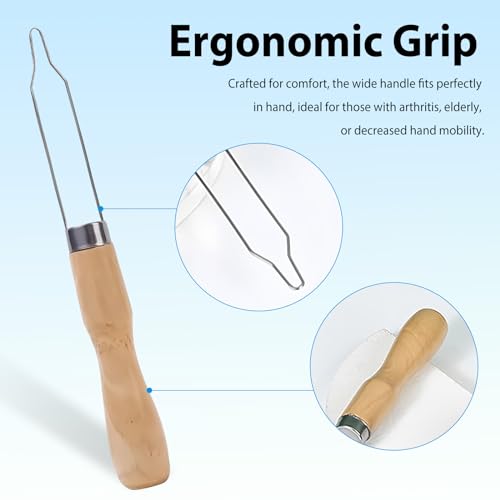
A product may help when the current hook needs a tight pinch, slips, or snags even after you adjust posture and technique. In that case, one common option is a hook with a wider ergonomic handle and a smooth, fabric-friendly wire loop that is designed to work with different button sizes.
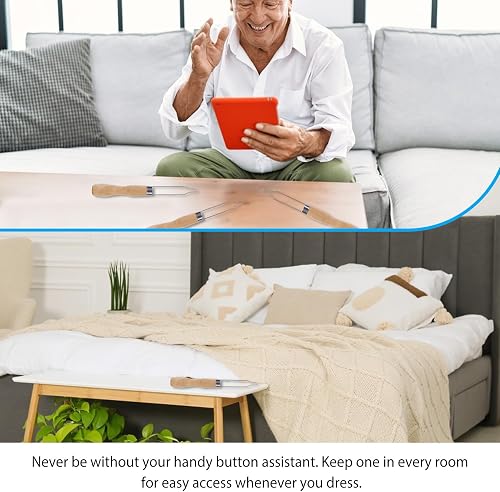
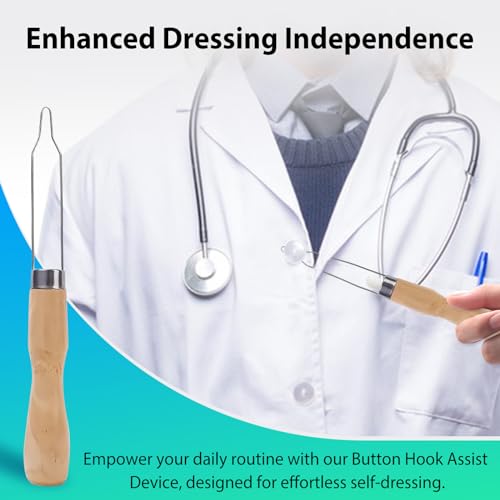
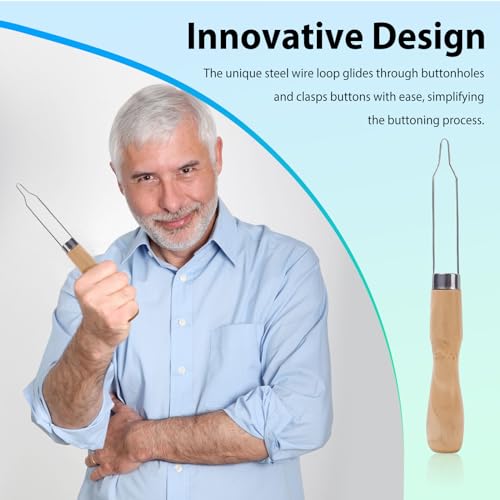
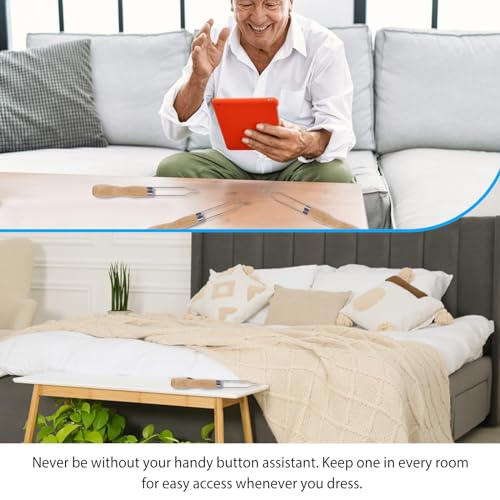
For example, the 2pcs Button Hook Assist Device with Easy-Grip is described as having a wide wooden handle for a comfortable hold and a steel wire loop that is made to glide through buttonholes without catching. The two-pack format lets you keep one where you dress most often and one for travel, which may help reduce extra reaching.
This guide contains affiliate links, and we may earn a commission if you buy through them, at no extra cost to you.

Prime lyforx 2-Pack Button Hook Assist Device



As an Amazon Associate we earn from qualifying purchases. Product prices and availability are accurate as of the date/time indicated.
Any tool is only one part of a safer routine. Pair it with seated dressing, slow straight pulls, and clothing that does not require strong tugs.
When to Talk to a Professional Instead
A button hook is not ideal for a senior who has frequent falls while dressing, notable bone fragility, recent fractures, or hand pain that makes even light pulling uncomfortable. It is also not a good fit if dressing requires prolonged standing, leaning, or twisting that feels unsteady.
In those situations, a home fix alone is not the right choice. Talk with a physician, occupational therapist, or physical therapist about safer dressing methods, adaptive clothing, or other supports that match the person’s strength and balance.
Bring the current hook and a typical shirt to the appointment if possible. A clinician can observe grip, wrist position, and seating and suggest adjustments that are specific to the senior’s needs.
Frequently Asked Questions
How can we reduce pulling force with a button hook?
Seat the person with good back support, bring the button close, and pull in a slow straight line. Choose shirts with slightly larger buttons and buttonholes that are not stiff, and pause between buttons to avoid fatigue.
What handle features are easier for a senior with osteoporosis?
Look for a wide, cushioned, non-slip handle that allows a whole-hand grasp without pinching. A lightweight design with a smooth wire loop that does not snag fabric may help keep the motion gentle and controlled.
Should we keep using a button hook if it still feels unsafe?
If you notice slipping, sharp tugs, or the need to twist the wrist, stop and reassess. Try a different handle style or adaptive clothing, and check with a healthcare provider or occupational therapist for a safer dressing plan.
Browse more picks in our Dressing & Grooming Aids category, or see our related guide on Button Hooks We Recommend for Stroke Recovery in 2026.


Write Your Review
No reviews yet. Be the first to share your experience!