

Quick Answer
If your folding walker is not working well for a senior who also uses a wheelchair, the most common reason is a mismatch between when and how each device is used, plus fit or setup that does not match the person or home. Try checking walker height, how the folding locks engage, where the wheelchair is parked for transfers, and whether pathways are clear before you replace anything.
Why This Happens
A folding walker and a wheelchair serve different purposes, and switching between them can create confusion or extra effort. A walker supports short, steady steps when the person can bear weight and balance with their hands, while a wheelchair is for longer distances or when standing is tiring. If the routine for when to use each one is unclear, the walker may feel unstable or unnecessary.
Fit and setup also make a big difference. If the walker is set too high or too low, the senior may hunch, put extra strain on wrists and shoulders, or feel unsteady. Wheels that are worn, locks that are not fully engaged, or a frame that is not opened completely can make the walker wobble or drag. Always check with a healthcare provider, physician, physical therapist, or occupational therapist before making mobility changes for a senior in your care.
Home layout plays a role too. Narrow doorways, rugs, thresholds, clutter, or tight turns between the wheelchair and the walker path can make any walker feel like it is not working. Fatigue, changes in strength during the day, and carrying items while trying to use the walker can add to the difficulty.
Finally, expectations matter. A standard folding walker is designed to be lifted or rolled a short distance with each step and is not intended to support full body weight like a wheelchair or to be used as a seat. If the senior needs frequent rest, cannot stand for more than a moment, or needs to be pushed, a basic folding walker alone may not be enough. You can explore more options in the Walkers & Rollators section and the broader Mobility Aids category.
Practical Steps to Try
Try these general, non-medical checks in order, starting with the simplest. Stop and get guidance if anything feels unsafe.
- Check walker height and hand position. With the senior standing inside the walker in regular shoes, the handgrips should line up near wrist height and allow a slight bend at the elbows when holding on. If the senior must reach up or stoop down, adjust the legs evenly on both sides and confirm all push buttons click into place.
- Clarify when to use the walker versus the wheelchair. One common option is to use the wheelchair for longer distances and the walker only for very short, supervised moves, such as from bed to chair or to the bathroom, if the care team says that is appropriate. Park the wheelchair close, lock its brakes, and keep the walker fully opened and locked before any transfer.
- Confirm the frame, folding mechanism, and wheels. Open the walker until both sides lock, listen for the click, and gently tug to confirm it is secure. Look at the front wheels for hair, debris, or wobble, and check rear glides or tips for wear. Tighten or replace worn tips and keep the path free of rugs or cords that could catch.
- Simplify the environment and routine. Clear a straight, wide path between the most used spots, remove loose rugs, and keep often used items within reach so the senior does not need to carry things while walking. Use a pouch or basket that attaches to the walker if the design allows it, rather than holding bags in the hands.
- Do a supervised walk through and note what is not working. Watch a short, everyday move together and write down where hesitation, wobbling, or fatigue happens. Share those notes with the care team and consider a gait belt for caregiver assistance only if a physical therapist or occupational therapist has shown you safe handling. For ideas on safe transfers, see this related guide on NOVA Gait Belt options.
If these checks do not help, it may be time to consider whether a different style of support fits the senior’s current abilities and home better.
When a Product Can Help
A product change can help when the current walker is the wrong style for mixed walker and wheelchair use, when height cannot be adjusted enough, or when the folding system is hard for the caregiver to operate. In those cases, a simple, lightweight folding walker with clear controls and wheels for smoother forward movement may be easier to manage for short, supervised steps.
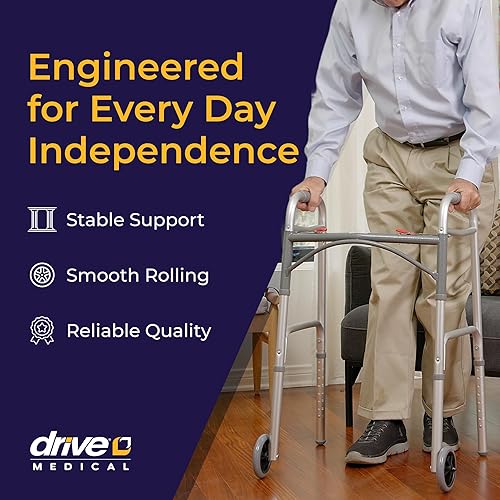
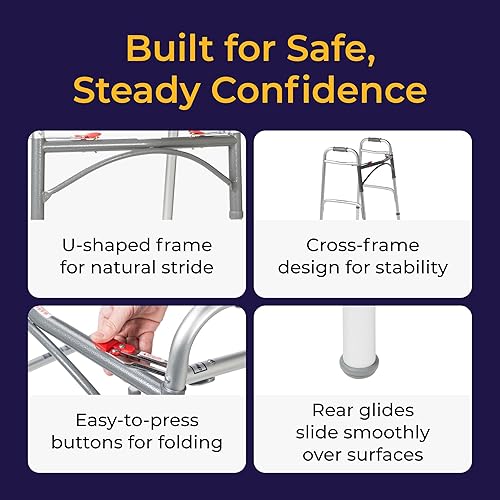
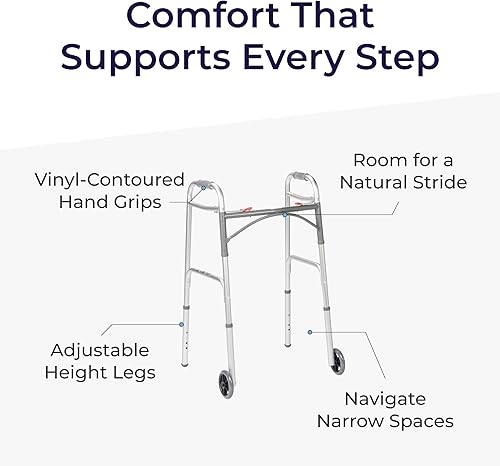
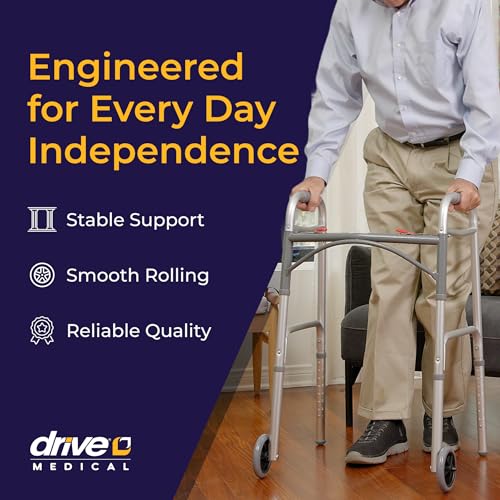
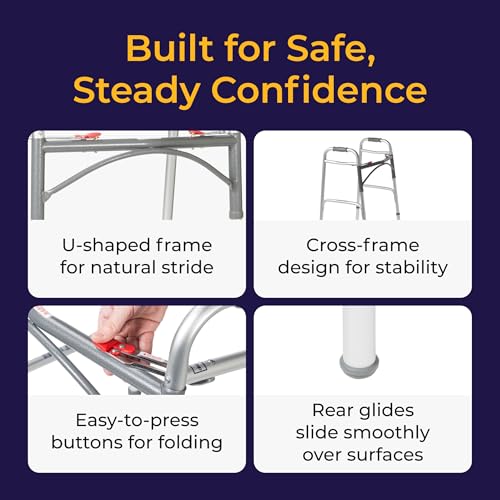
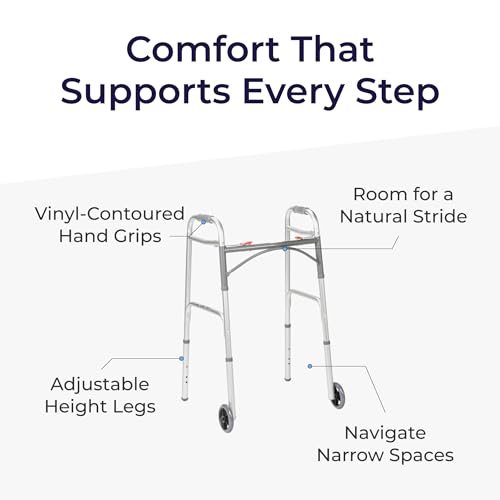
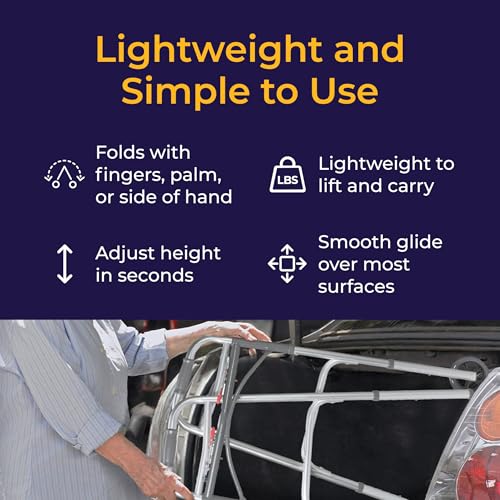
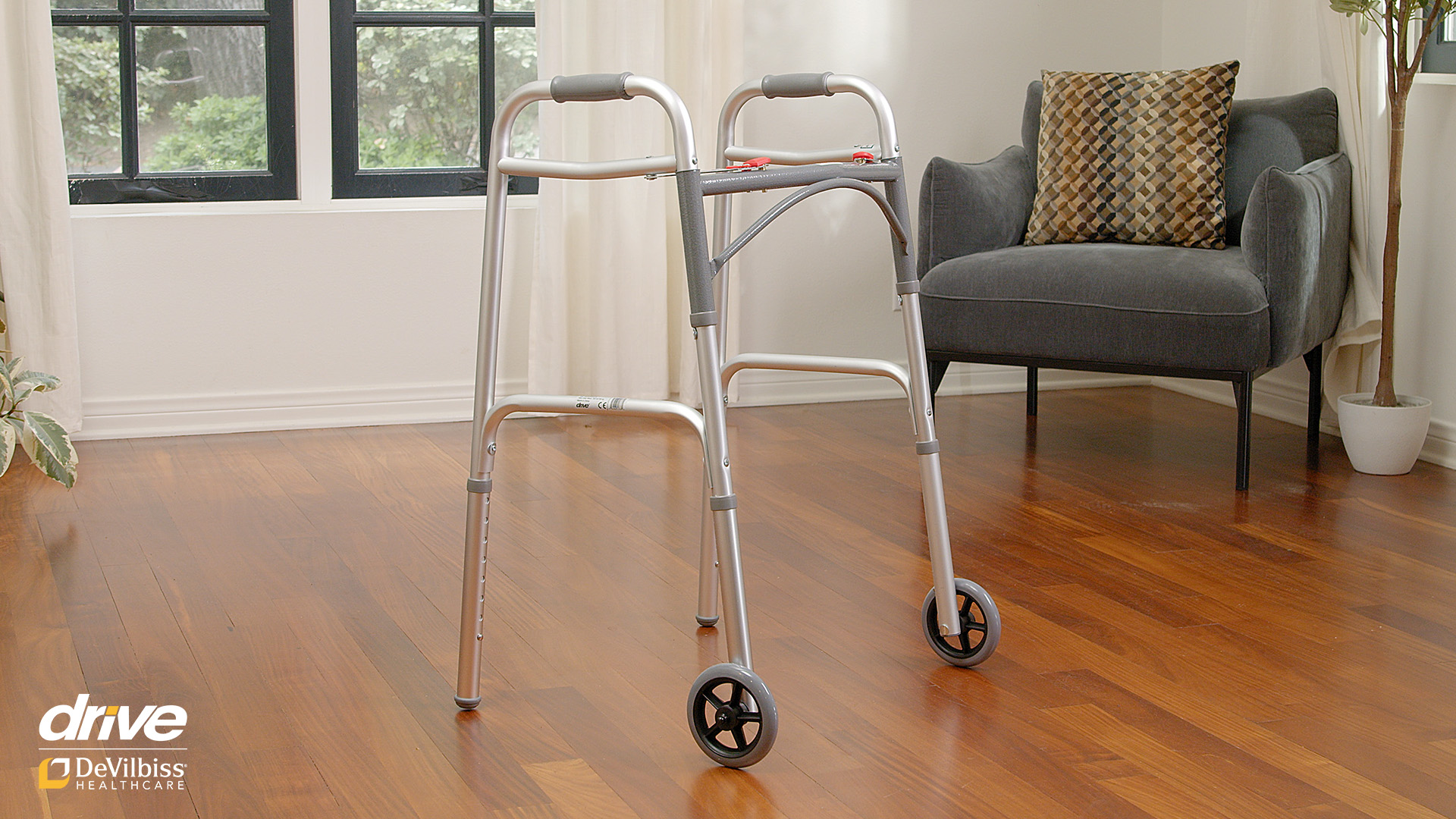
One practical option some families consider is the Drive Medical Two-Button Folding Walker, which features dual push-button operation, adjustable height, and a durable aluminum frame with front wheels. Its design is intended to provide steady support while remaining light enough to fold and store near a wheelchair, which may help reduce the risk of stumbles when moving between devices.
This guide contains affiliate links, and we may earn a commission if you buy through them, at no extra cost to you.

Prime Drive Medical Two-Button Folding Walker







As an Amazon Associate we earn from qualifying purchases. Product prices and availability are accurate as of the date/time indicated.
This type of walker is not a seat and is not meant to be pushed like a wheelchair, so consider your routine carefully. If the senior needs to sit often or must be pushed for any distance, you may need a different category of aid. You can also review related mobility topics such as how high a stair lift should be for elderly users if stairs are part of the challenge.
When to Talk to a Professional Instead
A standard folding walker is not ideal for every situation, and it is not a good fit when the senior cannot bear weight through the legs or arms, feels faint or very unsteady when standing, or has had recent changes in strength, vision, or cognition. It also is not the right choice if the walker is being used to catch frequent falls or to lift the person, as that can increase risk for both the senior and the caregiver.
Talk with a doctor, physician, physical therapist, or occupational therapist if you notice increased unsteadiness, new pain, skin irritation from gripping, or if transfers between the wheelchair and walker feel unsafe. They can assess fit, suggest whether a rollator with a seat, a transport chair combination, or a different aid is more appropriate, and show safe techniques for your specific home layout.
Bring your notes about when the walker feels most difficult, the walker model and height setting, and photos of doorways and thresholds. That information helps the professional give guidance that matches the senior’s abilities and the home, rather than guessing.
Frequently Asked Questions
Why does the folding walker feel unstable even though it is new?
Often the frame is not fully opened and locked, the height is uneven, or the rear tips are worn. Check that both push buttons are engaged, all legs are set to the same height, and the walker sits level on the floor before use.
Should a senior who uses a wheelchair still use a walker at all?
That depends on the person’s strength, balance, and the care plan. Some seniors use a wheelchair for most mobility and a walker only for very short, supervised moves if their clinician says it is appropriate. Ask a healthcare provider or physical therapist what is safe for your situation.
What helps make switching between a wheelchair and a walker easier?
Keep both devices close, lock the wheelchair brakes before standing, fully open and lock the walker, and clear the path of rugs and clutter. Keep transfers short, unhurried, and supervised, and avoid carrying items in the hands while moving.
Browse more picks in our Walkers & Rollators category, or see our related guide on Jar Opener vs Rollator for Seniors in 2026.




Write Your Review
No reviews yet. Be the first to share your experience!