

Quick Answer
If your bedside commode feels unstable for an elderly user, check the leg height settings and floor contact first. In most cases, wobble comes from uneven leg heights, a loose frame connection, or placement on carpet or uneven flooring, not a broken frame. Leveling the legs, confirming all push-button connections are fully locked, and moving it to a firm, flat surface may help reduce the risk of tipping before you consider a replacement in 2026.
Why This Happens
Always check with a healthcare provider or physical therapist before making changes to toileting equipment for a senior in your care. They can confirm whether the current setup matches the person’s strength, balance, and home layout.
Legs set at different heights are the most common cause of rocking. If one leg is a notch higher than the others, the frame will shift when weight moves from sitting to standing.
A loose or not fully locked frame can also create sway. Folding commodes rely on push pins and cross braces that must click fully into place, and a partially engaged pin may allow movement that feels like instability.
Flooring matters more than many caregivers expect. Thick carpet, rugs, or a slightly sloped bathroom floor can make even a sturdy frame feel unsteady, and rubber tips that are worn, cracked, or missing make it worse.
Seat and bucket placement can add to the problem too. If the clip-on seat or bucket frame is not seated evenly, weight may shift to one side, and repeated folding and moving can loosen connections over time without it being obvious.
Practical Steps to Try
Try these checks in order, they take only a few minutes and do not require tools. Work on a hard, level floor and have the user nearby but not on the commode while you adjust it.
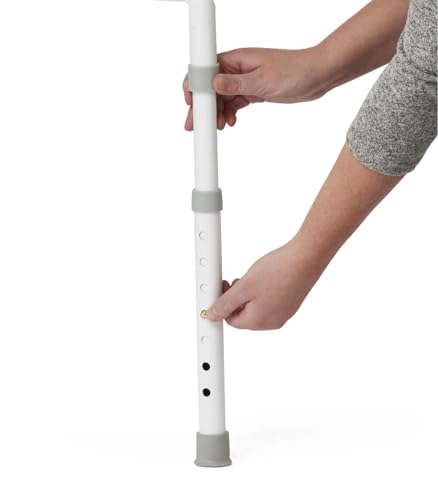
- Check that all four legs are set to the same height and locked. Press each push button, move each leg to the same numbered hole, and listen for a clear click. Place the chair on a hard, level floor and press down firmly on each armrest to see if it still rocks.
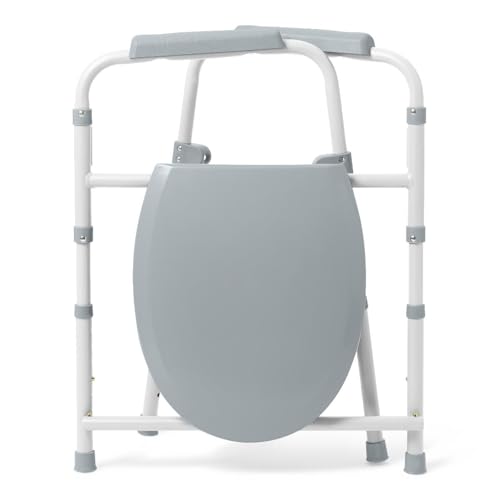
- Confirm the frame is fully unfolded and braced. Open the frame completely, make sure any crossbars or folding braces are flat and locked, and reseat the clip-on seat and bucket frame so they sit evenly without gaps.
- Inspect feet, tips, and the floor surface. Look for missing or worn rubber tips and replace them if they are cracked or smooth. Move the commode off rugs onto vinyl, tile, or hardwood, or use a thin, firm mat underneath if carpet is unavoidable.
- Adjust height to match the user. When seated, feet should rest flat on the floor with knees roughly level with hips, and armrests should allow pushing up without leaning far forward. Raise or lower all legs evenly until that position feels secure, then recheck for wobble.
- Check usage and weight guidance. Confirm the commode is rated for the user’s weight and observe how they stand. Pulling heavily on one armrest or twisting to one side can tip any model, so a caregiver standing nearby during practice can reveal if motion itself causes the sway.
If the wobble stops after these adjustments, recheck the settings weekly. Push pins and folding joints can shift with repeated moving and cleaning, so a quick press on each leg and armrest helps catch looseness early.
For more context on choosing the right configuration for recovery needs, you may find how to choose bedside commode for hip replacement recovery helpful, and families planning bedroom placement often review bedside commode for knee replacement.
When a Product Can Help
If the frame still sways after leveling, tightening, and changing the floor surface, or if the current model lacks key stability features, a different design may help reduce the risk of instability. This is especially true if the legs will not stay locked, tips are worn beyond simple replacement, or the seat height range does not fit the user.
This guide contains affiliate links, and we may earn a commission if you buy through them, at no extra cost to you.

Prime Dr. Dunley 3-in-1 Bedside Commode Chair



As an Amazon Associate we earn from qualifying purchases. Product prices and availability are accurate as of the date/time indicated.
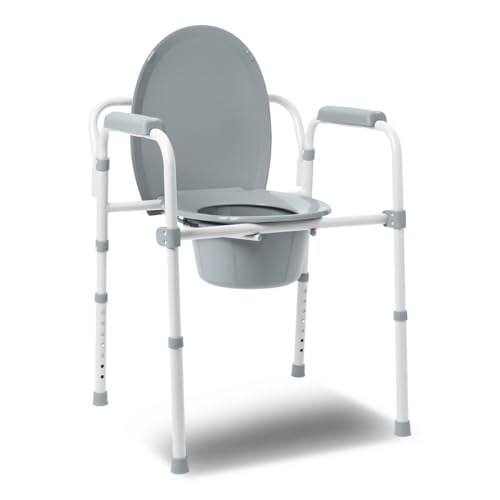
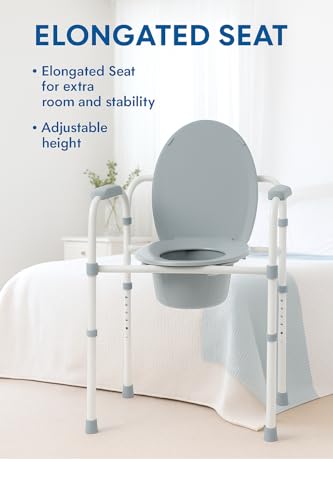
One practical option some families consider is the Dr. Dunley 3-in-1 Bedside Commode Chair, which is described as having a powder-coated steel frame rated to support up to 350 lbs, an elongated seat, and a 7.5-quart bucket with lid and splash guard. Its 3-in-1 design allows use as a bedside commode, toilet safety frame, or elevated seat, and it is listed as offering tool-free assembly, which may help ensure all connections are fully secured. As with any commode, placement on a flat, firm surface and correct height adjustment remain important for steadiness.
When to Talk to a Professional Instead
Some situations are not a good fit for a simple home adjustment. If the elderly user has had recent surgery, a noticeable change in balance, or needs to pull heavily on the commode to stand, a basic commode alone is not ideal for safe support and may need a different approach.
Talk with a physician, occupational therapist, or physical therapist if you notice repeated near falls, new weakness on one side, or if the commode must sit on an uneven surface that cannot be changed. They can assess whether a different height, a model with drop arms, or additional bathroom support would better match the person’s needs.
You can also ask whether a raised toilet seat with arms or a commode placed over the existing toilet would better fit the home layout. For ideas on alternatives, see best raised toilet seat for low vision seniors reviewed and discuss the options with the care team before making a change.
Frequently Asked Questions
Why does the commode wobble only when my parent stands up?
That often points to uneven weight on one armrest during the stand. Check that both armrests are secure and that seat height allows feet to stay flat while pushing up evenly, and ask a physical therapist to review safe standing technique if leaning is heavy.
Can I put the commode on carpet to stop it from sliding?
Carpet may reduce sliding but can increase rocking because the legs sink unevenly. A firm, level hard floor with intact rubber tips usually provides more stable contact, or a thin firm mat designed for medical equipment if carpet is unavoidable.
How do I know if the commode is the right size for the user?
Check that the seat width allows comfortable sitting without pressing on hips and that height lets the user sit and stand without excessive leaning. If the frame feels narrow, too low, or too high even at its limits, a different model or a professional fitting may be needed.
Browse more picks in our Toilet Safety & Commodes category, or see our related guide on Toilet Safety Rails vs Cameras for Seniors in 2026.










Write Your Review
No reviews yet. Be the first to share your experience!