

Quick Answer
If your bed alarm for elderly keeps coming loose, the most common reason is the sensor pad sliding under the fitted sheet or the cord getting tugged when your loved one moves. Try repositioning the pad exactly as the maker directs, smoothing the sheet tightly over it, and routing the cord so it cannot pull or snag, then check if a floor based alert that does not rely on a pad staying in place may help reduce the risk of a missed alert.
Why This Happens
Most bed sensor pads are designed to sit under the fitted sheet at hip or shoulder level, and even small shifts can cause them to bunch, slide, or lose contact. Restless movement during sleep, loose sheets, a soft or deep mattress, or a mattress protector can all let the pad work its way out of position.
Corded models add another point of failure. If the cord is draped over the side rail, pinched between mattress and frame, or left where it can be kicked, it may pull the pad loose or disconnect the monitor. Wireless pads avoid that cord pull, but they can still move if the sheet is not snug or if the pad is placed on top of extra bedding layers.
Sometimes the product itself is not a good match for the setup. A pad that is too small for the bed, a sheet that is too stretchy, or a loved one who sweeps bedding aside or tries to remove anything unfamiliar can make any on bed sensor unreliable. Always check with a healthcare provider or occupational therapist before making safety changes for a senior in your care, especially if falls or confusion are increasing.
You may also want to review related bedroom safety options, such as whether carex bed rails review for elderly or best bed rails for seniors with osteoporosis fits your situation, since rails and alarms address different needs and are often used together.
Practical Steps to Try
- Reset the pad placement to the maker’s guide. Place it flat under the fitted sheet with no wrinkles, centered where weight will lift when your loved one starts to rise, often at hip level. Pull the fitted sheet corners tight and smooth the surface so the pad cannot fold or slide, and avoid putting extra blankets or pads between the person and the sensor.
- Secure the sheet and mattress surface. Use a fitted sheet that matches your mattress depth and check that a waterproof protector or mattress topper is not creating a slippery layer. If the sheet is loose, a deeper pocket sheet or sheet fasteners designed for adjustable beds may help keep tension even, which helps the pad stay flat.
- Route and anchor the cord or monitor correctly. For corded systems, follow the routing path in the instructions, clip the monitor to the bed frame or nearby surface as directed, and leave a gentle service loop so movement does not yank the pad. Keep the cord away from side rails and wheels where it could catch.
- Check for movement patterns that shift the pad. If your loved one repositions often, sits on the edge of the bed, or pulls at bedding, look for signs the pad is being pushed aside rather than worn out. You can try a thinner, incontinence resistant pad that wipes clean and lies flatter, and confirm the low battery or sensor status light shows the system is still connected.
- Consider an alert that does not sit on the bed. If the pad continues to move despite careful placement, one common option is to place a pressure sensing alert on the floor beside the bed so you are notified when feet touch the floor instead of when weight leaves the mattress. This approach removes the need to keep anything positioned under the sheet.
When a Product Can Help
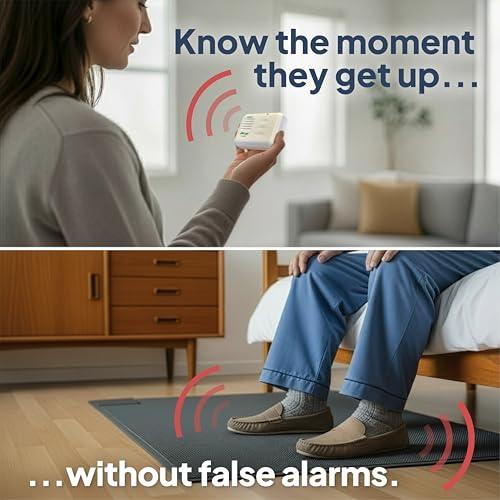
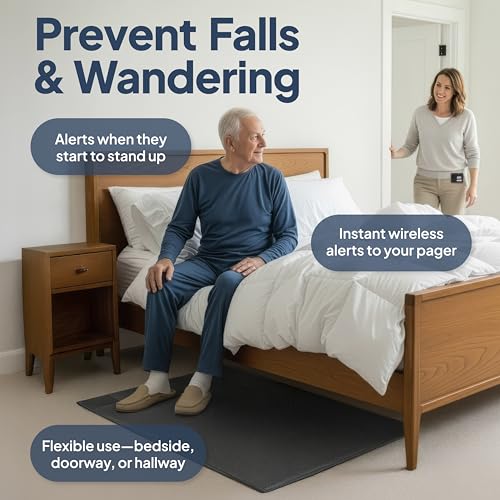
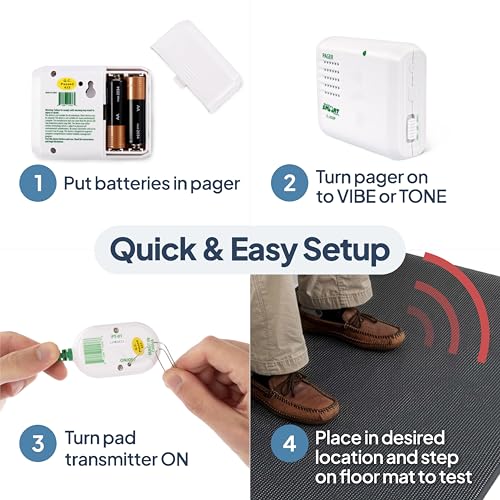
A product change is worth considering when you have tried careful repositioning and the bed pad still will not stay put, or when your loved one notices and removes anything placed on the bed. In those cases a floor mat system that sits beside the bed and sends an alert to a pager you carry may help reduce the risk of a missed exit, because there is no pad to keep aligned under the sheet and no cord at the bedside to snag. Look for a system with a wireless pager you can keep with you and an alert mode you can set to sound or vibrate so you are notified without a loud noise in the bedroom.
This guide contains affiliate links, and we may earn a commission if you buy through them, at no extra cost to you.
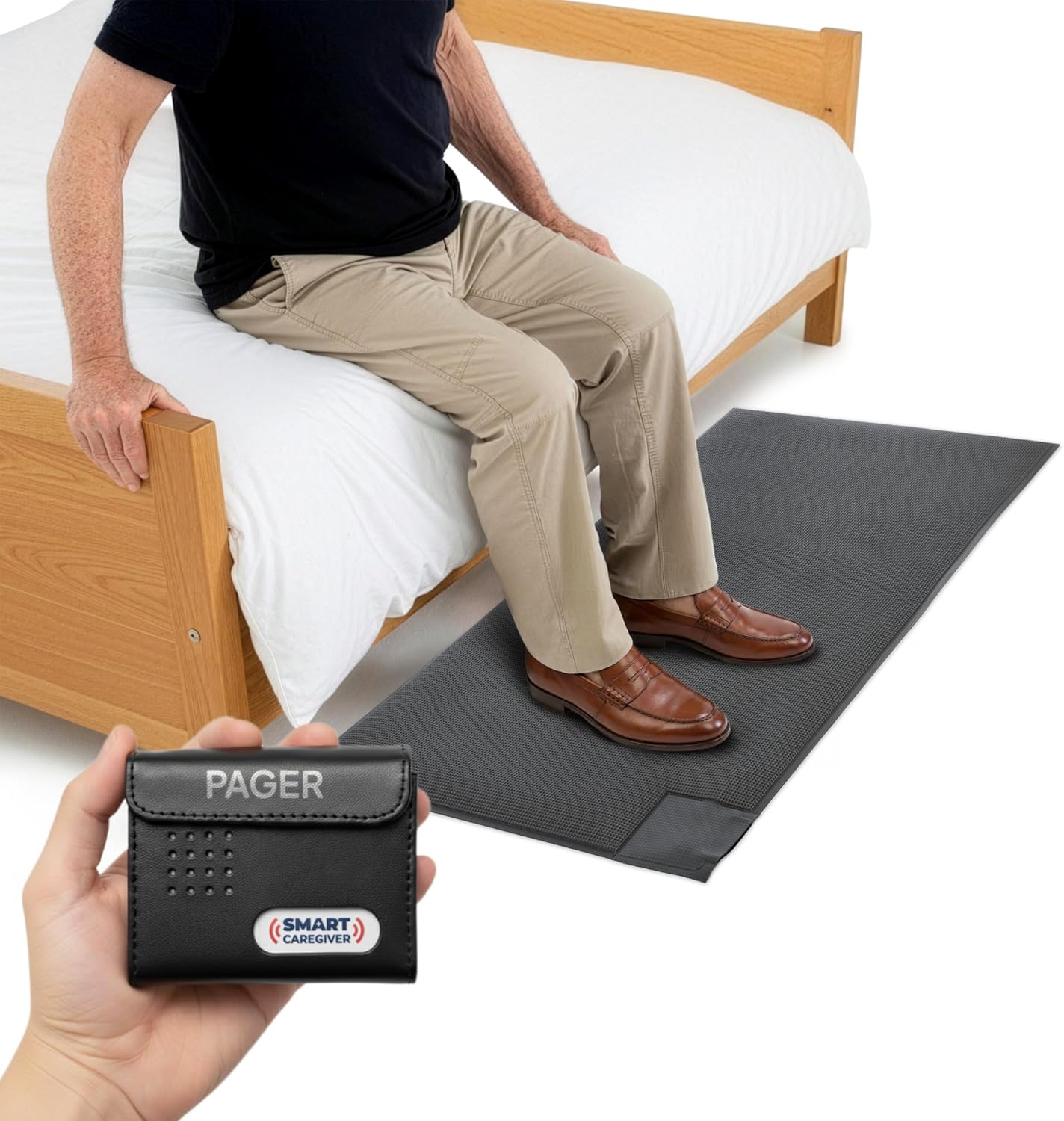
Smart Caregiver Wireless Floor Mat Alarm



As an Amazon Associate we earn from qualifying purchases. Product prices and availability are accurate as of the date/time indicated.
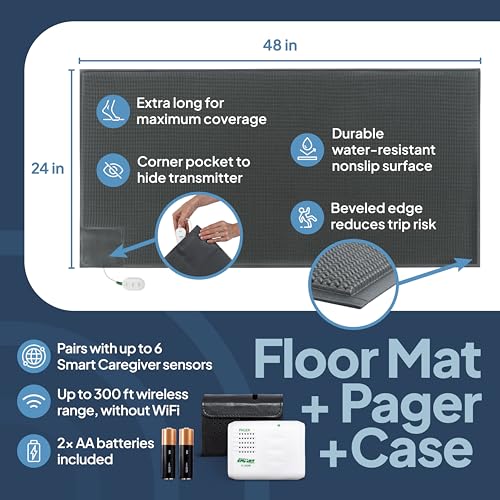
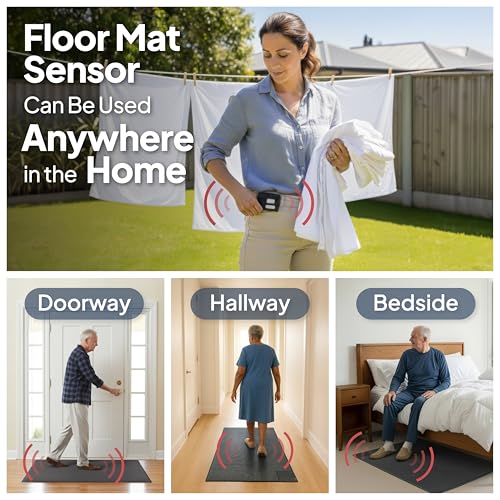
The Smart Caregiver Floor Mat Alarm and Pager System is one practical option in this category. It uses a weight sensing 24in x 48in floor mat placed at the bedside or by a doorway and a wireless caregiver pager that can alert up to 300 feet away with sound or vibrate, so you can be notified from another room while your loved one is not startled by an in room alarm. It may help support a bedroom fall prevention routine when combined with good lighting, clear pathways, and guidance from your care team. For more ideas on low light safety, see best motion sensor night light for osteoporosis.
When to Talk to a Professional Instead
A bed or floor alarm alone is not ideal for every situation and is not a good fit when falls are frequent, when your loved one needs hands on help to stand, or when confusion, wandering, or medication changes have increased. In those cases an alarm may alert you, but it does not provide support for balance or safe movement.
Talk with a physician, physical therapist, or occupational therapist if you notice new unsteadiness, repeated near falls, or if your loved one is getting up often at night. They can review the bedroom layout, bed height, lighting, footwear, and whether a different combination of supports, such as a bedside commode, rail, or supervised schedule, may help reduce risk more than an alarm alone.
This is also the right time to get advice if the senior lives alone for long periods, if the home has stairs or narrow doorways that complicate a quick response, or if you are unsure whether an alarm might increase agitation. A professional can help you weigh the trade offs and create a plan that respects dignity and safety. You can explore broader options in Bedroom Fall Prevention and Fall Prevention.
Frequently Asked Questions
Why does my bed sensor pad keep sliding out of place?
Most often the sheet is too loose, the pad is on top of an extra layer, or cord tension is pulling it. Try placing the pad flat under a snug fitted sheet, smoothing wrinkles, and routing the cord with a little slack so it does not tug when your loved one moves.
Can I use tape or straps to hold the pad down?
It is best to avoid adding tape, pins, or straps not included by the maker, since they can damage the pad, create a pressure point, or affect how the sensor responds. Check the instructions for approved placement and consider a floor mat style alert if the pad will not stay put with the recommended setup.
What helps if my loved one keeps removing the pad?
If the pad is noticed and pushed aside, an option that does not sit on the bed may be more reliable. A floor mat at the bedside that alerts a pager you carry has nothing on the bed to remove, and it may help you respond sooner. Discuss any change with a healthcare provider to be sure it fits your loved one’s needs and routine.
Browse more picks in our Bedroom Fall Prevention category, or see our related guide on Osteoporosis Bed Rails We Recommend for 2026.









Write Your Review
No reviews yet. Be the first to share your experience!