

When nighttime trips to the bathroom become difficult, many families start looking for a bedside option that may help reduce the risk of falls and support independence. For older adults recovering from surgery, managing limited mobility, or simply wanting fewer steps at night, a commode near the bed can make daily routines calmer for everyone in the household.
This AquaSense bedside commode review for elderly focuses on one widely available model, the Drive Medical Folding Bedside Commode, and explains what its specifications suggest for aging in place. Always check with a healthcare provider, physician, or occupational therapist before making mobility changes for a senior in your care, especially after a hospital stay or new mobility challenge. This review is grounded in the product’s listed features and caregiver considerations, not hands-on use.
This guide contains affiliate links, and we may earn a commission if you buy through them, at no extra cost to you.

Prime Drive Medical Folding Bedside Commode 3-in-1



As an Amazon Associate we earn from qualifying purchases. Product prices and availability are accurate as of the date/time indicated.
What Stands Out
3-in-1 Versatility for Different Home Setups
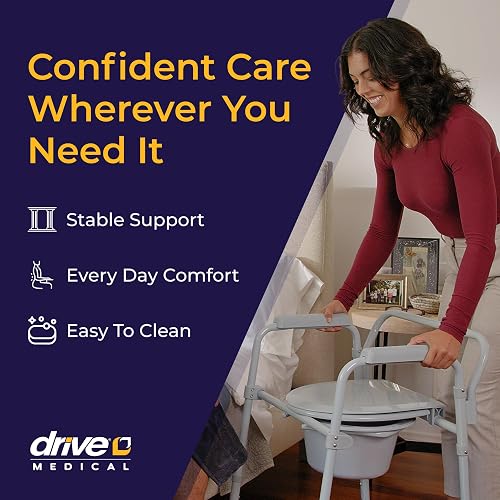
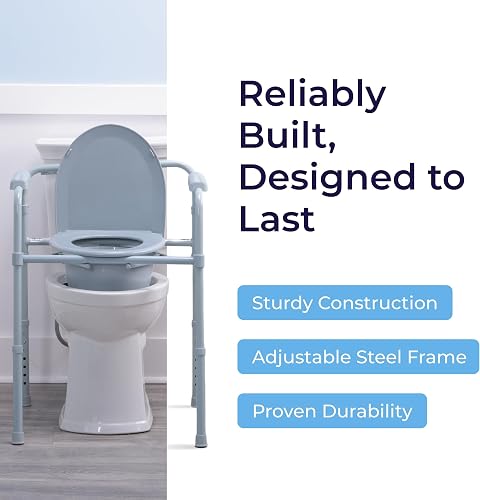
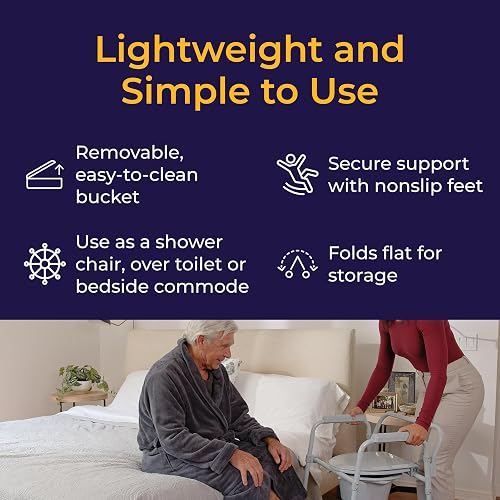
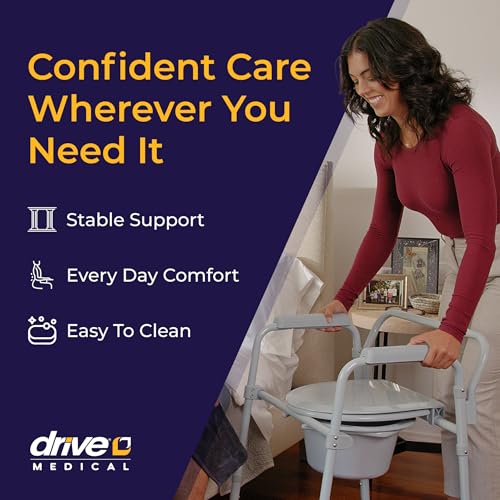
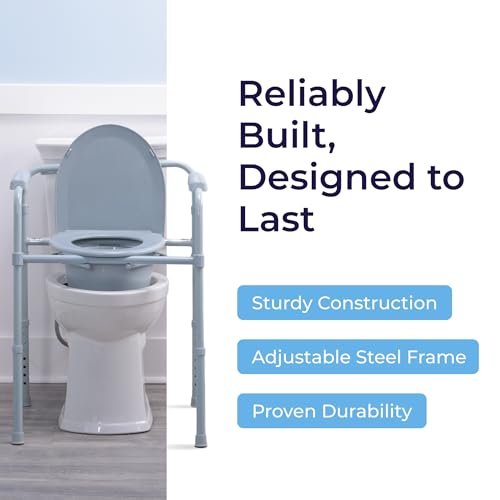
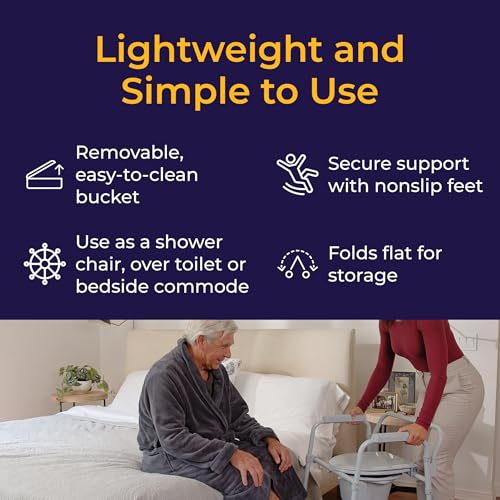
The Drive Medical Folding Bedside Commode is described as a 3-in-1 design, which means it can function as a standalone bedside commode, a raised toilet seat over an existing toilet, and a toilet safety frame. That flexibility matters when needs change from week to week, such as moving from bedroom use during early recovery to bathroom use later.
For households weighing placement, this versatility may help reduce extra purchases. You can position it at the bedside for overnight convenience, then relocate it to the bathroom as a frame around the toilet when walking distance improves. If you are comparing placement options, this bedside commode for knee replacement guide offers related context on bedroom versus bathroom setups.
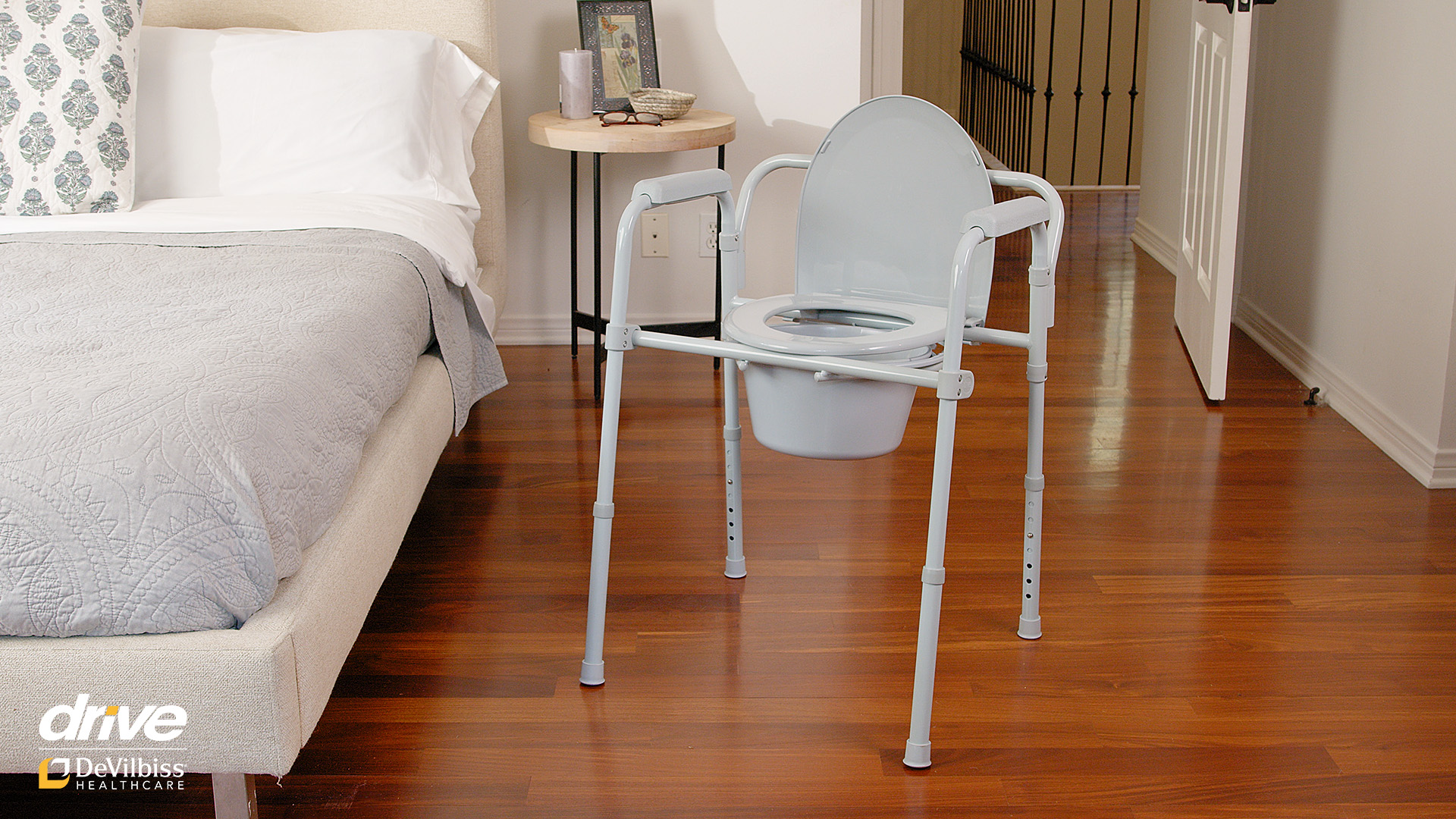
The inclusion of a 7.5-quart bucket with lid and splash guard supports the bedside role. The bucket is removable for emptying and cleaning, while the lid may help contain odors between cleanings. When used over the toilet, the bucket can be removed so the chair frames the existing toilet instead.
Caregivers who assist with transfers often value a single piece of equipment that adapts without requiring new hardware. Because the same frame serves multiple roles, families can keep routines consistent while adjusting the location to match the senior’s current stamina and the home layout.
Foldable Steel Frame Rated to Support 350 Pounds
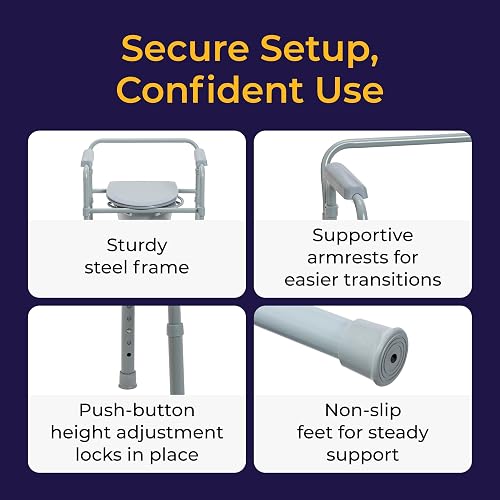
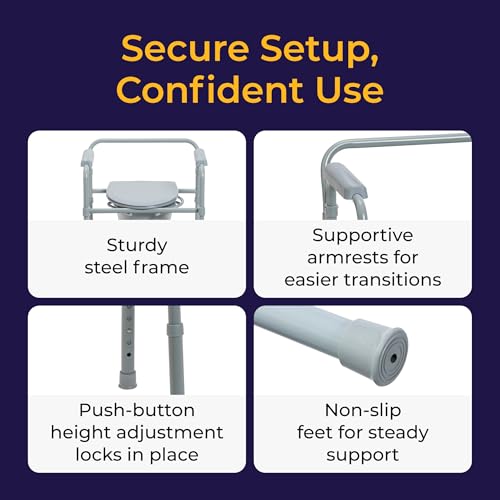
The frame is listed as powder-coated steel, a material choice intended to support daily use and resist wear in humid bathroom environments. Steel construction also contributes to stability when a senior leans on the armrests to sit or stand, which is a common moment when extra support is needed.
The product specification lists a weight capacity rated to support up to 350 lb. That rating applies when the commode is assembled as directed and placed on a level surface with all legs adjusted evenly. For many households, this capacity covers a broad range of adults while keeping the overall footprint compact.
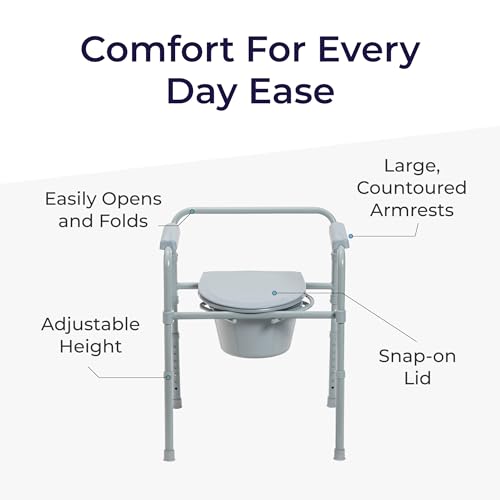
Fold-up steel legs are part of the design, allowing the commode to collapse for transport or storage. This can be helpful for families who need to move the chair between rooms, bring it for a short stay with relatives, or store it when not needed. The folding design also simplifies moving it aside for floor cleaning.
Stability is further supported by the wide seat and stable feet described in the feature list. While no commode removes all risk, a stable base combined with armrests may help reduce the risk of slips during sit-to-stand movements when used as directed and with appropriate supervision as needed.
Tool-Free Assembly and Push-Pin Height Adjustment
According to the product description, assembly is tool-free with a snap-on seat and lid. That approach may be appreciated by caregivers who want to set up equipment quickly without searching for tools or hardware. Clear push-pin mechanisms are used to set leg height, which helps keep adjustments straightforward.
Height adjustability allows the seat to be set to a level that aligns with the senior’s comfort and leg length. A seat that is too low can make standing harder, while a seat that is too high can leave feet unsupported. Being able to fine tune height may help promote a more upright posture and steadier footing.
For families coordinating care after a procedure, quick setup and simple height changes can ease transitions between caregivers. If you are planning for post-surgical recovery, you may find this how to choose bedside commode for hip replacement recovery resource useful for thinking through height and placement alongside clinician guidance.
Because adjustments use push pins rather than tools, rechecking that each leg is locked at the same setting before each use is a sensible habit. Consistent leg height supports even weight distribution and helps the chair remain level, which contributes to a more secure experience.
Supportive Armrests and Practical Bucket Design
Supportive armrests are listed as part of the design, giving a place to press down when sitting or to push up when standing. For older adults with reduced leg strength, armrests can provide an additional point of contact that may help reduce the risk of unsteadiness during transfers.
The bucket system includes a 7.5-quart capacity, a lid, and a splash guard. The capacity is intended to hold enough for overnight or between-cleaning use without frequent emptying, while the splash guard is designed to help contain splashes. The lid can be used to cover contents when moving the bucket for disposal.
Cleaning considerations are important for any bedside product. The description notes smooth surfaces and a clip-on seat that lifts off for rinsing, which may simplify daily care. Caregivers often prefer surfaces that wipe clean quickly and parts that separate without extra steps.
When the commode is used over the toilet, the bucket is removed and the splash guard remains relevant for hygiene. This dual approach keeps the same seat and armrests in use, so the senior does not need to adapt to a completely different support setup when the location changes. For broader bathroom planning, explore the Toilet Safety & Commodes category for related options.
Where It Comes Up Short
The Drive Medical Folding Bedside Commode prioritizes portability and basic support, so it does not include padded seating or a backrest. Some seniors find a hard plastic seat less comfortable for longer sitting, and those who need back support while seated may prefer a model with cushioning. Adding a cushion not designed for this frame is not recommended, as it can affect stability and hygiene.
Drop-arm functionality is also not part of this design, which can matter for lateral transfers from a wheelchair. The fixed armrests provide steady support for sit-to-stand, but they do not lower to allow a slide transfer from the side. Households that need that specific feature may want to compare drop-arm commodes or consider a separate transfer strategy discussed with a physical therapist. If low vision is a concern, you may also want to review the best raised toilet seat for low vision seniors reviewed for contrast and visibility considerations that complement commode choice.
Who Should Buy This
This model may be a good fit for caregivers and older adults who want a simple, adaptable, and storable solution for safer toileting at home. It aligns well with needs such as overnight bedside access, short-term recovery support, or adding armrests and height to an existing toilet without a permanent installation, especially when space is limited and easy folding is valued.
Who Should Skip It
This commode is not ideal for seniors who need a padded seat with back support for extended sitting, or for wheelchair users who require drop-down arms for side transfers. It is also not the right choice if you need bariatric capacity above the listed 350 lb rating or a wider, reinforced frame, in which case a model rated for higher loads and a broader seat may be more appropriate.
If your bathroom layout requires wall-mounted support or you prefer a permanently installed rail, a fixed toilet safety frame or grab bar system discussed with a healthcare provider may suit better than a portable folding commode. Families who prioritize maximum comfort over portability may also want to compare padded commode chairs before deciding.
Frequently Asked Questions
Can the Drive Medical Folding Bedside Commode be used over a regular toilet?
Yes, the product is described as a 3-in-1 design that can be used as a bedside commode, a raised toilet seat, or a safety frame over an existing toilet. When used over the toilet, the bucket is removed and the frame surrounds the toilet to provide armrests and height. Check that the toilet shape and bathroom space allow the frame to sit level and stable.
How do you adjust the height and fold it for storage?
Height is adjusted with push-pin mechanisms on each leg, allowing you to raise or lower the seat to a comfortable level. Each leg should be set to the same height and confirmed locked before use. For storage or transport, the steel legs fold up so the commode becomes more compact to move or store.
Is the bucket easy to clean and does it help with odors?
The commode includes a 7.5-quart bucket with a lid and splash guard, and the seat is designed to lift off for rinsing. Smooth surfaces are intended to wipe clean quickly, which supports daily care routines. Using the lid between cleanings may help contain odors, but regular emptying and cleaning remain important for hygiene.
Browse more picks in our Toilet Safety & Commodes category, or see our related guide on Toilet Safety Rails vs Cameras for Seniors in 2026.









Write Your Review
No reviews yet. Be the first to share your experience!