

Eating with shaky hands or stiff, arthritic joints can turn a simple meal into a source of frustration and fatigue. When a spoon feels too light, too thin, or too hard to control, spills become more frequent and confidence at the table can fade for both seniors and caregivers.
This Vive adaptive utensils review for elderly focuses on one product, the Vive Adaptive Utensil Set, using its listed specifications and common caregiver reports to assess who it helps most. Always check with a healthcare provider or occupational therapist before making adaptive changes for a senior in your care, especially when tremors or arthritis affect safe eating.
This guide contains affiliate links, and we may earn a commission if you buy through them, at no extra cost to you.

Prime Vive Adaptive Utensil Set




As an Amazon Associate we earn from qualifying purchases. Product prices and availability are accurate as of the date/time indicated.
What Stands Out
Weighted Stainless Steel to Support Steadier Control
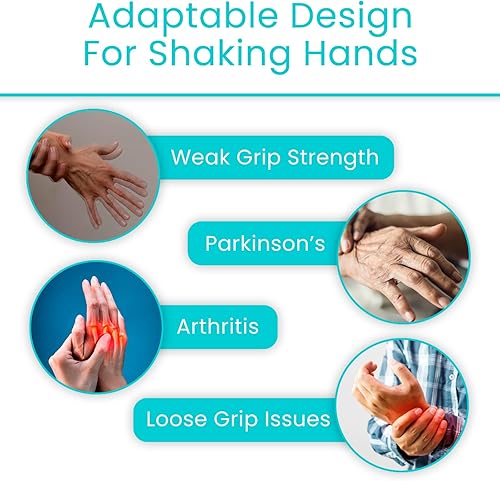
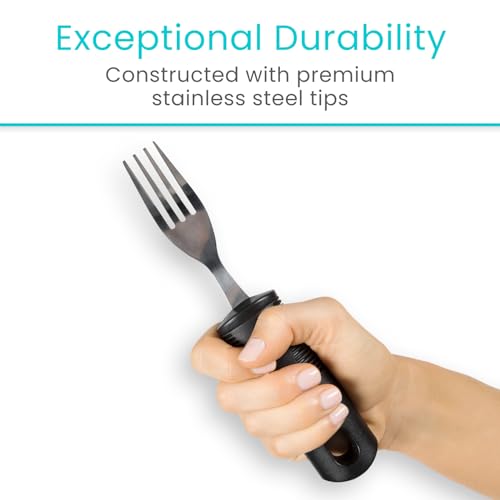
The set is described as heavy stainless steel, a design choice that many adaptive utensil makers use to add subtle heft. That added weight is intended to help dampen small, involuntary movements and give the hand more feedback with each motion.
For older adults with Parkinson related tremors or general hand shaking, a heavier utensil may help reduce the need to grip tightly to keep the spoon steady. The stainless steel construction also signals durability for daily use and easy cleaning without special care steps.
Unlike lightweight plastic utensils that can feel unsteady, this metal build is meant to feel grounded in the hand. Caregivers often report that a little extra weight helps seniors feel more in control when scooping soups, yogurt, or soft foods.
Wide, Easy-Grip Handle Shaped for Arthritic Hands
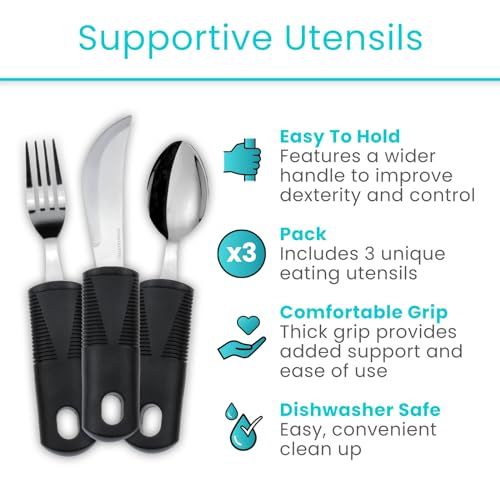
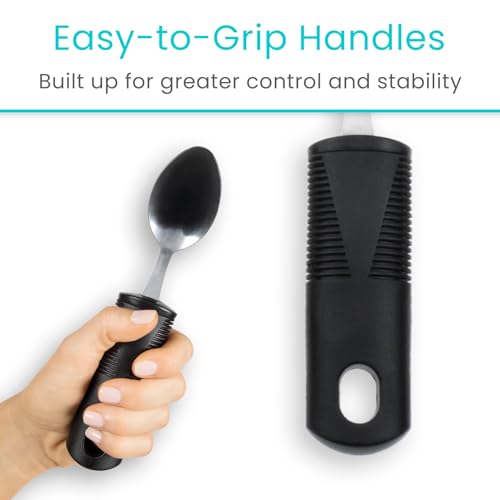
The standout ergonomic feature is the wide, easy-grip handle built to accommodate limited finger dexterity and reduced grip strength. A larger diameter handle can be held with a looser, more natural grasp, which may help reduce hand fatigue during a full meal.
For seniors with arthritis, the ability to hold a utensil without pinching tightly is a meaningful comfort factor. The handle profile is intended to support a palmar grip, so the utensil can be guided more by the whole hand than by the fingertips alone.
If you have been exploring other kitchen adaptive tools for seniors with arthritis, this same principle of reducing joint strain will feel familiar. Pairing utensils that are easier to hold with other low effort kitchen aids can support a more consistent daily routine.
Set-Based Approach for Everyday Independence
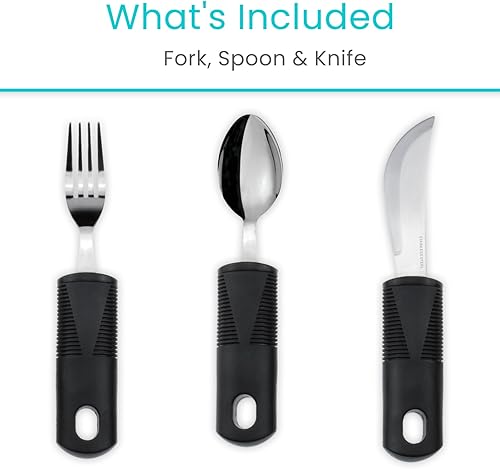
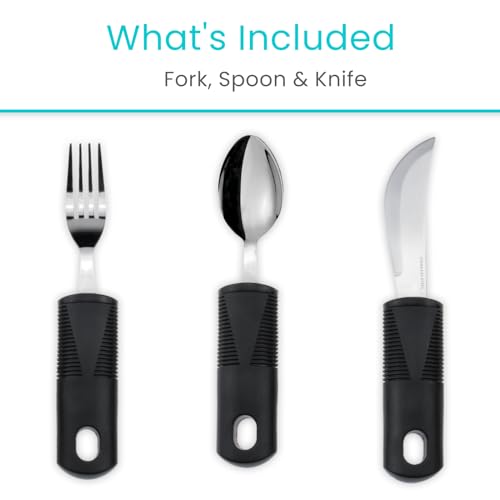
The Vive Adaptive Utensil Set is presented as a coordinated silverware set rather than a single spoon, which helps maintain a familiar place setting. Having a matching fork, knife, and spoon with the same handle style means a senior does not need to switch between adaptive and standard utensils during a meal.
That consistency can matter for confidence and habit formation, especially for those who value dining independently. Caregivers commonly note that a uniform set reduces confusion and makes it easier to set the table the same way each day.
The regular spoon size included in this version is sized for typical bites and daily foods, from oatmeal to stews. It is intended as an everyday tool, not a specialty item that only works for one type of meal.
Simple Care and Familiar Materials
Stainless steel utensils are widely recognized for being straightforward to wash and maintain, and this set follows that pattern. The materials are described as suitable for regular household cleaning, which helps keep daily care simple for caregivers and seniors alike.
There are no electronic parts, batteries, or complex assembly steps noted in the product description. That simplicity supports aging in place, where tools that work right out of the drawer are more likely to be used consistently.
For households that already use other supportive dining items, such as a scoop plate with a high rim, these utensils can complement that setup. You can learn more about coordinating table height and mealtime comfort in our guide on how high an overbed table should be for elderly users.
Where It Comes Up Short
The product information provided for this set is limited, with no detailed measurements for handle diameter, total weight, or length in the visible description. Without those specifics, it is harder to judge in advance whether the balance will feel right for someone with very small hands or severe grip limitations.
The design also relies on added weight and a larger handle rather than features like a swivel, angled shaft, or strap support that some seniors may need for more pronounced tremors. If you are comparing options, consider whether a basic weighted handle is enough or whether you should also look at plates and bowls with walls, and explore aids like a jar opener for seniors with balance issues to reduce overall kitchen strain.
Who Should Buy This
This set is a strong match for older adults who want to keep eating independently but find standard silverware too light or too thin to control comfortably. If arthritis makes pinching difficult or mild to moderate tremors make scooping feel unsteady, the heavy stainless steel and wide handle may help support a more secure and less tiring grip. Caregivers who want a simple, familiar looking utensil without extra parts or learning curves often find this style fits well into daily routines, and pairing it with other daily living supports, such as the button hooks for stroke recovery featured in our Kitchen and Daily Living section, can help maintain broader independence at home throughout 2026.
Who Should Skip It
This set is not ideal for seniors who need a fully customized or clinically fitted solution, such as an angled or swivel utensil prescribed by an occupational therapist for significant tremor or limited wrist rotation. It is also not a good fit if the senior has difficulty lifting any added weight, since the heavy stainless steel design may feel tiring over a full meal, or if the household prefers utensils that are angled, weighted differently for each hand, or secured with a cuff. In those cases, a therapist guided evaluation may help identify a more tailored option.
Frequently Asked Questions
Are Vive adaptive utensils good for elderly with Parkinson’s related hand tremors?
Based on the listed description, the Vive Adaptive Utensil Set is designed with a heavy stainless steel build and an easy-grip handle to support steadier control for shaking hands. Caregivers often report that added weight and a wider grip can help with scooping and reduce spills, though individual comfort varies and a clinician can help assess fit.
What is included in the Vive Adaptive Utensil Set and how is it cleaned?
The product is presented as an adaptive silverware set centered on a regular stainless steel spoon with easy-grip handles, intended for everyday meals. The stainless steel materials are described as suitable for normal household washing, which helps keep cleanup simple without special products.
Will the wide handle help seniors with arthritis hold utensils more comfortably?
The wide handle is intended to allow a looser, whole hand grasp rather than a tight fingertip pinch, which many seniors with arthritis find more comfortable. If joint stiffness or grip strength is a primary concern, comparing handle size and weight and consulting an occupational therapist can help confirm the right choice.
Browse more picks in our Kitchen Adaptive Tools category, or see our related guide on Large Number Scales We Recommend for Seniors in 2026.






Write Your Review
No reviews yet. Be the first to share your experience!