

When a senior spends more time in bed for rest, recovery, or limited mobility, simple routines like eating breakfast, reading mail, or joining a video call require a steady surface close at hand.
This AquaSense overbed table review for elderly looks closely at one specific model, the Medical king Adjustable Overbed Bedside Table, using its listed specifications and caregiver-reported features to assess everyday fit.
Always check with a healthcare provider or occupational therapist before making mobility changes for a senior in your care.
Understanding height range, wheel mobility, surface size, and design trade-offs can help you decide if this table supports aging in place for your household in 2026.
This guide contains affiliate links, and we may earn a commission if you buy through them, at no extra cost to you.
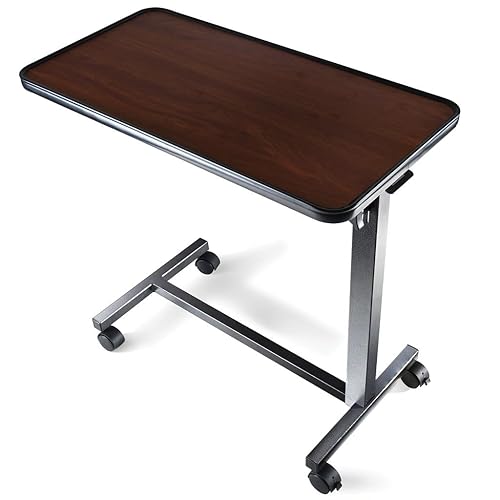
Medical King Adjustable Overbed Table with Wheels









As an Amazon Associate we earn from qualifying purchases. Product prices and availability are accurate as of the date/time indicated.
What Stands Out
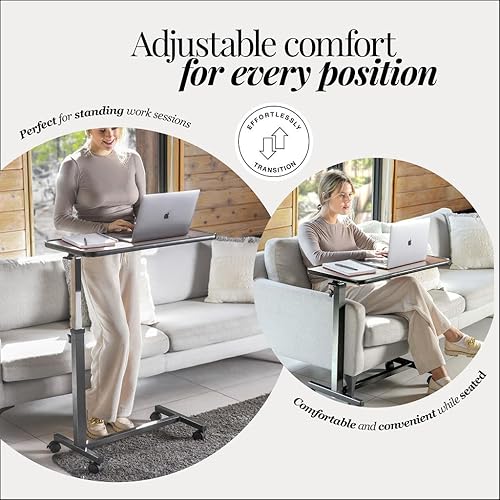
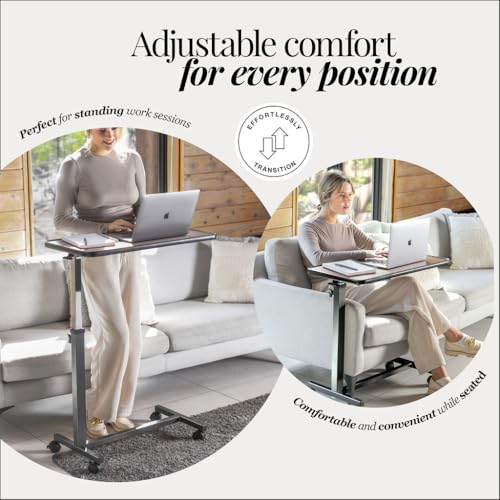
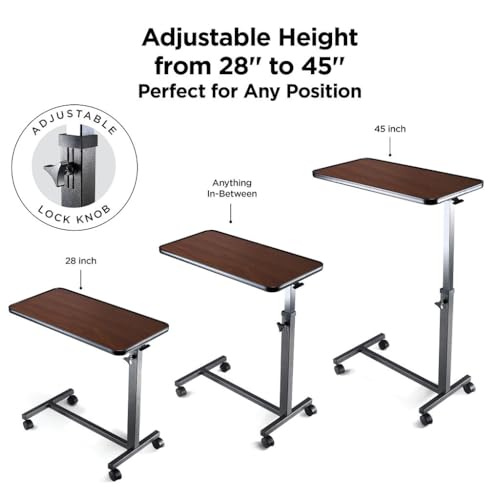
Customizable Comfort With Height Adjustment for Sitting or Reclining
The product description highlights customizable comfort through height adjustment to suit sitting or lying positions.
This flexibility matters for older adults who shift between upright in bed, reclined with pillows, or seated in a chair beside the bed.
Instead of a fixed-height tray, the table is designed to be raised or lowered to align with the mattress height and the senior’s reach.
For caregivers, that means less bending and repositioning when serving meals or setting up activities.
If you are unsure what height is most comfortable and safe, the guide on How High Should Overbed Table Be for Elderly? 2026 Height Guide offers a useful reference for measuring bed and chair clearance.
The listed height range centers around a 30 by 15.5 inch surface with an overall height up to 45 inches, which covers most standard beds and many low-profile frames.
Because the adjustment is described as suitable for home or medical settings, it may help reduce the risk of awkward reaching during meals or reading.
Households that share the table between a bedroom and a living room chair will appreciate not needing separate surfaces for each spot.
Smooth Mobility With Rolling Wheels for Easy Repositioning
Smooth mobility is a second defining feature noted in the specifications.
The table is equipped with smooth-rolling wheels that allow it to glide into place for meals, work, or leisure and then move away when not needed.
For seniors with limited strength, a table that rolls easily can support independence, since it requires less effort to bring items within reach.
Caregivers also benefit, because they can reposition the table with one motion rather than lifting and carrying a tray.
The H-style base is designed to slide under most beds, sofas, or wheelchairs, which helps keep the tabletop close without crowding the floor space.
This under-bed clearance is especially helpful in smaller bedrooms where a bulky base could block a walker or cane.
Compared with stationary bed trays, a rolling design may help reduce the risk of spills from overreaching, by keeping the surface stable and centered.
Families considering different mobility supports may also want to review grabber reacher tool for seniors with low vision for complementary reach solutions.
Spacious Surface That Keeps Essentials Within Reach
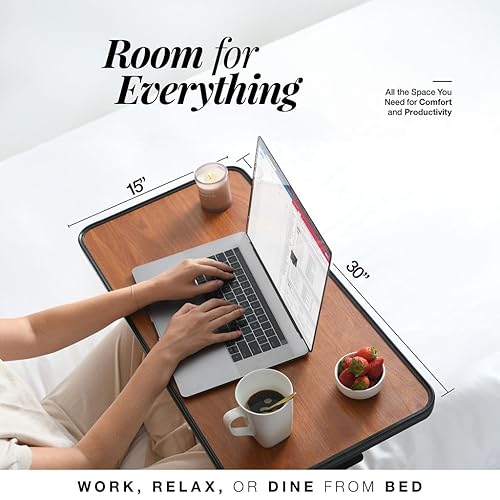
The listed dimensions describe a spacious surface at 30 inches long by 15.5 inches wide, with an overall height up to 45 inches.
That footprint provides room for a plate, cup, book, or laptop without forcing items to the edge.
For older adults who spend extended time in bed, having everything within a single, organized area supports routine and reduces repeated requests for help.
The description notes ample space for meals, laptops, books, and more, which reflects how many households actually use an overbed table throughout the day.
A rectangular top also makes it easier to position a placemat, keep a water bottle upright, and leave space for hands to rest comfortably.
While the surface is not described as having a raised spill lip like some hospital-style models, its size still helps contain daily items in one accessible zone.
For seniors who alternate between eating and other activities, the extra length means a caregiver can set down medication organizers or reading glasses without moving the meal tray.
This kind of consolidated reach may help reduce the risk of knocking items over when reaching across the bed.
Versatile Design for Eating, Reading, and Working
Versatility is emphasized as a core strength, with the table described as a reliable surface for eating, reading, or working.
That broad purpose aligns with aging-in-place needs, where one piece of furniture often serves multiple roles from morning to evening.
In the morning it can function as a breakfast surface, in the afternoon as a reading desk, and in the evening as a laptop stand for calls with family.
The simple, non-tilting design keeps the surface level, which many seniors prefer for bowls, mugs, and writing.
Because the table is presented as suitable for patients, seniors, or anyone needing extra convenience, it fits both short-term recovery and longer-term daily living.
Households that already use adaptive kitchen tools may find this table pairs well with other supports, such as those featured in best jar opener for seniors with balance issues.
The straightforward form also means fewer moving parts to learn, which can be reassuring for caregivers coordinating care across multiple family members.
For a broader view of the category, the parent collection at Kitchen & Daily Living places overbed tables alongside other adaptive supports for home routines.
Where It Comes Up Short
The Medical king Adjustable Overbed Bedside Table focuses on essential function rather than premium features, and that creates clear trade-offs.
The specifications do not describe a one-handed hydraulic or gas-spring lift, a tilt-top, or a divided surface for angled reading.
Seniors who need an angled surface for books or tablets, or who want a separate stationary section for drinks while the main top tilts, may find this flat-top design limiting.
The description also does not list a locking mechanism for the casters, a raised perimeter lip for spill containment, or a certified weight rating.
Without a stated lock or lip, caregivers should plan to position the table on level flooring and use non-slip mats for cups, and to confirm stability before leaving items unattended.
Assembly details and materials are not fully detailed in the provided data, so households seeking chrome-plated steel, solid wood, or tool-free setup should verify those specifics in the listing before purchase.
Finally, with fewer owner reviews than some long-standing hospital-style tables, there is less community feedback to review for long-term durability, even though the existing rating is strong.
These gaps do not make the table unsuitable, but they do mean buyers who prioritize tilt, locks, or documented load capacity may want to compare closely with alternatives.
Who Should Buy This
This table is a strong match for seniors and caregivers who need a simple, mobile surface for everyday bedside use without complex adjustments.
If your primary needs are meals, reading, writing, or laptop use while in bed or seated nearby, the height adjustability and rolling base cover the most common scenarios.
It may help reduce the risk of strain from reaching or holding trays, by bringing a stable surface to the senior rather than asking the senior to lean forward.
Households with limited space will also appreciate the H-base that slides under the bed, keeping the floor clear for walkers and caregivers moving around the room.
Because the design is straightforward, it is often easier for multiple family members or aides to learn and use consistently throughout the day.
For those comparing options within the same adaptive category, the related review essential medical supply overbed table review for elderly provides additional context on how basic and feature-rich models differ.
Who Should Skip It
This model is not ideal for seniors who need a tilt-top for angled reading, writing, or tablet viewing, or who require a two-part top with a stationary section for drinks.
It is also not a good fit if you need a documented locking caster system for a very smooth floor, a raised spill lip for frequent liquid use, or a stated load rating for heavy equipment.
Households where the table must double as a wheelchair desk with a low minimum height should measure carefully, since the listed height up to 45 inches suggests a standard range that may not suit every chair.
If you need a premium wood finish, a gas-spring lift operable with one hand, or a model with extensive long-term owner feedback, you should skip this basic versatile option and consider a more feature-rich alternative.
In those cases, exploring the full Kitchen Adaptive Tools category can help you find a table whose specifications align more closely with your safety and comfort priorities.
Frequently Asked Questions
Does the Medical king Adjustable Overbed Bedside Table tilt for reading or tablets?
According to the provided specifications, this model is described as a flat, versatile surface for eating, reading, and working without a tilting function.
If you need an angled top for books or tablets, look for a tilt-top model that lists dual-tilt or infinite tilt positions in its feature set.
How does the height adjustment work and will it fit under my bed?
The description notes customizable height adjustment to suit sitting or lying positions, with an overall table size around 30 by 15.5 inches and height up to 45 inches.
The H-style base is designed to slide under most beds, sofas, or wheelchairs, but you should measure your bed frame clearance and mattress height to confirm fit.
Is this overbed table easy to move and stable during meals?
The listing highlights smooth-rolling wheels for easy repositioning across home or hospital settings, which helps caregivers glide the table into place.
Stability depends on floor level, wheel contact, and even loading of the 30-inch top, so place it on a flat surface, center items, and confirm steadiness before use.
Browse more picks in our Kitchen Adaptive Tools category, or see our related guide on Kitchen Reacher Tools for Arthritic Hands in 2026.








Write Your Review
No reviews yet. Be the first to share your experience!