

Quick Answer
If adaptive utensils are not working well for a senior after a knee replacement, the most common reason is not the utensil but how and where meals happen. Sitting too low, sitting too far from the table, or using a utensil that does not match hand strength and wrist range often makes eating feel harder. Try adjusting chair height, table distance, and grip support first, then consider a different utensil design if needed.
Why This Happens
After a knee replacement, many seniors sit differently to stay comfortable. A chair that is too low or too soft can change arm angle and make it harder to bring food to the mouth smoothly, even with a built up handle. Always check with a healthcare provider or physical therapist before making changes that affect comfort or safety after a knee replacement.
Adaptive utensils can also feel wrong when the weight, handle size, or bend angle does not match the person. A handle that is too thick may be hard to close around, while a very light utensil may feel less steady for someone with tremor. A fixed straight handle can also force extra wrist bending if the person has limited range of motion.
Fatigue and general deconditioning after surgery can play a role too. If meals are long or the senior is eating when tired, grip strength and coordination may vary across the day. A setup that works at lunch may feel less comfortable at dinner.
Finally, the dining surface matters. A slippery placemat, a bowl that slides, or a plate without a rim can make scooping harder and create more spills, which makes any utensil seem less effective. For more ideas on supportive dining setups, you can explore the Kitchen Adaptive Tools category.
Practical Steps to Try
- Check seating height and distance. Try a firm, stable chair where feet can rest flat and knees are not higher than hips, if that position is comfortable for the senior. Pull the chair close enough so elbows can rest near the table without reaching forward.
- Stabilize the dish and work surface. Try a non slip mat under the plate or bowl and a bowl or plate with a high rim or suction base to reduce sliding. This can reduce the need to hold the dish steady with the other hand.
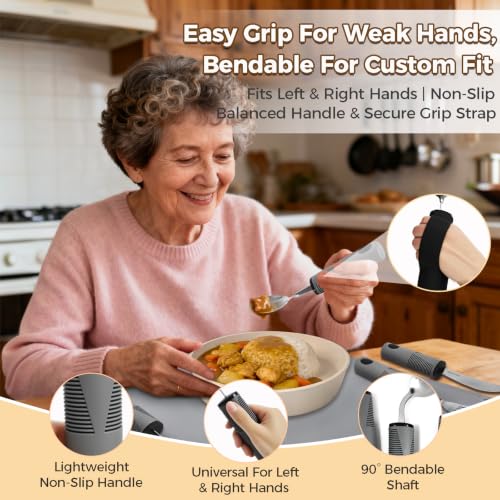
- Adjust the utensil angle and grip. If the utensil has a bendable shaft, try a small angle change so the wrist stays more neutral. You can also try adding a foam grip sleeve or a fastening strap if the handle feels hard to hold, and see if a lighter or slightly weighted option feels more steady.
- Simplify the meal setup. Try smaller portions, softer foods that are easier to scoop, and a spoon with a deeper bowl for soups or cereals. Keep the eating area uncluttered so the senior can focus on one item at a time.
- Observe timing and fatigue. Try scheduling meals when the senior feels most alert and allow short pauses. If you notice consistent difficulty at a certain time of day, share that pattern with an occupational therapist for more tailored guidance.
For related kitchen tasks that also become harder after surgery, guides like best jar opener for seniors with balance issues and best kitchen reacher tools for seniors with arthritis may give you additional setup ideas that reduce reaching and strain.
When a Product Can Help
A different adaptive set may help when you have addressed seating and surface stability but the utensil still feels awkward, slips, or requires too much wrist bending. In that case, one common option is a set with multiple handle supports and bendable angles so you can try different grips without buying separate pieces.
This guide contains affiliate links, and we may earn a commission if you buy through them, at no extra cost to you.

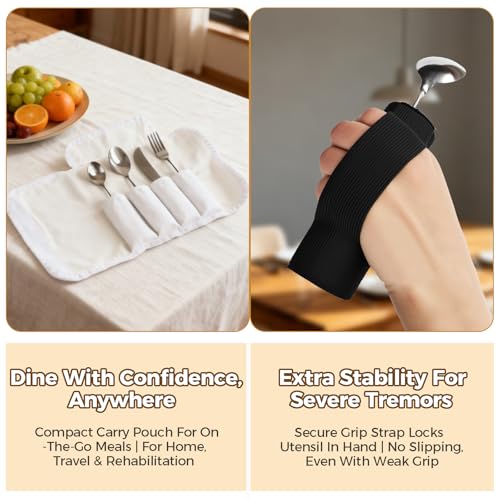
Prime RyroBlayze 9-Piece Bendable Adaptive Utensils Set






As an Amazon Associate we earn from qualifying purchases. Product prices and availability are accurate as of the date/time indicated.
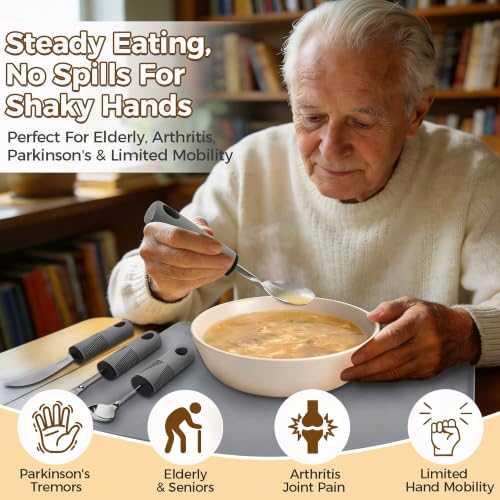
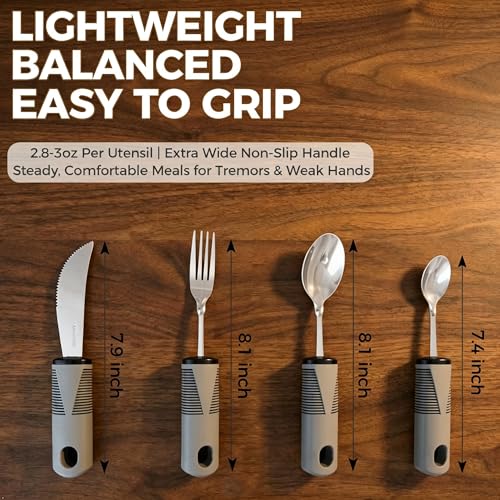
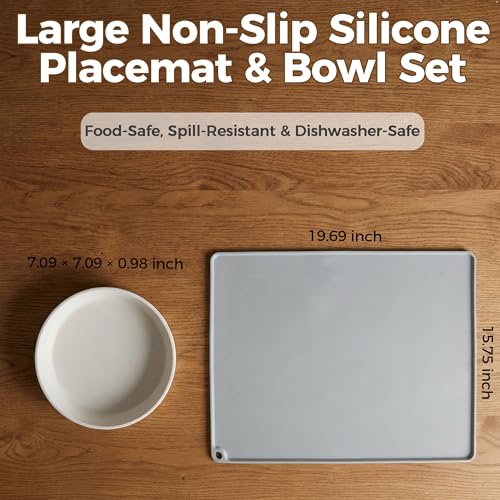
The 9 Pcs Bendable Adaptive Utensils Set is one practical option to consider because it includes bendable spoons, a fork, and a knife with thick non slip built up grips, plus a food grade silicone bowl and non slip placemat that may help reduce sliding during meals. The set is described as lightweight at about 2.8 to 3 oz per utensil with a balanced stabilizing design, and all components are BPA free and dishwasher safe, which may help with daily care.
When to Talk to a Professional Instead
If eating remains difficult, causes choking, coughing, or significant weight loss, or if the senior has new pain, swelling, or weakness after the knee replacement, contact a physician, physical therapist, or occupational therapist promptly. They can assess seating, posture, and hand function and suggest safer strategies.
This type of general utensil set is not ideal for seniors who need highly specialized swallowing support, one handed techniques after a stroke, or custom positioning for severe hand contractures. In those situations, a clinician can recommend tools matched to the individual, rather than a standard built up set.
You should also skip this approach as a standalone fix if the main challenge is getting to and from the table safely, standing for meal prep, or balance while carrying dishes. Those concerns are better addressed with mobility and kitchen safety guidance from a healthcare provider, not just a different utensil.
Frequently Asked Questions
Why do adaptive utensils feel harder to use after a knee replacement?
Knee discomfort can change how a person sits, which changes arm and wrist angles at the table. When posture changes, a utensil that worked before may now require more reaching or bending, so adjusting chair height and table distance often helps.
Should we choose weighted or lightweight adaptive utensils?
It depends on the senior’s hand strength and steadiness. Some people find a little weight helps steady small tremors, while others find lightweight utensils less tiring over a full meal. If possible, try both types for a few meals and note which feels more comfortable and less fatiguing.
What else helps if the senior still struggles to eat independently?
Try stabilizing the dish with a non slip mat, using a rimmed plate or scoop bowl, and keeping foods in easy to scoop portions. If challenges continue, an occupational therapist can suggest personalized techniques and tools that support independence at mealtimes.
Browse more picks in our Kitchen Adaptive Tools category, or see our related guide on Kitchen Reacher Tools for Arthritic Hands in 2026.





Write Your Review
No reviews yet. Be the first to share your experience!