

Quick Answer
If your adaptive utensils are not working well, the most common reason is a mismatch between the utensil design and the senior’s current hand strength, grip, or range of motion. A lighter foam handle, a different weight, or an angled shape may be more comfortable than what you have now. Before you replace the set, try a few simple adjustments to seating, plate setup, and grip position, which often help more than switching brands alone.
Why This Happens
Adaptive utensils come in many styles, and what works for one person may not work for another. Always check with a healthcare provider or occupational therapist before making changes that affect eating safety for a senior in your care. A quick review of how your loved one holds and moves the utensil often reveals the mismatch.
Foam handles that are too large, too small, or too soft can make control harder. If the hand slides, squeezes too hard, or tires quickly, the grip size or texture may not suit their current strength. You may notice food slipping off, the utensil turning in the hand, or the need to use two hands for a task that should take one.
Weight and balance are another common factor. Some people do better with lightweight utensils that reduce fatigue over a full meal, while others find a little added weight helps steady movement. If the utensil feels tiring to lift or too light to control, the balance may be off for that person. The same set can feel very different at breakfast when energy is higher versus dinner when fatigue sets in.
Angle and daily setup also matter. A straight fork or spoon requires more wrist rotation, which can be uncomfortable if range of motion is limited. A plate that slides, a table that is too high or low, or a chair without arm support can make even a good utensil feel ineffective. For related kitchen ease, you might find ideas in our guide to the best jar opener for seniors with balance issues which covers stable positioning that also helps at mealtimes.
Practical Steps to Try
- Check seating and table height first. Make sure your loved one is seated upright with feet flat and elbows close to table height. If the table is too high or low, the wrist has to bend more, which makes any utensil harder to use. A stable chair with armrests and a table at comfortable height often improves control right away. Our article on How High Should Overbed Table Be for Elderly offers general height guidance you can apply to dining tables as well.
- Stabilize the plate so less precision is needed. Use a plate with a raised rim or lip and place a non-slip mat underneath so the plate stays put. This lets the person push food against the edge instead of needing precise scooping. You can also try serving softer, bite-size foods that stay on the spoon more easily and reduce spills.
- Look at how the utensil is held and try a grip adjustment. A grip closer to the middle of the handle often gives more control than gripping near the tip. If the handle feels thin or slippery, one common option is to add foam grip tubing that slides over a regular utensil to build up the diameter. This low-cost change lets you try different thicknesses without buying a whole new set, and you can trim it to a comfortable length.
- Consider weight and angle one change at a time. If the current set feels tiring, try a lighter foam-handle option for a few meals and note any change in fatigue. If hands shake, some people find a slightly weighted utensil steadier, while others prefer lightweight. An angled or bendable utensil can also reduce wrist movement for those with limited rotation. Trying one change at a time helps you tell what actually helps.
- Match the utensil to the meal and simplify the task. A teaspoon may be easier to manage than a tablespoon, and a curved rocker knife can be simpler than a straight knife that needs a sawing motion. Offer one utensil at a time and keep the other hand free to stabilize the plate if that feels natural. Keep meals relaxed and allow extra time, which often reduces spills more than any tool change.
When a Product Can Help
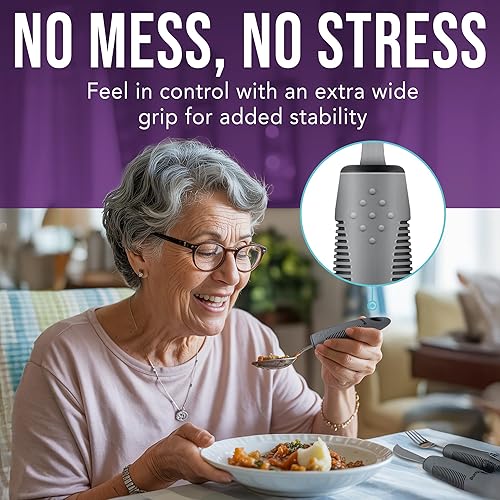
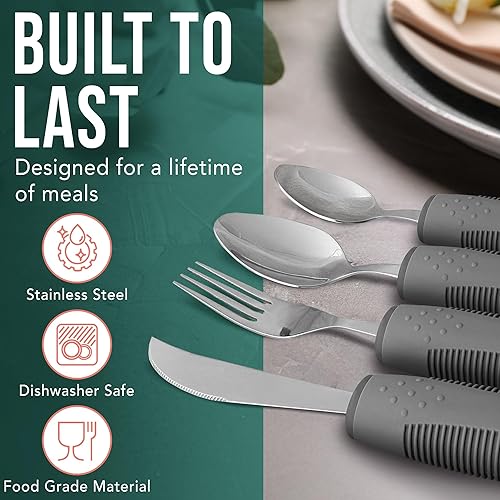
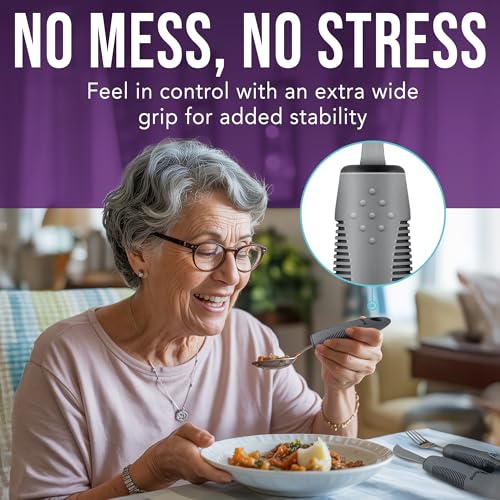
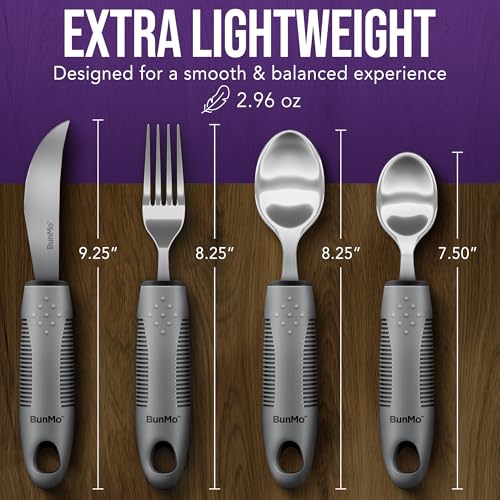
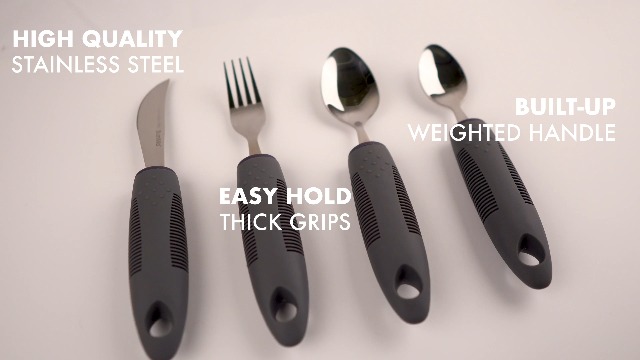
If adjustments at home do not improve comfort, a different utensil design may be worth trying. A lightweight set with large, soft foam handles and a discreet travel wrap can be a practical option when grip strength is limited and you want something portable for home and dining out. Look for rustproof stainless steel and dishwasher safe construction for daily ease, and a set that includes a fork, spoons, and a rocker knife to cover most meals without extra pieces to manage.
This guide contains affiliate links, and we may earn a commission if you buy through them, at no extra cost to you.
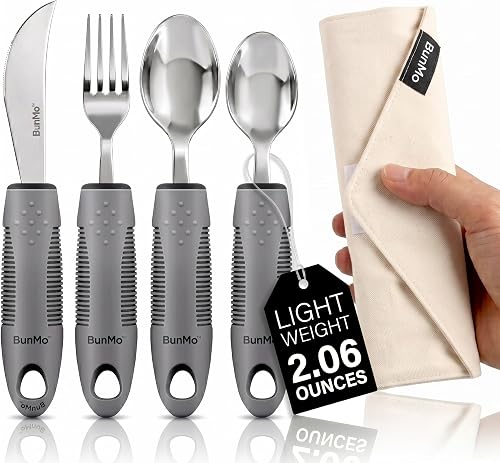
Prime BUNMO Adaptive Utensils for Seniors









As an Amazon Associate we earn from qualifying purchases. Product prices and availability are accurate as of the date/time indicated.
When to Talk to a Professional Instead
Some situations call for professional guidance rather than another product swap. If you notice increased coughing or choking while eating, significant weight loss, frequent spills that lead to frustration, or a sudden change in hand function, contact a physician or occupational therapist promptly. These changes can signal an underlying issue that a utensil alone cannot address, and early input may help reduce the risk of mealtime difficulties.
A lightweight foam-handle set is not ideal for everyone. For example, it is not a good fit for a senior who needs substantial weight for steadiness, requires a specific angled utensil prescribed by a therapist, or has swallowing difficulties that need a clinical eating plan. In those cases, a therapist can evaluate grip, range of motion, and safe swallowing and recommend a more tailored aid. The same is true if the senior has had a recent stroke or joint surgery and needs a personalized approach.
You should also seek advice if the senior’s abilities are changing quickly or if home adjustments create new challenges. An occupational therapist can suggest positioning, adaptive strategies, and referrals that go beyond utensils. For broader daily living ideas, explore our Kitchen Adaptive Tools category and our parent guide to Kitchen & Daily Living for related supports that work together at mealtimes.
Frequently Asked Questions
Why do our adaptive utensils still feel unstable even with a large handle?
A large handle helps only if it matches hand size and grip strength. If the handle is too thick to close comfortably, too soft to control, or the utensil balance is off, it can still wobble. Try adjusting grip position and checking table height before switching to another handle style.
Should we try weighted or lightweight utensils for shaky hands?
There is no single best choice, as some people find lightweight easier for longer meals while others find a little weight steadier. Try one style for several meals and note fatigue and control. An occupational therapist can help you decide which direction to explore based on observed movement.
Is it okay to add foam tubing to regular silverware instead of buying adaptive utensils?
Yes, foam grip tubing is a common low-cost way to build up a thin handle and may help you find a comfortable diameter. It slides over many standard forks and spoons and can be trimmed to length. If tubing does not provide enough stability or the utensil still requires too much wrist rotation, a dedicated adaptive set with an ergonomic shape may be the next option to consider.
Browse more picks in our Kitchen Adaptive Tools category, or see our related guide on Kitchen Reacher Tools for Arthritic Hands in 2026.










Write Your Review
No reviews yet. Be the first to share your experience!