

Quick Answer
The most common reason a jar opener feels unsafe after stroke recovery is that it needs two hands, strong grip, or steady twisting at the same time. Try stabilizing the jar on a non slip surface first, then add friction at the lid with a rubber gripper, and keep the motion close to your body while seated. These small changes may help reduce the risk of slips without needing a completely new setup.
Why This Happens
After a stroke, one side may be weaker and grip may fatigue quickly. Many standard jar openers assume you can hold the jar firmly with one hand while you twist hard with the other, which is difficult when strength and coordination are uneven.
Some openers also add instability. Under cabinet models can be mounted too high, require overhead reaching, or need a sharp twisting motion that pulls on the shoulder. Countertop models can slide if the base is not secure. Always check with a healthcare provider or occupational therapist before making safety changes for a senior in your care.
Wet or smooth lids make the problem worse. If the rubber inside an opener is worn, or the lid is slightly oily, the tool can spin without gripping. That sudden slip can strain the wrist or cause the jar to tip.
Finally, the opener may not match the person or the kitchen. A handle that is too short offers little leverage, and a grip that is too wide can be hard to hold with a weaker hand. For more context on choosing tools that fit different needs, you can review the Kitchen Adaptive Tools category.
Practical Steps to Try
- Sit and stabilize the jar at counter height. Place the jar on a non slip mat or damp shelf liner on a stable table or counter, not on a slick surface. Sit in a sturdy chair with feet flat, keep the jar close to your body, and brace your stronger forearm on the table edge for support. This may help reduce the need to hold the jar in mid air.
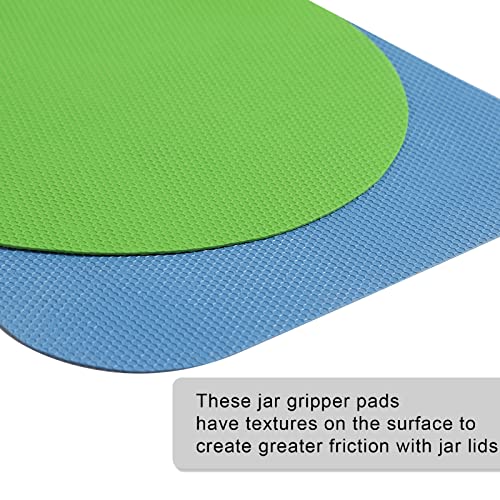
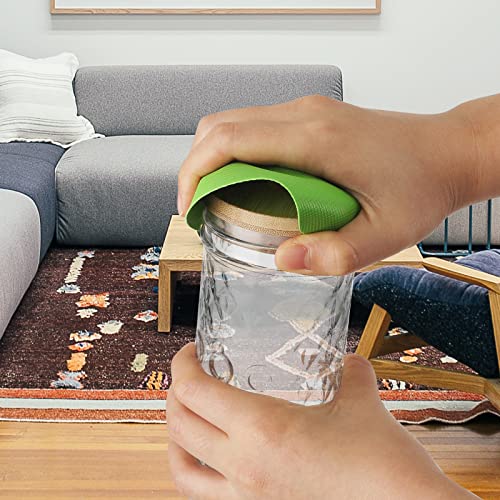
- Add friction at both ends before you twist. Put a rubber gripper pad under the jar and a second gripper on top of the lid. The textured surface increases friction so you need less hand strength to keep the jar from spinning. Check that the gripper is dry and fully covers the lid, and replace it if it feels smooth or cracked.
- Break the vacuum seal first, then open. Try tapping the lid edge gently on the counter, or running warm water over the metal lid for a few seconds and drying it well. Then use the rubber gripper to turn slowly with your stronger hand while the non slip base holds the jar. One common option is to pause, reposition your grip, and turn again in small increments rather than forcing one hard twist.
- Adjust height and leverage to avoid overhead strain. If you use an under cabinet opener, the jar should be at a height where you can see the lid and turn without lifting your shoulder above chest level. If you have to reach up or twist awkwardly, try a portable countertop approach instead. You can find related ideas for safer positioning in this guide to the best jar opener for seniors with balance issues.
- Check fit, keep it simple, and practice with an empty jar. Choose an opener opening that fits the lid snugly without wobbling, and keep handles clean and dry for a secure hold. Try the motion with an empty, lightweight jar first to see if you can turn it without the jar sliding. If the jar still spins or you feel unsteady, stop and try a different stabilization method. For other one handed daily tasks after stroke, many caregivers also find ideas in button hooks for stroke recovery useful for understanding adaptive tool design.
When a Product Can Help
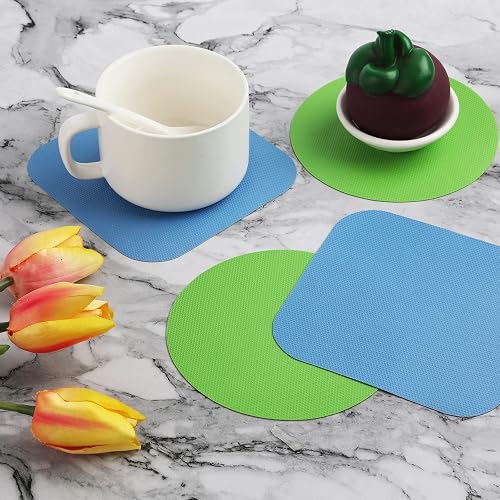
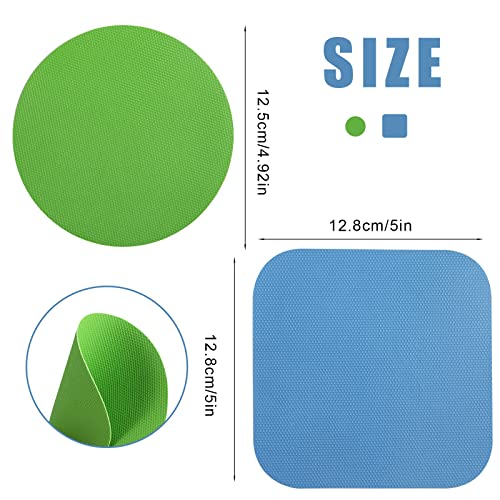
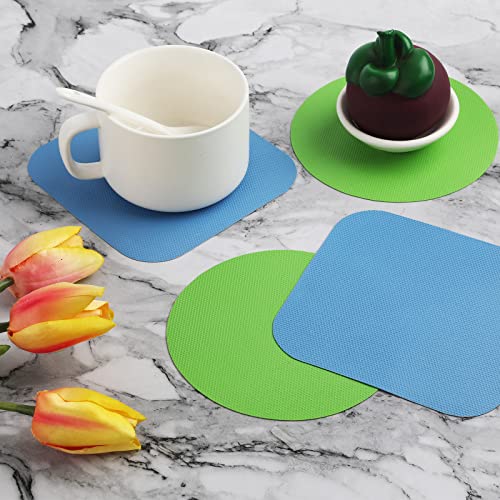
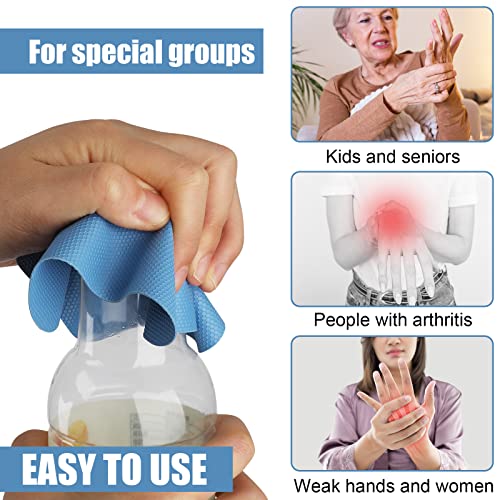
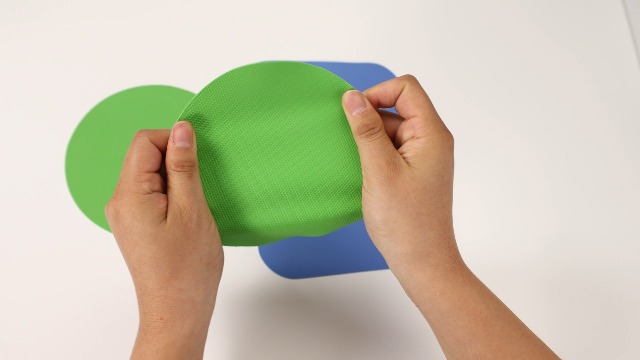
A product may help when the jar still spins even on a non slip surface, or when you need more friction without squeezing harder. In that case, a simple rubber gripper set is often a reasonable next step because it adds grip at both the base and the lid and does not require mounting or complex handling. Look for a set that includes multiple shapes and sizes so you can match the pad to the jar, is made of soft, tear resistant rubber with a textured surface, and can also be used as a coaster or heat pad when not opening jars.
This guide contains affiliate links, and we may earn a commission if you buy through them, at no extra cost to you.

Prime LUTER 4-Pack Rubber Jar Opener Gripper Pads



As an Amazon Associate we earn from qualifying purchases. Product prices and availability are accurate as of the date/time indicated.
When to Talk to a Professional Instead
This type of rubber gripper pad is not ideal for a senior who cannot safely stabilize the jar even when seated, who has significant shoulder pain, severe spasticity, or very limited grasp on the stronger side. It is also not a good fit if the kitchen layout forces overhead reaching or if the person feels unsteady standing to open jars.
If opening jars causes pain, numbness, repeated slips, or a feeling of being off balance, pause home adjustments and ask a physician, occupational therapist, or physical therapist for guidance. They can assess hand function, recommend positioning, and suggest whether a different adaptive approach or a seated workstation would be safer.
A professional can also review the whole task, not just the opener. They may suggest ways to set up the counter, choose easier to open containers, or plan for help with tightly sealed jars, which may help reduce the risk of strain while supporting independence where possible.
Frequently Asked Questions
How can I open a jar safely with one hand after stroke recovery?
Try to keep the jar from turning rather than trying to grip harder. Place a non slip pad under the jar on a stable surface, add a rubber gripper on the lid, and turn slowly in small increments while seated and braced. If the jar still moves, ask an occupational therapist about one handed techniques that fit your specific strength.
Is an under cabinet jar opener safer than a handheld one?
It depends on mounting height and strength. An under cabinet opener can hold the lid so you use one hand, but if it is mounted too high or requires a strong twist, it may strain the shoulder. A portable non slip base and gripper is often easier to position at a comfortable height without installation.
What if the lid is stuck even with a gripper?
Check that the gripper and lid are clean and dry, make sure the gripper fully covers the lid, and try breaking the seal with warm water on the lid followed by drying. Use gentle, repeated turns instead of one forceful twist. If it remains stuck, set it aside and ask for help rather than risking a slip or spill.
Browse more picks in our Kitchen Adaptive Tools category, or see our related guide on Kitchen Reacher Tools for Arthritic Hands in 2026.


Write Your Review
No reviews yet. Be the first to share your experience!