

Quick Answer
If your stair handrail feels unstable for an elderly user, what to check first for elderly safety is the mounting hardware, not the rail itself. In most homes, wobble comes from screws that have loosened, anchors that never hit solid structure, or a wall surface that cannot hold weight well.
Try a gentle wobble check, watch where the base meets the wall, and see if screws spin or the base pulls away. If the hardware is loose or the wall material is soft, tightening, re-anchoring into solid backing, or repositioning the rail is often the most direct next step to try.
Why This Happens
Handrails carry repeated pulling and sideways force every time someone steadies themselves on steps. Over time, that motion can loosen screws, especially if they were set only into drywall, thin trim, or soft mortar.
Always check with a healthcare provider or physical therapist before making safety changes for a senior in your care, especially if balance or strength has recently changed. They can help you decide if a hardware adjustment is enough or if more support is needed.
Another common cause is a mismatch between the rail and the wall. A compact U-shaped rail designed for 1 to 3 steps near an entry, porch, or garage may feel flexible if it is mounted only to siding or hollow material without solid blocking behind it.
Outdoor conditions can add to the problem. Wood expands and contracts with moisture and temperature, masonry can crumble, and powder coating can hide early rust around the base that weakens the connection.
The rail itself may be fine while the wall cannot hold it. Vinyl siding, hollow brick, or deteriorated wood trim often needs a mounting board or proper anchors to create a stable base. For more context on entry safety, you can explore the Outdoor & Entrance Safety section and the broader Fall Prevention overview.
Practical Steps to Try
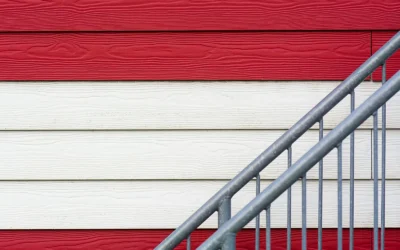
- Do a gentle, no-weight wobble check. Stand to the side and try moving the rail slightly up and down and side to side while watching the base plates. Notice whether the entire base lifts from the wall or only the rail itself flexes, which points to different fixes.
- Inspect each screw and anchor closely. Try tightening screws with the correct driver, but stop right away if a screw spins without gripping or the anchor turns. A spinning fastener often means the wall material has failed and needs a different anchor or backing.
- Confirm what is behind the mounting surface. Try to locate a stud, solid wood blocking, or solid masonry. One common option is to shift the rail a few inches so at least two fasteners hit solid structure, using anchors that are rated for your specific wall type such as wood, concrete, or brick.
- Look for damage, rust, or gaps around the base. Try cleaning the area, checking for soft wood, cracked mortar, or bent plates, and see if the base sits flat. If the surface is uneven or damaged, a solid mounting board or professional repair may help create a firm, flat connection.
- Observe how the rail is used day to day. Try watching whether your loved one must reach too far, pull at an angle, or lean heavily on a short rail. If the rail is too low, too high, or too short to support a natural grip, try discussing placement or additional support options with a professional. You may also find helpful background in the ADA cane requirements for seniors aging in place guide when considering added mobility support.
When a Product Can Help
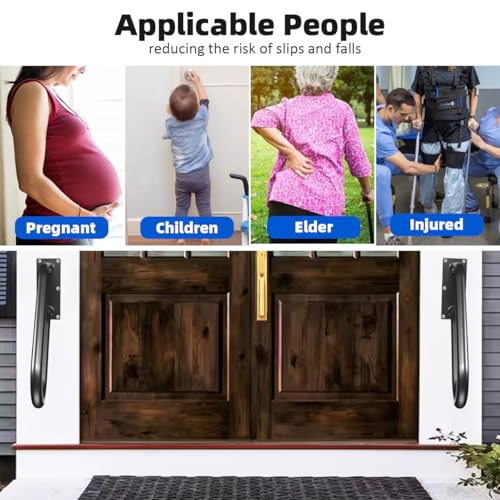
If tightening and re-anchoring does not steady the rail, or the current rail was never secured to solid structure, a replacement designed for wall mounting near short entry steps may be a practical next step. Look for a simple U-shaped design with a comfortable, non-slip grip and a powder-coated metal construction that is described as suitable for indoor and outdoor use.
This guide contains affiliate links, and we may earn a commission if you buy through them, at no extra cost to you.

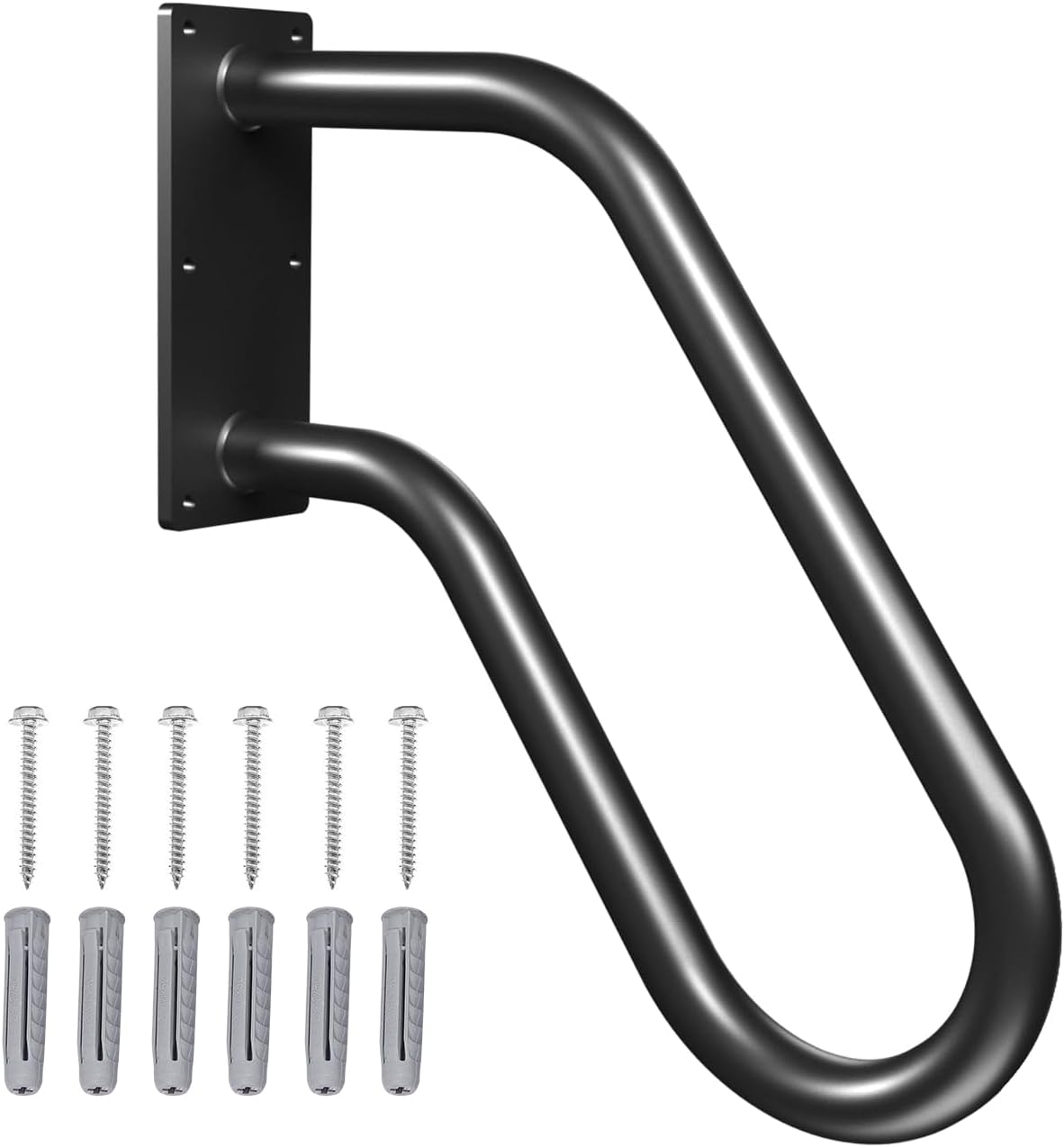
Prime Sahans 16 Inch Black Metal U-Shaped Wall Mount


As an Amazon Associate we earn from qualifying purchases. Product prices and availability are accurate as of the date/time indicated.
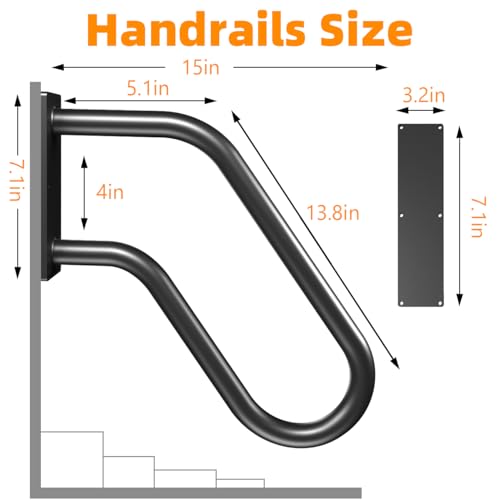
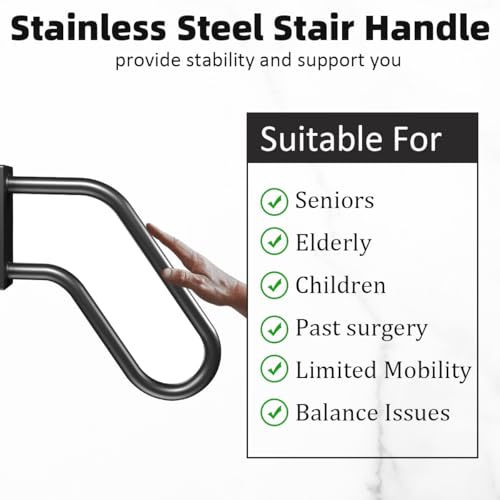
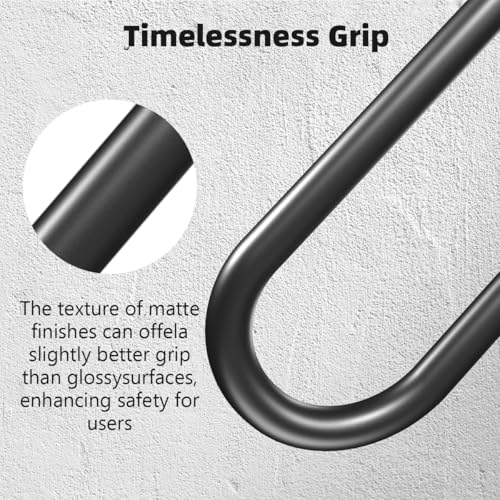
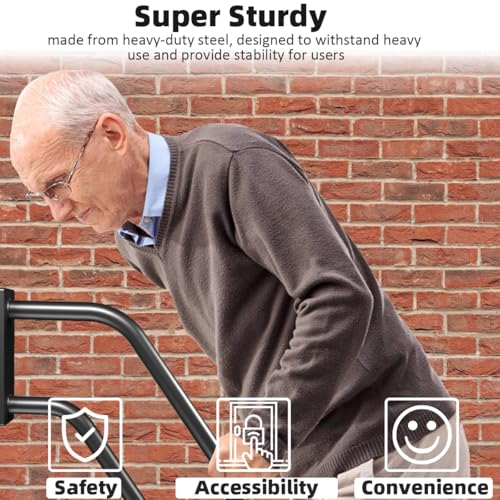
The Handrails Wall Mount Stair Safety Handle Non-Slip is listed as a wall-mounted U-shaped handle intended to support stepping up and down for 1 to 3 steps, with a black powder coating to help resist rust and included screws and expansion tubes for concrete or brick. Its U-shaped profile is designed to offer a steady place to hold near a porch, garage, or garden entry, which may help reduce the risk of a misstep when the rail itself is securely anchored.
When to Talk to a Professional Instead
A hardware fix is not ideal for every situation. This type of short wall-mounted rail is not a good fit for long staircases, open sides without a wall, or cases where someone needs continuous support along the entire flight.
Try contacting a qualified contractor or handyman if screws will not hold, the wall is soft, cracked, or hollow sounding, or you are unsure what is behind the surface. They can assess backing, recommend anchors rated for your wall type, and confirm height and placement that allows a comfortable grip without overreaching.
If unsteadiness, recent falls, or new difficulty with stairs are part of the concern, try talking with a physician, occupational therapist, or physical therapist before relying on a rail alone. They can evaluate balance, strength, and whether additional measures such as improved lighting, non-slip treads, or a different mobility aid would better support safety and independence.
Frequently Asked Questions
Can I fix a wobbly handrail with longer screws?
Longer screws only help if they reach solid wood blocking, a stud, or solid masonry. If they still sit in drywall or damaged material, try using anchors rated for your wall type or having a professional add solid backing. A secure connection to structure matters more than screw length alone.
How do I know if the handrail is at the right height for an elderly user?
Try watching how your loved one naturally reaches for the rail. It should be easy to grip with a slightly bent elbow without leaning forward or twisting. If reaching feels awkward or the hand must slide to find support, try asking a professional for placement guidance.
Should I add a second rail on the opposite side?
A second rail can be helpful on wider or longer stairs, but it depends on the layout and the person’s needs. Try discussing the staircase design, daily routine, and overall entrance safety with a contractor and a healthcare provider. They can help you decide what combination of supports may help reduce risk most.
Browse more picks in our Outdoor & Entrance Safety category, or see our related guide on Door Lever Handles for Seniors Outdoors in 2026.


Write Your Review
No reviews yet. Be the first to share your experience!