

Quick Answer
If your outdoor grab bar does not feel steady or helpful for a senior, the issue is often placement, mounting surface, or the bar being the wrong type for the step, not just the bar itself. Try checking where it is anchored, how the senior naturally reaches for it, and whether the entrance needs a different style of support before you buy another product.
Why This Happens
An outdoor grab bar often feels unhelpful when it is mounted where a senior cannot use it naturally. If the bar is too high, too low, or set back from the step, the person may have to twist or lean to reach it, which can feel less stable. Always check with a healthcare provider, physician, or physical therapist before making safety changes for a senior in your care, especially if balance has changed recently.
Mounting surface is another common cause. A bar screwed only into siding, trim, or soft wood may flex or feel loose even if the bar itself is strong. For reliable support, grab bars need solid backing such as a stud, masonry, or a manufacturer approved anchor, and outdoor surfaces add extra stress from weather and temperature changes.
The bar style may also be a mismatch for the entrance. A short vertical bar at a doorway works differently than a longer horizontal handrail along steps. Seniors who need continuous support while climbing two or three steps may find a single small bar leaves a gap with nothing to hold onto between the bottom and top.
Finally, an outdoor grab bar alone is often not enough for all needs. Uneven steps, poor lighting, slippery surfaces, or a lack of contrast at the edge can make any bar feel less effective. You can explore more entrance options in the Outdoor & Entrance Safety section and general strategies in Fall Prevention to see how other supports work together.
Practical Steps to Try
- Check the mounting and stability. Gently try to wiggle the bar without putting full weight on it. Look for movement at the base, gaps behind the flange, rust, or loose screws. If you see flex or corrosion, avoid using it for support and have the mounting evaluated by a qualified installer.
- Observe how the senior uses the entrance. Watch from a safe distance as they approach, step up, and open the door. Note where their hand naturally reaches, whether they need to let go mid-step, and if they favor one side. This can show if the bar is on the wrong side or needs to be longer or angled differently.
- Improve the surrounding conditions. Clear leaves, ice, or clutter from steps, add non-slip tread where appropriate, and make sure lighting clearly shows the edge of each step at night. A bar may feel more helpful when the footing and visibility are better, and these fixes do not require new hardware.
- Consider adding continuous support. If there are two or more steps, a single grab bar often leaves an unsupported gap. One common option is a longer wall-mounted handrail that runs the full length of the steps so the hand can stay in contact the whole way. Compare your step count and wall space to what is already installed.
- Make small adjustments to technique and routine. Encourage the senior to pause before the step, keep the hand firmly on the support, and carry items separately so one hand stays free. If fatigue or unsteadiness is new or getting worse, route that question to a doctor or physical therapist rather than trying to solve it with hardware alone.
When a Product Can Help
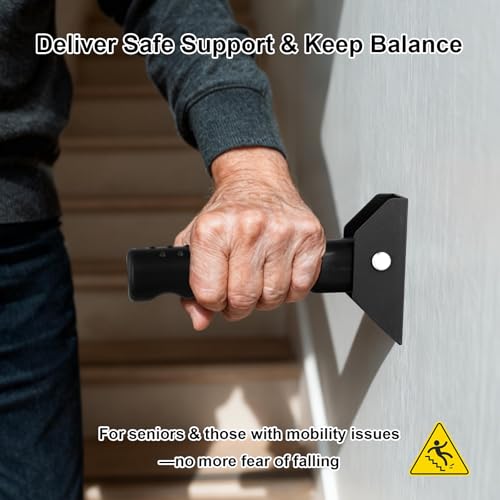
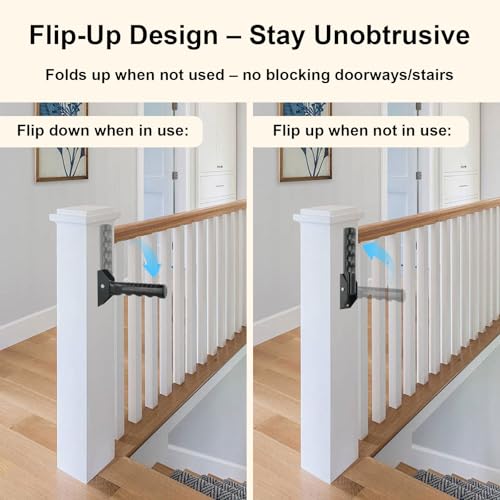
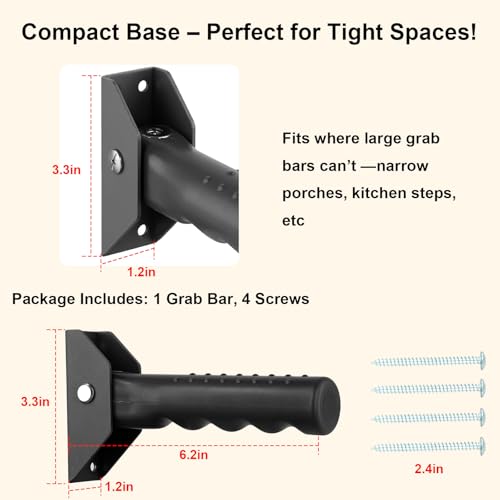
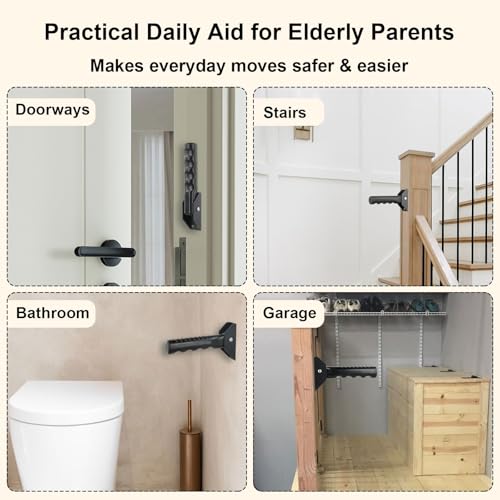
A different product can be a reasonable next step when the current bar is too small, blocks the doorway, or does not match the space. For tight entryways where a long rail will not fit, one common option is a compact flip-up handle that can be folded out of the way when not in use.
This guide contains affiliate links, and we may earn a commission if you buy through them, at no extra cost to you.

Prime VigorKeeper Flip Up Doorway Grab Bar


As an Amazon Associate we earn from qualifying purchases. Product prices and availability are accurate as of the date/time indicated.
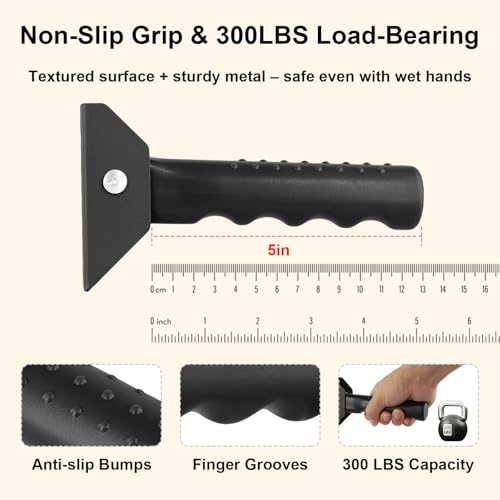
The Doorway Assist Handle Flip Up Grab Bar for Seniors is designed for doorways, small steps, and narrow porches where space is limited. According to its specifications, it features a heavy-duty metal build with a non-slip grip and is rated to hold up to 300 lbs, with a flip-fold design that folds flat against the wall to keep the path clear. For ideas on how different handles work at entries, you may also find the guide to best door lever handles for seniors with hearing loss outdoors useful for thinking about the whole entrance setup.
When to Talk to a Professional Instead
This type of small doorway handle is not ideal for seniors who need full weight-bearing support along several outdoor steps or who have significant unsteadiness that requires continuous hand contact. It is also not a good fit for walls without solid backing or for entrances where the main risk comes from uneven grade, crumbling steps, or a need for a ramp.
Talk to a healthcare provider, physician, occupational therapist, or physical therapist if the senior has had a recent fall, shows sudden changes in balance, or needs help deciding between a grab bar, handrail, or ramp. A professional can assess strength, reach, and home layout and recommend a safer configuration. You can also review broader mobility options such as wheelchair ramps for seniors with hearing loss if steps themselves are becoming a barrier.
Frequently Asked Questions
Why does our outdoor grab bar feel wobbly even though it was tightened?
Movement often comes from what is behind the wall, not the screws themselves. Siding, trim, or drywall alone may not provide enough holding strength, and outdoor exposure can loosen anchors over time. Have a qualified installer check the backing and use manufacturer recommended hardware for your wall type.
Should the grab bar be vertical, horizontal, or angled at outdoor steps?
It depends on how the senior moves. Vertical bars can help with pulling up at a single step or doorway, while horizontal or angled rails help maintain contact while moving along several steps. Try to match the bar orientation to the natural hand path and consider a longer rail if the hand has to leave the bar mid-climb.
Can we just add a second small grab bar instead of a full handrail?
Sometimes two small bars can help at a doorway, but they may still leave an unsupported gap on longer stair runs. If the senior needs to keep a hand on support the entire time, a continuous handrail that spans the steps often provides more consistent contact. A physical therapist or installer can help you decide what length and placement fit your entrance best.
Browse more picks in our Outdoor & Entrance Safety category, or see our related guide on Door Lever Handles for Seniors Outdoors in 2026.



Write Your Review
No reviews yet. Be the first to share your experience!