

Keeping track of blood pressure at home becomes more important with age, yet small screens and confusing buttons can make daily checks frustrating for older adults and their caregivers. A monitor with a large, easy to read display and a comfortable cuff can help make the routine feel calmer and more manageable.
This Medline blood pressure monitor large display review for elderly focuses on one specific model, the iHealth Track Smart Upper Arm Blood Pressure, and evaluates what its specifications and common caregiver reports suggest for senior households in 2026. You will find a close look at display clarity, cuff fit, connectivity, and everyday ease of use, without hands on claims.
This guide contains affiliate links, and we may earn a commission if you buy through them, at no extra cost to you.

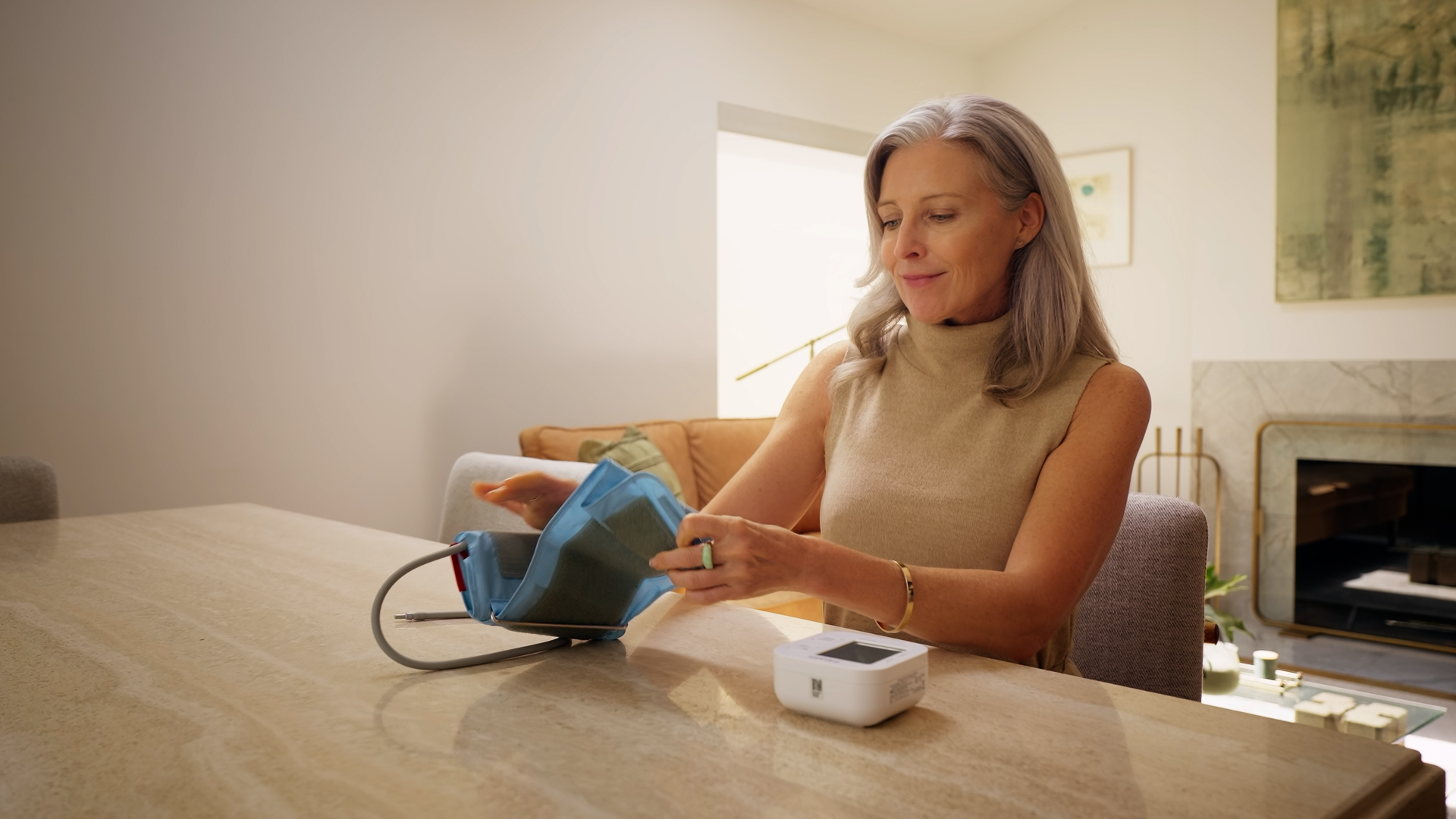
iHealth Track 550BT Smart Upper Arm Blood Pressure





As an Amazon Associate we earn from qualifying purchases. Product prices and availability are accurate as of the date/time indicated.
What Stands Out
Large Display with Color Coded Results for Quick Reading
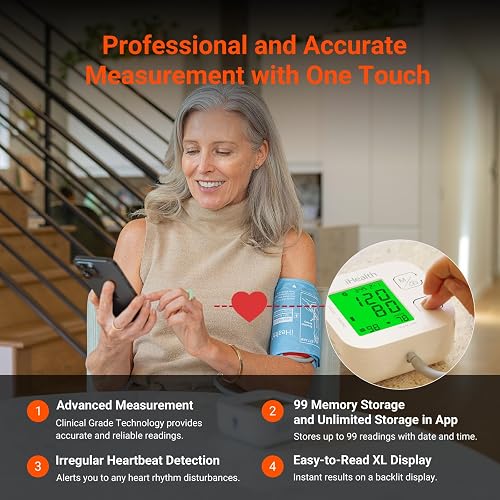
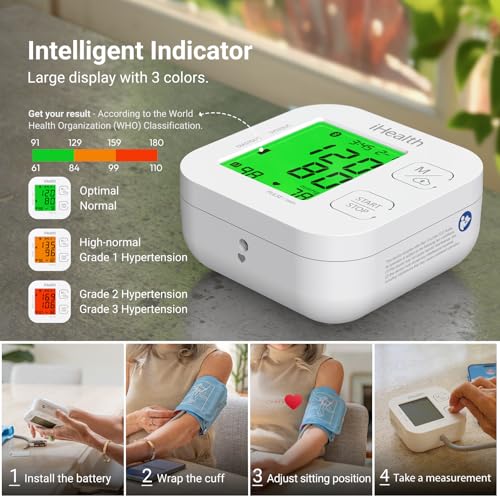
The most relevant feature for this audience is the oversized display that presents systolic, diastolic, and pulse readings in large numerals. According to the product description, the screen is designed to be highly visible, which may help reduce the need to squint or bring the monitor close to the face.
Caregivers often report that color coded indicators are especially helpful for older adults who want an at a glance sense of where a reading falls. The iHealth Track uses a simple color system on the display to signal general ranges, so you can see quickly whether a result is within a commonly referenced zone.
For seniors with mild low vision, large characters combined with strong contrast can make a meaningful difference in daily confidence. While the monitor does not replace guidance from a healthcare provider, a clearer screen may help reduce errors from misreading numbers.
If you have explored other options in our large display BP monitors for elderly with hearing loss guide, you will notice that display size and contrast are consistently top priorities for aging in place households. This model aligns with that priority by emphasizing legibility over extra on screen clutter.
The layout also keeps information uncluttered, with each value in its own defined area of the screen. That separation can help seniors who find crowded digital screens overwhelming, and it supports caregivers who check readings quickly during a visit.
Wide Range Upper Arm Cuff for Standard to Large Adult Arms
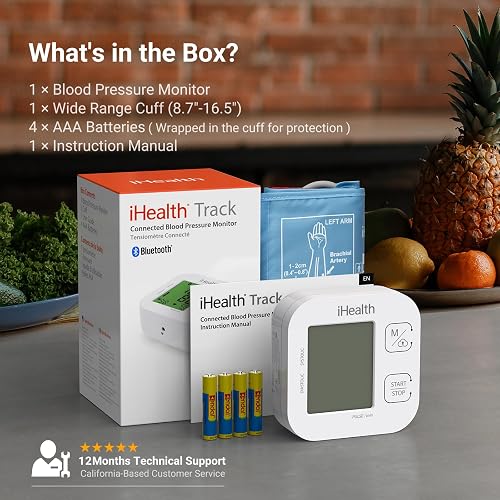
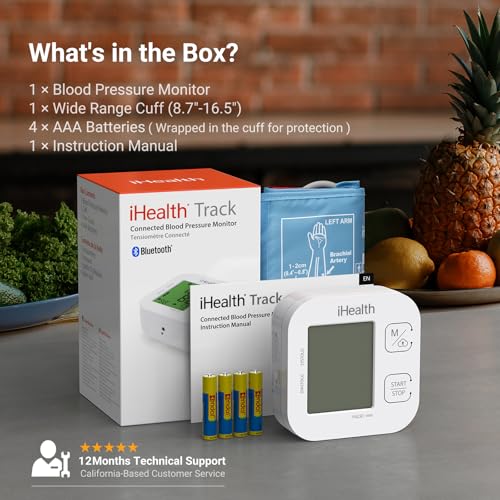
The iHealth Track Smart Upper Arm Blood Pressure comes with a wide range upper arm cuff intended to fit standard to large adult arms. The product listing highlights this flexibility as a core feature, which may help households avoid the extra step of sourcing a separate cuff size.
A proper cuff fit is important for consistent readings, and a cuff that is too small or too large can affect comfort and positioning. The wide range design aims to accommodate a broader set of arm sizes while maintaining a secure, even wrap around the upper arm.
For older adults who have found standard cuffs snug, the added room can make daily use feel less restrictive. The soft, adjustable material is described as suitable for home use, and caregivers often note that a comfortable cuff encourages more regular monitoring.
Compared with monitors that include two separate cuffs for different size ranges, this single wide range approach keeps the setup simpler. You have one cuff to store, one set of instructions to follow, and fewer parts to keep track of in a shared household.
As with any upper arm monitor, correct placement on the arm and sitting posture remain important for steady results. Families who want additional context on home health tools can also explore our Health Monitoring Devices category for related guidance on choosing supportive equipment.
Bluetooth Connectivity and App Support for Caregiver Tracking
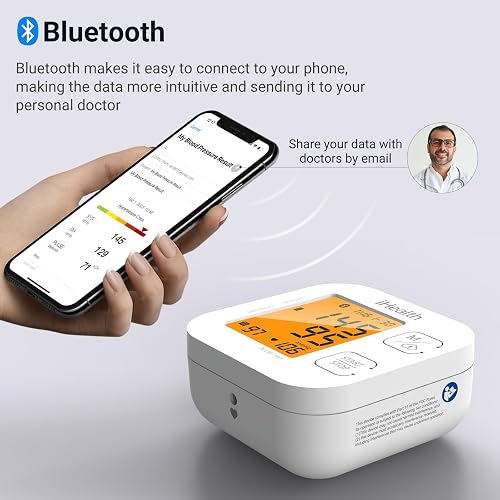
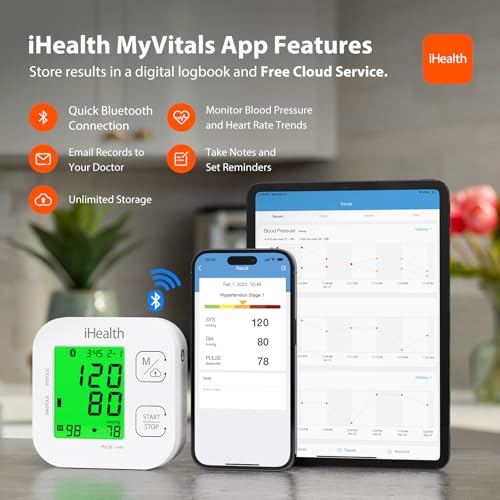
Bluetooth connectivity is a defining characteristic of this monitor, with compatibility listed for both iOS and Android devices. The product is designed to sync readings to the free iHealth app, which may help reduce the need to write down numbers by hand after each check.
For caregivers who do not live in the same home, app based tracking can offer a convenient way to review trends over time. When readings are automatically logged, it becomes easier to share a clear history at the next appointment, rather than relying on memory or paper logs.
The app also provides visual charts that organize readings by date and time, which many families find easier to interpret than a long list of numbers. This kind of organization may help you notice patterns, such as morning versus evening variations, and discuss them with a clinician.
Setup involves pairing the monitor with a smartphone or tablet, and the product materials guide users through that process. While some seniors prefer a fully standalone device, others appreciate that a family member can help with the initial pairing and then let the system log results quietly in the background.
If you are already using connected health tools, this Bluetooth approach fits naturally alongside other devices. Readers who manage multiple monitors at home may also find our best pulse oximeter for seniors with arthritis article useful for comparing simple, senior friendly designs across categories.
Simple Two Button Operation and Built In Memory
Day to day operation is kept intentionally simple, with a minimal button layout that focuses on starting a measurement and reviewing memory. The product description emphasizes straightforward use, which is often a deciding factor for older adults who want to avoid complex menus.
Automatic inflation and deflation mean you do not need to pump the cuff manually or adjust pressure yourself. You wrap the cuff, press start, and the device handles the rest, then displays results on the large screen within moments.
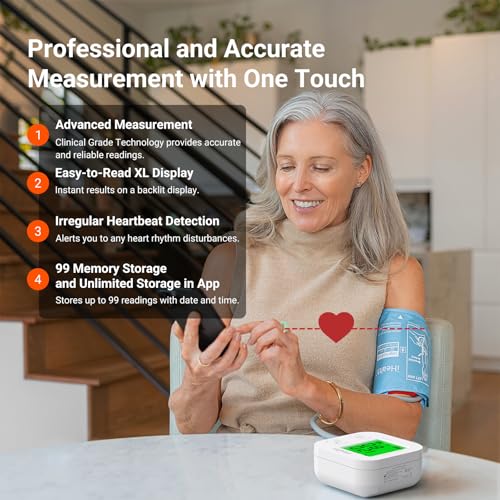
Built in memory storage allows the monitor to retain prior readings for later review, even if you do not sync every time. This can be reassuring for seniors who want to confirm a previous result or for caregivers who check the device during weekly visits.
The monitor is also designed to detect an irregular heartbeat pattern and flag it on screen, which may prompt a timely conversation with a healthcare provider. As always, the device supports home tracking and does not replace professional evaluation, but the alert adds an extra layer of information for families to share.
Where It Comes Up Short
No single monitor is ideal for every household, and this model involves a few trade offs that are worth considering before you choose. The reliance on a smartphone app for full tracking benefits means seniors who do not use iOS or Android devices may not experience the complete feature set, even though the monitor can still display readings on its own screen.
The wide range cuff covers standard to large adult arms, but households that need an extra large cuff size for larger arm circumferences may need a different solution. For comparison, some competing monitors offer two cuffs in the box to cover 9 to 17 inches and 13 to 21 inches, while this iHealth model focuses on one versatile cuff rather than dual sizing.
Another consideration is that the monitor does not include a spoken announcement of results, which some seniors with significant low vision or hearing loss prefer. If voice guidance is a priority, you may want to compare this option with models highlighted in our hearing loss focused monitoring guides.
Finally, Bluetooth pairing and app permissions can feel unfamiliar for older adults who are new to connected devices. A caregiver can often help with the initial setup, but households that want a completely app free experience with large on device memory buttons may prefer a more basic standalone design.
Who Should Buy This
This monitor is a strong match for seniors and caregivers who value a large, easy to read display paired with simple operation and optional smartphone tracking. If you want to check blood pressure at home without navigating complex menus, and you appreciate having readings automatically organized in an app for later review, the feature set aligns well with that routine.
It also suits households where the adult arm size falls within the standard to large range and where one comfortable cuff is preferable to managing multiple accessories. Adult children who help coordinate care from a distance may find the Bluetooth history especially useful for keeping a consistent log to share with a physician.
For broader home comfort planning, many families pair health monitoring with supportive sleep and daily living aids. You can find related ideas in our medline bed wedge pillow review for elderly resource, which explores how positioning support complements other aging in place tools.
Who Should Skip It
This model is not ideal for seniors who do not use a smartphone and have no interest in app based tracking, since much of its added value comes from Bluetooth syncing and charting. It is also not a good fit for households that specifically need an extra large cuff beyond the standard to large range, or for those who require a talking monitor that announces results aloud.
Seniors with very limited dexterity who need extra large, widely spaced memory buttons for two users on the device itself may prefer a monitor that emphasizes on device user switching without opening an app. If that describes your household, a model with dual on device user profiles and oversized tactile buttons may feel more straightforward.
Home layout and routine matter as well, so consider how and where you will measure. If you plan to keep the monitor in a shared space and want every family member to review history directly on the screen without a phone nearby, a device with a larger on board memory display and dedicated user buttons could be more convenient.
Frequently Asked Questions
Is the iHealth Track Smart display easy for elderly users with low vision to read at home?
The product is described as having a large display with big numerals and color coded indicators, which many caregivers report makes at home reading easier than small screened models. For mild low vision, the high contrast layout may help reduce misreading, though seniors with significant vision loss may still want additional lighting or a talking monitor.
Does the wide range cuff fit larger arms comfortably for older adults?
The included wide range cuff is rated for standard to large adult arms and is designed to provide a secure yet comfortable wrap around the upper arm. If your household needs coverage well beyond that range, you may want to compare with monitors that include an extra large cuff option in the box.
Can caregivers track readings without being present for each measurement?
Yes, when paired with the iHealth app on iOS or Android, the monitor can sync readings via Bluetooth so caregivers can review history and trends remotely. The monitor also retains readings in its own memory, so you can view recent results directly on the large display even without immediate syncing.
Browse more picks in our Health Monitoring Devices category, or see our related guide on Medline Bed Wedge Pillows for Elderly Support in 2026.








Write Your Review
No reviews yet. Be the first to share your experience!