

Living alone with Parkinson’s means a simple trip to the kitchen can feel unpredictable. Freezing at a doorway, a sudden shuffle when turning, or a light tremor while reaching for a cabinet can quickly throw off your balance, especially when no one else is home to help you steady yourself.
This guide contains affiliate links, and we may earn a commission if you buy through them, at no extra cost to you.
Quick Picks at a Glance
Prime Fall Prevention for Seniors Over 70

Prime Fall Prevention Balance Exercises for Seniors

Prime Balance and Fall Prevention Exercises for Seniors
As an Amazon Associate we earn from qualifying purchases. Product prices and availability are accurate as of the date/time indicated.
Pros
- Extremely accessible, no equipment or prior experience needed
- Time efficient format encourages consistent daily practice
- Large illustrations and leveled progressions support safe, gradual improvement
- Focuses on functional movements that directly support independence at home
Cons
- Concise 82-page length offers focused coverage rather than an in-depth program
- Print illustrations only, with no companion videos for visual learners
- New release with limited long term reader feedback available
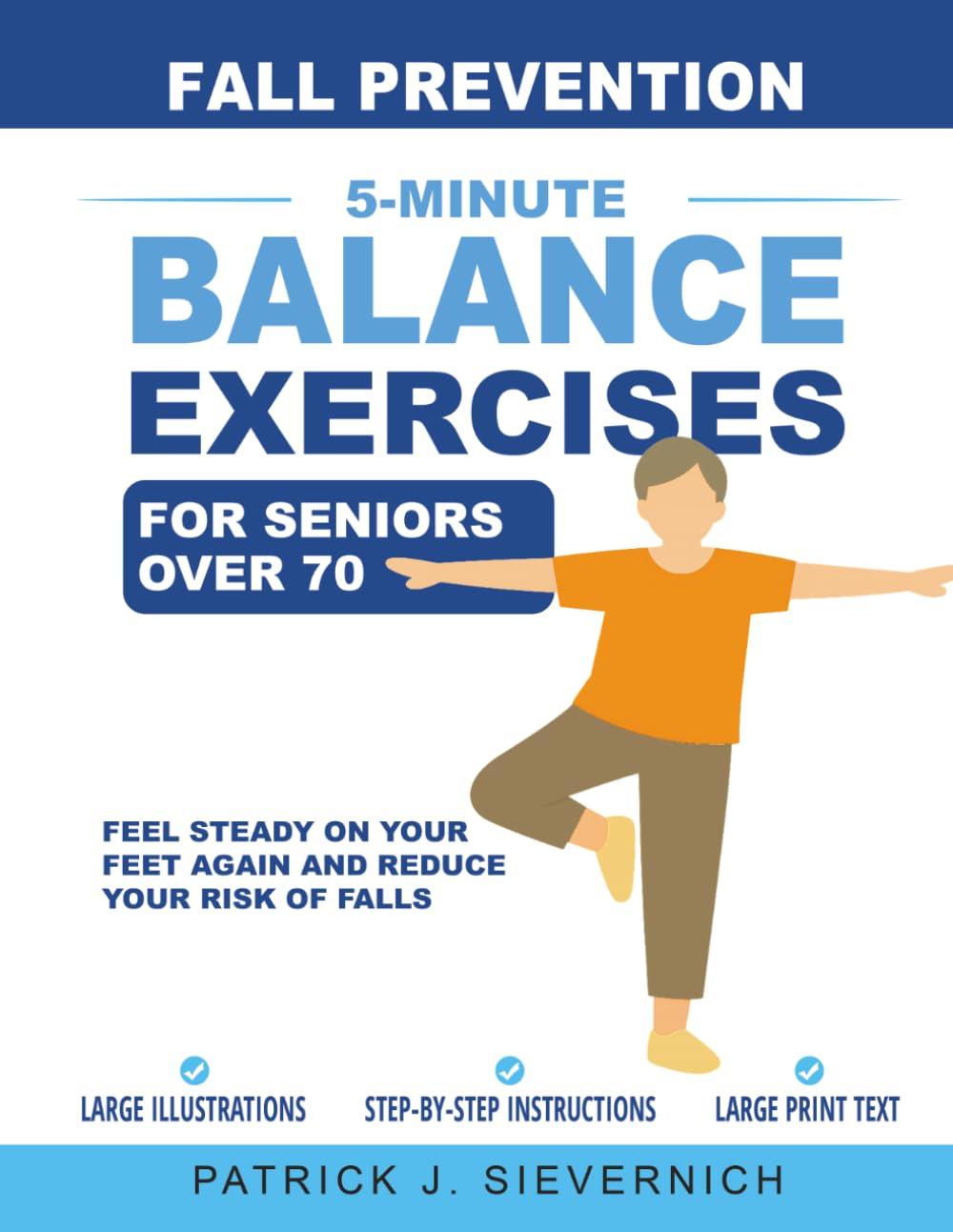
This is an 82-page instructional guide focused on fall prevention for adults over 70, part of the Stay Active After 70 series by Patrick J. Sievernich. It is designed for seniors who notice reduced steadiness and want to regain confidence in everyday movements without joining a gym.
The core promise is simple, five minute routines that can be done at home with no equipment and no prior experience. Exercises are presented with large illustrations and clear step-by-step instructions, with beginner to advanced variations to match different starting points and support steady progress.
As a paperback, the book is lightweight and generously sized at 8.5 by 11 inches, which makes the illustrations easy to follow during practice. The layout is clean and structured by levels, so readers can easily find appropriate exercises and adapt them as strength and coordination improve.
The concise length means it focuses on essential balance and mobility work rather than an exhaustive fitness program. Readers looking for video guidance or extensive background on aging science may find the print-only, illustration-based approach limited.
Overall, this guide delivers a practical, approachable plan for seniors who want short, consistent routines to feel steadier on their feet. It is a strong choice for anyone seeking simple at-home exercises to improve stability, mobility and confidence in daily life.
ASIN: B0GYRNGF55
Publisher: Independently published
Publication Date: April 27, 2026
Language: English
Print Length: 82 pages
Dimensions: 8.5 x 0.19 x 11 inches
Item Weight: 9.6 ounces
Series: Stay Active After 70
Category: Exercise and Fitness For the Aging, Injury Prevention
Pros
- Award-winning, clinically supported program with high user satisfaction
- Very accessible format with large print, step-by-step illustrations and no equipment needed beyond a chair
- Structured progression with three difficulty levels and at-home balance evaluations to track improvement
- Gentle, low-impact and joint-friendly with modifications for limited mobility and recovery needs
- Excellent bonus value with videos, printable charts and expert email support
Cons
- Print length is relatively short at 111 pages, may feel brief for those wanting a longer-term program
- Physical book format means videos and printable bonuses require online access
- Focus is specifically on seniors over 60, less relevant for younger users seeking intense workouts
Fall Prevention Balance Exercises for Seniors is a 28-day movement plan designed to help adults over 60 rebuild strength, stability and confidence at home. Created by Linette Cunley in collaboration with a licensed physiotherapist, it is ideal for seniors, caregivers and family members who want a safe, structured way to reduce fall risk without gym equipment.
Standout features include three progressive levels that let you start gently and advance as mobility improves, all in just 15 minutes a day with a chair. Readers consistently report feeling steadier within the first week, praising the clear progression, joint-friendly approach and practical focus on everyday movements like standing, dressing and navigating curbs.
The book itself is highly accessible, with large-print text, 100+ step-by-step illustrations and clear diagrams that make each exercise easy to follow. Published by WGR Publishing, the 111-page softcover is lightweight and sized for easy reading, while bonus videos, printable trackers and illustrated posters add valuable support beyond the printed pages.
Drawbacks are minor but worth noting. The program is intentionally gentle and chair-based, so it will not satisfy those looking for high-intensity training. Bonus materials require internet access, and the compact page count means you may want to repeat or extend the plan after completing the 28 days.
Verdict: For seniors seeking a safe, clinically supported and easy-to-follow routine to improve balance and core strength, this award-winning guide delivers exceptional value. Its thoughtful design, expert backing and encouraging structure make it a top choice for regaining mobility and living with greater confidence.
Publisher: WGR Publishing, Publication Date: September 10, 2024, Language: English, Print Length: 111 pages, Series: Workout Books
ISBN-10: 064597076X, ISBN-13: 978-0645970760, Dimensions: 8.5 x 0.25 x 11 inches, Item Weight: 9.8 ounces
Category: Osteopathy, Best Sellers Rank: Number 1 in Osteopathy, Number 2 in Nursing Home Care, Number 3 in Medical Home Care
Pros
- Highly rated for clear illustrations and easy to follow instructions
- Gentle, low-impact program suitable for older adults with modifications for individual needs
- Requires no special equipment, only a chair, making it accessible at home
- Structured 6-week plan plus bonus maintenance workouts for long-term results
- Covers more than exercise, including balance education and home safety guidance
Cons
- Content may be too basic for physical therapists or experienced fitness professionals
- Concise 151-page length may feel limited for those wanting a more comprehensive reference
- Independently published format lacks the extra polish of major publisher fitness books
Balance and Fall Prevention Exercises for Seniors by Patrick J. Sievernich is a practical 151-page guide built around a structured 6-week program to improve stability, coordination and mobility. It is designed for seniors who feel unsteady, adults recovering confidence after a fall, and caregivers looking for a safe at-home resource to support independence.
Its standout strength is accessibility and real-world usability, with gentle 15-minute workouts three days a week that require only a chair. Every movement includes clear illustrations, step-by-step instructions and modifications for different ability levels, plus bonus maintenance workouts to continue progress after the initial program.
In terms of design, the book prioritizes clarity over complexity with large 8.5 x 11 inch formatting, readable layouts and visual guidance that helps ensure proper form. As an independently published title, it focuses on straightforward, actionable content rather than glossy production, which many readers find approachable and encouraging.
The main limitation is depth for professionals, as experienced physical therapists will recognize familiar standards like tandem walking and single leg stance. Those expecting an extensive encyclopedia of exercises may also find the concise page count leaves less room for advanced progression.
Overall, this is an excellent choice for older adults seeking a safe, doable path to better balance and everyday confidence. If you want a no-equipment, supportive program that builds strength and reduces fear of falling, this guide delivers clear value and motivation.
Publisher: Independently published, March 26, 2025
Print Length: 151 pages, Dimensions 8.5 x 0.35 x 11 inches, Weight 13.1 ounces
Language: English, ISBN-13 979-8313797595, Series Senior Exercises: Move Strong, Live Healthy
Format: Paperback with clear illustrations and step-by-step instructions, no equipment required beyond a chair
Category Rankings: Top ranked in Sports Health and Safety, Exercise and Fitness For the Aging, and Injury Prevention
What to Look for in a Parkinson’s Fall Prevention Checklist
A checklist for Parkinson’s is not the same as a generic senior safety list. It needs to address movement patterns like festination, postural instability, and freezing of gait, while remaining simple enough to follow alone each day. The books we reviewed approach this from slightly different angles, so your choice depends on daily time, print size, and structure.
1. A Daily Balance Routine Built for Parkinson’s Movement Changes
Look for a program that trains weight shifting, ankle stability, and controlled turning rather than only general leg strength. Parkinson’s often affects how you initiate steps and how you recover when your center of gravity moves forward, so exercises that practice stepping over a line, turning in a tight space, and recovering from a small sway are especially useful. Before starting any new balance routine, it is wise to consult your doctor or physical therapist to confirm it fits your current mobility and medication plan.
Fall Prevention: 5-Minute Balance Exercises is built around very short daily sessions that focus on feeling steady on your feet again with simple, practical movements you can do near a counter for support. In contrast, Fall Prevention Balance Exercises For Seniors offers a 28 day plan with 15 minute sessions and more than 100 illustrations that walk you through core strength and stability work step by step. If you have limited energy or fluctuate between on and off periods, the 5 minute format may be easier to complete consistently.
- Prioritize exercises that practice starting, stopping, and changing direction with support nearby
- Choose a routine that includes seated and standing options so you can adapt on low energy days
- Look for clear cues for posture, such as eyes forward and chest tall, to counter forward leaning
2. Home Environment Checklist for Freezing, Festination, and Transfers
Your home layout can either reduce or trigger freezing episodes. A strong checklist will prompt you to clear narrow pathways, remove loose rugs, add visual cues on the floor for stepping, and keep turning spaces open, especially between bedroom and bathroom where nighttime trips are common. It should also cover safe transfer spots, like a sturdy chair with armrests and a non slip mat in front of the sink.
Pair your exercise book with targeted bathroom safety upgrades such as grab bars, raised toilet seats, and shower seating, since the bathroom combines tight turns, wet surfaces, and quick direction changes. If you use a cane or walker, review the ADA cane requirements for seniors aging in place to ensure your aid is the right height and has a secure grip tip for indoor use. A good checklist reminds you to keep your aid within arm’s reach at all times, even when you are sitting.
- Mark door thresholds and hallway pinch points where freezing often occurs
- Keep floors matte and clutter free, with cords secured and pet bowls out of walkways
- Place a stable landing spot every few steps for rest and hand support
3. Medication Timing, Daily Rhythm, and Safety Habits
Parkinson’s symptoms often vary through the day with medication cycles, so your checklist should link movement and household tasks to your personal on time. Schedule balance practice, showering, and errands when you typically feel most steady, and plan quieter seated tasks for times when you expect more stiffness or dyskinesia. A written daily rhythm helps you avoid rushing, which is a common fall trigger when living alone.
BALANCE AND FALL PREVENTION EXERCISES FOR SENIORS frames its 6 week program around rebuilding coordination and confidence gradually, which aligns well with tracking how you feel before and after each session. Use a simple log to note time of day, how your movement felt, and any near falls, then share it with your care team. You can also find helpful planning ideas in our caregiver corner guidance for building check in routines, even when you live independently.
- Check medication schedule before balance work and avoid practicing when you feel unusually off
- Add cues like counting out loud or stepping to a steady beat to support rhythm
- Include a daily phone or message check in with family or a neighbor
4. Large Print Illustrations and Simple Follow Along Format
When you live alone, clarity matters more than complexity. Look for large print text, full page illustrations, and one exercise per page so you can glance up from the book without losing your place. Clear photos or drawings that show hand placement on a chair, foot position, and where to look help you stay safe without needing a coach beside you.
Fall Prevention Balance Exercises For Seniors stands out for its large print format and extensive illustrations, plus bonus materials that reinforce daily habits, which many readers find easier to follow without assistance. Fall Prevention: 5-Minute Balance Exercises and BALANCE AND FALL PREVENTION EXERCISES FOR SENIORS both emphasize practical, step by step guidance from Patrick J. Sievernich that breaks movements into manageable parts. Browse our printable checklists collection to pair your book with a one page daily tracker you can post on the fridge.
- Prefer books with numbered steps and visual start and end positions
- Check that instructions specify when to use a wall or counter for support
- Look for weekly progress pages to keep motivation steady
Who Shouldn’t Buy This
This type of balance exercise book is not a good fit for seniors who need hands on supervision for every stand or transfer, have severe freezing that requires cueing devices or a therapist present, or have been advised to avoid unsupervised standing exercise. If you have advanced postural instability, recent frequent falls with injury, or significant cognitive changes that make following printed steps alone unsafe, a supervised therapy program is a safer starting point.
Final Thoughts
For a quick daily habit that fits fluctuating energy, Fall Prevention: 5-Minute Balance Exercises keeps the commitment low while reinforcing steadiness, while Fall Prevention Balance Exercises For Seniors offers a more structured 28 day plan with large print illustrations that many seniors living alone find reassuring to follow in 2026.
Frequently Asked Questions
What should a Fall prevention checklist for seniors living alone for seniors with Parkinson’s include?
It should combine a short daily balance routine, a home safety scan for rugs, cords, and narrow turns, and a medication linked daily rhythm. Add visual floor cues for freezing spots, secure handholds in the bathroom and hallway, and a daily check in contact. In 2026, many checklists also include a simple log to track on and off times and near fall moments.
How often should seniors with Parkinson’s do balance exercises at home?
Consistency matters more than length, so daily short sessions are often more sustainable than a few long workouts. A 5 to 15 minute routine done at your steadiest time of day can reinforce weight shifting and turning control. If you notice increased stiffness or fatigue, shorten the session and focus on seated stability work instead of skipping entirely.
What home changes help most with freezing of gait when living alone?
Keep pathways wide and well lit, remove threshold rugs, and use contrasting tape or mats as stepping targets where you often freeze, such as doorways and hall turns. Place sturdy furniture or grab bars where you naturally pause, and avoid carrying items with both hands while walking. For bathing safety, consider options highlighted in our Invacare bath stool review to create a stable seated transfer point.
Are illustrated balance books safe to use alone without a therapist?
Illustrated books can be safe when they show clear support options, progress gradually, and remind you to work near a counter or wall. Start with the easiest level, use a chair for support, and stop if you feel dizzy or unusually unsteady. For personalized guidance, ask your physical therapist to mark which exercises match your current balance level and which to save for later in 2026.
Browse more picks in our Checklists category, or see our related guide on Shower Chairs We Recommend for Seniors After Knee Replacement in 2026.







Write Your Review
No reviews yet. Be the first to share your experience!