

If you are caring for a parent or partner who lives with both dementia and arthritis, daily life can feel like a delicate balancing act. You want to prevent wandering and confusion while also easing stiff joints, limited grip strength, and fall risks that make every hallway and kitchen task more challenging.
This guide contains affiliate links, and we may earn a commission if you buy through them, at no extra cost to you.
Quick Picks at a Glance
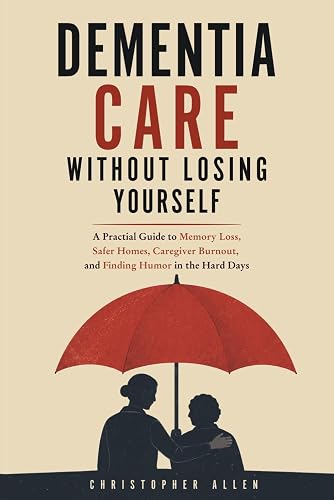
Prime Dementia Care Without Losing Yourself

Prime The Complete Family Guide to Dementia

Prime The Complete Eldercare Planner 4th Edition by Joy

Prime The Ultimate Dementia Caregiver Guide by Matthew

Prime Aging in Place for Seniors by C.P. Walker
As an Amazon Associate we earn from qualifying purchases. Product prices and availability are accurate as of the date/time indicated.
Pros
- Highly practical and budget conscious, written for real families without private care resources
- Warm, witty and jargon-free writing that makes complex topics approachable
- Strong dual focus on preserving loved one's dignity and protecting caregiver health
- Covers the full caregiving journey from early signs and diagnosis to daily care and future planning
Cons
- Concise at 159 pages, so not an exhaustive medical reference
- Primarily aimed at family caregivers, less suited for clinical professionals seeking advanced detail
- Independently published format with limited visuals or illustrated guides
Dementia Care Without Losing Yourself by Christopher Allen is a 159-page practical manual for family members suddenly coordinating memory care. Drawing from caring for two generations on a shoestring budget, Allen writes for everyday caregivers who need affordable, dignified solutions rather than clinical theory.
Standout features include DIY home safety modifications using everyday household items, plus street-smart routines for wake ups, dressing, hygiene and calming evening wind downs to ease sundowning. The book also excels at decoding aggression, exit seeking and paranoia as solvable communication cues, and frames humor as a deliberate resilience strategy rather than dismissal.
In terms of design and readability, the book uses a compact 6 x 9 inch softcover that is easy to handle during short breaks. The writing is compassionate, witty and jargon free, with logical chapters that move from brain basics, nutrition, sleep and exercise insights to daily care, medication management and legal preparation.
Drawbacks are modest. Its concise length prioritizes accessibility over encyclopedic depth, so readers seeking extensive neurological research or detailed clinical citations will want additional sources. The budget friendly, family focused lens also means less relevance for professional memory care providers.
Verdict: This is a reassuring, highly usable resource for anyone caring for a parent or partner with dementia. If you want realistic, low-cost tools that preserve dignity and help you sustain your own well being, this guide is a strong and encouraging choice.
ASIN: B0H99QZSXR
Author: Christopher Allen
Publisher: Independently published, July 15, 2026
Language: English
Print Length: 159 pages
Dimensions: 6 x 0.36 x 9 inches, 10.6 ounces
ISBN-13: 979-8185776469
Categories: Alzheimer's Disease, Dementia, Aging Parents
Choose this book if: You are a new or overwhelmed family caregiver seeking affordable, plain language guidance, you need help with home safety, daily routines, difficult behaviors and burnout prevention.
Consider alternatives if: You need an in depth clinical textbook, advanced medical protocols or a heavily illustrated visual guide for professional training.
What to expect: Practical checklists, community resource pointers like Area Agencies on Aging, MIND and Mediterranean diet insights, and communication strategies you can apply immediately without special equipment.
Pros
- Co-authored by clinical expert and journalist for balanced medical accuracy and readability
- Comprehensive coverage of medical, emotional, financial and behavioral topics in one volume
- Highly rated by caregivers for its relatable tone and affirming real-world advice
- Award-winning title in consumer health and family relationships categories
- Concise 243-page format that is approachable for busy family caregivers
Cons
- First edition from 2022, so some readers may want more recent resource updates
- Focus is specifically on caring for parents, less relevant for spouses or other relatives
- Some readers note the final sections feel brief and could cover advanced anger and awareness issues in more depth
The Complete Family Guide to Dementia is a 243-page caregiver manual written for adult children supporting a parent with dementia. Created by journalist Thomas Harrison and geriatric psychiatrist Brent Forester, it is designed for non-medical readers who need clear, authoritative guidance without overwhelming clinical jargon.
Where this guide excels is in its practical focus on everyday challenges, from communicating through confusion and resistance to managing safety and difficult behaviors. Readers consistently highlight its compassionate strategies for navigating medical, emotional and financial pressures while helping a loved one maintain dignity and quality of life.
Published by The Guilford Press, the book features a compact 6 x 9 inch paperback format that is easy to handle and reference during busy caregiving days. At 9.9 ounces and under an inch thick, it balances thorough coverage with portability, making it simple to keep nearby or share among family members.
The main limitation is its narrow focus on parent care, which may be less applicable to those caring for spouses, siblings or friends. A few caregivers also found the closing chapters felt condensed and wished for deeper discussion of anger, denial and lack of disease awareness that can strain sibling dynamics.
Overall, this award-winning guide is a standout choice for new and current family caregivers seeking a trustworthy, empathetic roadmap. If you want a readable, well structured resource that affirms the caregiver experience and offers actionable ways to care smarter, not harder, it deserves a place on your shelf.
Publisher: The Guilford Press, 1st Edition published August 3, 2022.
Language: English, Print length 243 pages, Dimensions 6 x 0.63 x 9 inches, Weight 9.9 ounces.
ISBN-10: 146254942X, ISBN-13: 978-1462549429.
Categories: Caregiving Health Services and Home and Community Nursing Care, with recognition as an award winner in consumer health.
Pros
- Trusted for over three decades with reassuring, practical guidance
- Includes actionable tools with downloadable checklists and worksheets
- Covers essential topics from housing options and dementia signs to finances and emotions
- Clear, user-friendly writing suitable for new and experienced caregivers
Cons
- Some content may feel like common sense to experienced caregivers
- Fourth edition offers limited new material compared to previous version
- Dense 416-page length can feel overwhelming to work through completely
The Complete Eldercare Planner, Revised and Updated 4th Edition by Joy Loverde is a comprehensive 416-page guide designed for family caregivers, professionals and anyone planning for an elder's final decades. It speaks directly to those managing care without warning as well as those thinking ahead for their own future needs.
Its strength lies in practical, immediately usable tools including action plans, checklists, worksheets and a directory of low-cost and free resources. Readers consistently praise its guidance on senior housing options, long-distance caregiving, dementia warning signs, financial protection and communication strategies that build trust with elders.
Published by Rodale Books, the book offers a clear, user-friendly layout that makes complex topics approachable and easy to navigate. The ability to download and reproduce worksheet pages adds real everyday convenience, while structured chapters allow readers to dip in quickly during urgent or stressful situations.
Some readers note the content covers a lot of familiar ground and that this edition feels very similar to the previous version, with limited new material. Its sheer depth can also feel overwhelming if you hope to work through every page, and it is most valuable when consulted early rather than in a crisis.
Overall, this is a reassuring and highly practical resource that helps caregivers move forward with confidence and make informed decisions. If you want a single, well organized reference to guide conversations, planning and care coordination, it remains one of the most complete options available.
Pros
- Comprehensive 5-chapter structure covers medical understanding, daily care, self-care, home safety and legal planning in one volume
- Includes 12 printable resources that add practical daily value beyond the book itself
- Written in compassionate, plain language specifically for family caregivers without medical background
- 242 pages in portable 6 x 9 inch paperback format that is easy to reference and share
Cons
- Independently published with no established editorial or medical review board, so credibility relies on author alone
- Currently has no verified reader feedback available, making real world effectiveness difficult to assess
- Covers a broad range of topics which may require supplemental professional advice for complex legal or medical decisions
The Ultimate Dementia Caregiver Guide by Matthew Coleman is a 242-page manual designed for family members caring for a loved one with dementia or Alzheimers. It is written for the overwhelmed, often exhausted caregiver who needs clear guidance without clinical jargon or judgment, and who wants to balance compassionate care with personal wellbeing.
Its core strength lies in practical, same-day strategies for eight frequent challenges such as aggression, sundowning, repetitive questions, wandering and bathing resistance. Additional chapters focus on creating a calm home environment, preventing falls and managing legal and financial planning, plus a 12-piece downloadable toolkit with checklists, trackers and reference cards that helps you stay organized.
As an independently published paperback, the book measures 6 by 9 inches and is structured as a workbook with highlighted takeaways, action steps and printable style templates. The layout is intended to be reader friendly, with tools you can copy, post on a fridge or bring to appointments, making daily routines more manageable.
The main limitation is its status as a self-published title with no independent medical endorsement or verified reader history to confirm long term outcomes. While the content is broad and compassionate, caregivers facing advanced medical complications or complex estate issues will still need advice from healthcare professionals and qualified attorneys.
Overall this guide is a strong fit for new and current family caregivers who want an all-in-one, empathetic roadmap rather than a clinical textbook. If you value structured checklists, emotional support and plain language planning help in a single resource, it offers meaningful everyday assistance and peace of mind.
Pros
- Comprehensive coverage from fall prevention and lighting to documents and care planning in one volume
- Actionable tools including fall prevention checklist, home modification planner and emergency sheets
- Written in plain, accessible language perfect for seniors and non-professional caregivers
- Focuses on affordable, realistic solutions that protect independence and dignity
- Proactive approach encourages planning before a crisis rather than reacting to one
Cons
- No reader reviews or ratings yet to provide independent validation
- Independently published with limited author background and credentials disclosed
- At 169 pages, complex legal, medical and financial topics may require additional professional guidance
Aging in Place for Seniors by C.P. Walker is a 169-page practical guide for older adults and families who want to remain at home safely and independently. It is written for seniors planning for themselves and for spouses, adult children and caregivers who are coordinating support.
The standout value is its actionable toolkit, including a master aging in place checklist, room-by-room safety assessments, fall prevention lists and a 30-day action plan. Coverage extends beyond the home itself to medication organization, simple technology, transportation, emergency planning and organizing important documents.
The book is designed for clarity and ease of use, with plain language, logical room-by-room organization and reproducible worksheets. As a lightweight 6.24 x 9.24 inch paperback, it is easy to handle, carry room to room, and reference during home walkthroughs and family meetings.
Drawbacks include its status as an independently published title with no reader reviews yet, so there is limited outside feedback on its effectiveness. The concise format also means some complex health, legal and insurance subjects are introduced as starting points rather than comprehensive professional advice.
Overall, this is a strong starter workbook for proactive planning that prioritizes safety, comfort and peace of mind. It works best as an organizing framework to use alongside advice from healthcare providers, contractors and legal professionals when needed.
Title: AGING IN PLACE FOR SENIORS: A Practical Guide to Home Safety, Independence, Care Planning, and Everyday Living
Author / Brand: C. P. Walker
Publisher: Independently published
Publication Date: June 20, 2026
Print Length: 169 pages
Language: English
Dimensions: 6.24 x 0.57 x 9.24 inches
Item Weight: 11 ounces
ISBN-13: 979-8182467889
ASIN: B0H66M48GL
Category: Residential Architecture, Aging and Home Design
This guide walks through fall prevention, bathroom and kitchen safety, lighting, stairs, entryways and mobility support. Each area includes affordable modification ideas and daily living strategies to maintain independence.
You will find dedicated sections on medication organization, medical information sheets, emergency contacts, simple technology and transportation alternatives. These tools help create a reliable support system at home.
The book also provides structured worksheets for family conversations, legal and financial document gathering, and a home modification priority planner. The included 30-day action plan turns big goals into manageable daily tasks.
Buying Guide: Choosing the Right Home Safety and Caregiving Book
Not every caregiving book covers the overlap of cognitive decline and physical limitations. We evaluated each title for how well it addresses dementia safety together with arthritis friendly living, so you can choose a resource that matches your current needs and your loved one’s stage. Before making major safety changes, consider consulting your doctor, occupational therapist, or physical therapist for personalized guidance.
1. Checklists That Address Dementia and Arthritis Together
The most useful guides give you actionable checklists you can walk through room by room. Look for coverage of wandering prevention, door and window security, stove and appliance safety, and lighting that reduces confusion and shadows. At the same time, the checklist should address joint pain, such as lever handles, raised seating, and heavy duty grab bars for seniors with arthritis that are easier to grip than small knobs.
AGING IN PLACE FOR SENIORS stands out for this dual focus because it frames staying home as a planning project with safety, independence, and everyday living in one place. THE ULTIMATE DEMENTIA CAREGIVER GUIDE also organizes daily challenges into calm home routines that reduce stress for both of you. We prioritized books that translate advice into simple steps you can complete in a weekend.
2. Clarity, Tone, and Step by Step Actionability
When you are tired, you need clear language and a logical order. The best resources use plain English, short checklists, and visual cues rather than dense medical jargon. They explain why a change matters, for example how contrast tape on stairs helps depth perception, and then tell you exactly what to do next.
The Complete Family Guide to Dementia is written by journalist Thomas F. Harrison and is praised for making complex care decisions accessible when a loved one is confused or resistant. Dementia Care Without Losing Yourself adds a warm, humorous voice that makes hard days feel more manageable. Pair any book with anti slip solutions for rugs and other quick fixes to see immediate progress.
3. Caregiver Wellbeing and Realistic Daily Routines
Safety is not only about the home, it is about sustaining the person who provides care. Look for chapters on burnout, sleep, communication techniques, and how to share tasks with family or professional help. Books that acknowledge grief, guilt, and humor help you stay steady for the long term.
Dementia Care Without Losing Yourself centers on memory loss, safer homes, and caregiver burnout in one practical framework. The Complete Eldercare Planner by Joy Loverde expands that support with three decades of trusted planning advice for families. For ongoing encouragement, explore our caregiver corner resources alongside your chosen book.
4. Long Term Planning and Aging in Place Systems
A checklist for today is helpful, but a system for the next year is better. Strong guides help you plan for evolving needs, from early forgetfulness to later stage care, and from mild stiffness to more limited mobility. They cover legal, financial, and care team questions you should ask now.
The Complete Eldercare Planner excels at where to start, which questions to ask, and how to find help as needs change. AGING IN PLACE FOR SENIORS complements it with home safety and independence strategies tailored to older adults who want to stay home. Together they help you align bathroom safety upgrades and other modifications with a realistic care plan for 2026 and beyond.
As you compare these books, think about your most urgent checklist. If wandering and kitchen safety are top concerns, start with a dementia focused title. If arthritis and daily living tasks are the bigger hurdle, lean toward an aging in place planner and update your plan each November as needs evolve.
- Entry and exit: secure doors, use chimes or alarms, keep keys out of sight, and ensure lever handles are easy on arthritic hands
- Living areas: remove clutter, secure cords, add contrast, use non slip backing, and keep pathways wide for walkers
- Kitchen: install automatic shut off devices, label cabinets with pictures, store sharp items safely, and choose easy grip tools
- Bathroom: add grab bars, raised toilet seat, non slip mats, and adequate lighting for night use
- Bedroom: use bed rails if appropriate, keep essentials within reach, and maintain a consistent, calming nighttime routine
- Whole home: improve lighting, reduce noise, set a steady daily schedule, and post simple signs for orientation
Who Shouldn’t Buy This
This category of book based checklists is not a good fit for families who need immediate hands on medical equipment installation or emergency intervention for advanced wandering or severe mobility loss. If you need a same day home modification or a clinical assessment for prescription devices, contact a healthcare professional or aging in place specialist directly instead of relying only on a guide.
Final Thoughts
For most families juggling memory loss and joint pain, we recommend pairing a compassionate dementia handbook with a practical planning system. Start with Dementia Care Without Losing Yourself for calm, safer home routines you can use this week, and add The Complete Eldercare Planner when you are ready to organize long term care, housing, and support decisions with confidence.
Frequently Asked Questions
What is the first step in How to make home safe for elderly with dementia complete guide for seniors with arthritis?
Start with a full walk through using a checklist, noting fall hazards, confusing areas, and tasks that strain arthritic joints. Prioritize high risk zones like entry doors, kitchen, and bathroom, then make low cost changes such as lighting, rug security, and lever handles. Revisit the list every few months as needs change in 2026.
How do I reduce wandering without making the home feel locked down?
Use discreet safety layers such as door chimes, delayed egress handles, and visual cues that redirect attention away from exits. Keep daily routines consistent and provide engaging, safe spaces near the main living area. A book like THE ULTIMATE DEMENTIA CAREGIVER GUIDE offers calm home strategies that balance security with dignity.
Which home modifications help both dementia and arthritis at the same time?
Choose upgrades that improve visibility and reduce grip strain. Examples include bright, even lighting, contrasting tape on stair edges, lever door handles, rocker light switches, and grab bars rated for balance support in the bathroom. These changes support orientation for dementia while easing joint stress for arthritis.
Can these books replace professional advice for home safety?
Books provide excellent checklists and planning frameworks, but they do not replace an in person evaluation. For tailored recommendations on layout, equipment, or care plans, speak with your clinician, occupational therapist, or a certified aging in place specialist. Use the books to prepare questions and track progress between appointments.
Browse more picks in our Checklists category.








Write Your Review
No reviews yet. Be the first to share your experience!