

Quick Answer
If your automatic pill dispenser feels unstable for an elderly user, check the surface, the lid and tray alignment, and the power source before you consider replacing it. In most homes the wobble comes from a slick or uneven counter, a lid that is not fully closed and locked, or low batteries that make the tray hesitate, not a major mechanical failure. Try the quick checks below to steady the unit and make daily use easier and calmer.
Why This Happens
Most automatic dispensers are taller than they are wide and hold a rotating tray with up to 28 compartments. That height makes them sensitive to the surface underneath. A laminate counter with a slight warp, a tablecloth, a placemat, or a small side table can let the base rock when a button is pressed, especially if the user leans on it for support.
A second common cause is a lid or tray that is not fully seated. Many units use a key locked or frosted privacy lid to help reduce the risk of extra doses, and the tray must sit flat on its center post. If the lid is only partly latched or the tray is a little off center after refilling, the top will shift and the whole dispenser may feel loose or tippy.
Power issues can also feel like instability. When batteries are low or the power adapter is loose, alarms may be faint, lights may be dim, and the tray may pause or click without turning smoothly. Your loved one may then press harder, shake the unit, or lift it to see inside, which adds wobble and frustration.
Finally, a mismatch between the dispenser and the person’s daily routine can make any model feel unstable. If the unit slides on a smooth counter, if buttons require firm pressure with one hand, or if the display is hard to read without tilting the device, the natural response is to move or tip it. You can learn more about steady, senior friendly kitchen setups from our related guide to best jar opener for seniors with balance issues and our overview of Kitchen Adaptive Tools for additional context.
Practical Steps to Try
- Start with a flat, stable, non slip spot. Move the dispenser to a level counter away from the edge and away from a tablecloth or tray. Place a thin non slip mat underneath if the base slides, and keep the cord routed so it does not pull when the unit is touched. Try pressing the buttons with the palm rather than a fingertip to see if it still rocks, and check if the unit feels steadier at a different height.
- Reseat the lid and tray after every refill. Remove the lid, lift the tray, and set it back down so it sits level on the center hub without forcing it. Close the lid until you hear or feel the lock engage, and confirm the dispensing window lines up correctly. A tray that is level and a lid that is fully locked may help reduce shifting and may help reduce the risk of spills or missed compartments.
- Check power and alarms in daylight. Replace or recharge batteries according to the manual, confirm the adapter is firmly plugged in, and run a quick alarm check at the next scheduled time. Make sure sound and light reminders are easy to notice without moving the dispenser. If you use a model with Bluetooth app support, check that alerts and history are syncing so you are not relying only on a faint beep.
- Watch how the dispenser is used for one full day. Notice if your loved one needs to lift, tilt, or hold the unit to see the compartment or to press the button. Try keeping the unit at waist to chest height on a stable surface with good lighting, so there is no need to lean or reach. Small changes in height and light often make the device feel much steadier, as discussed in How High Should Overbed Table Be for Elderly.
- Simplify the routine and keep a backup plan. Fill compartments at the same time each week, keep the key in a consistent place if the model is locked, and keep a simple written schedule nearby for reference. If missed doses are frequent or the dispenser still feels unsteady after these checks, note what happened and when, so you can share clear details with a pharmacist or healthcare provider.
When a Product Can Help
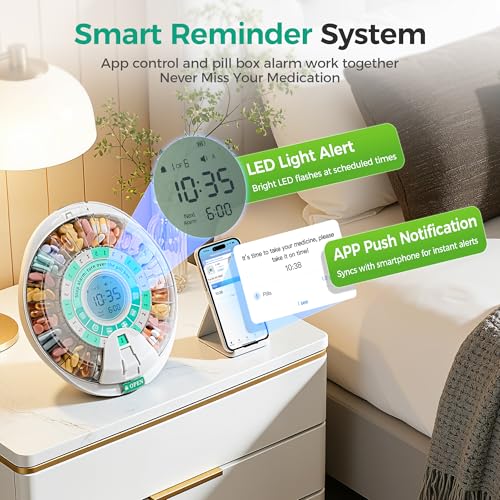
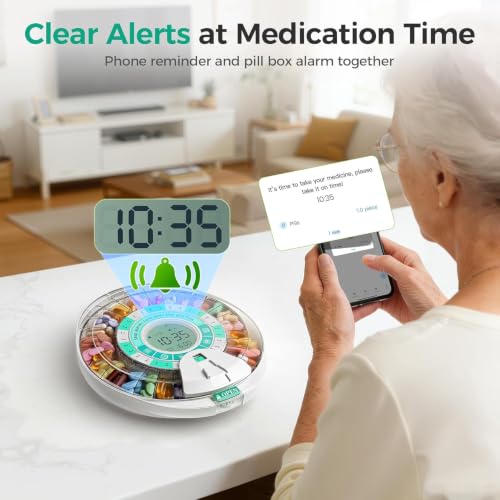
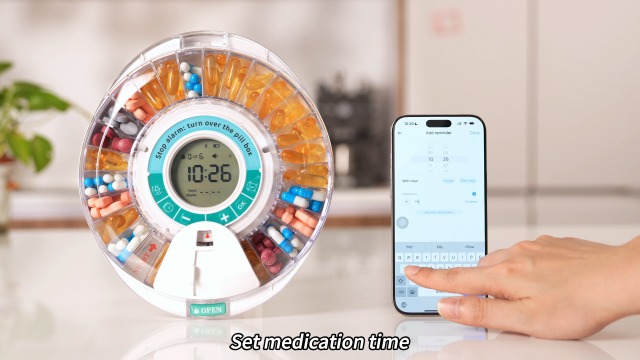
If the current dispenser still slides, tips, or is hard for your loved one to operate after you have tried the steps above, a different design may be a more stable fit. One common option is a dispenser with a wider base, a locking lid, and clear sound and light reminders that are easy to notice without moving the unit. For example, the features listed for the Betife Automatic Pill Dispenser,28-Day include 28 day organization, app support for alarms and history, and 6 alarms with light reminders, which may help support a steadier, more predictable routine when placement and power are already optimized.
This guide contains affiliate links, and we may earn a commission if you buy through them, at no extra cost to you.

Prime Betife Automatic Pill Dispenser





As an Amazon Associate we earn from qualifying purchases. Product prices and availability are accurate as of the date/time indicated.
When to Talk to a Professional Instead
A home fix is not the right choice in every situation, and this type of dispenser is not ideal for someone who is frequently confused about whether a dose was taken, who may open compartments outside the scheduled time, or who has had recent changes in memory, vision, or hand strength. If you notice repeated missed or doubled doses, pills found outside the dispenser, or increased unsteadiness while reaching for medication, pause and seek guidance rather than continuing to adjust the device.
Always check with a physician, pharmacist, or occupational therapist before making changes that affect medication safety or daily independence. They can review the medication list, the timing, and whether a locked dispenser, a simpler organizer, or a different support is more appropriate, and they can suggest home layout changes that may help reduce the risk of tipping or dropping.
This guidance is general household information and does not diagnose a health condition or prescribe a treatment. A healthcare provider can help you decide what level of supervision or reminder system best matches your loved one’s needs and your family’s routine in 2026.
Frequently Asked Questions
Why does my automatic pill dispenser wobble when the alarm goes off?
Vibration from the alarm plus a light base on a slick counter often causes wobble. Try a level surface with a non slip mat, make sure the lid is locked, and check that batteries are fresh so the tray turns smoothly without extra shaking.
Should I tape or weigh down an unstable dispenser to keep it steady?
Avoid taping, gluing, or adding heavy weights that were not part of the original design, as they can block the lid or dispensing window. Instead, try a stable counter location, a non slip mat, and a tray that is fully seated, and ask a pharmacist or occupational therapist if the model is a good match for one handed use.
How do I know when to replace the dispenser instead of fixing it?
Consider a replacement when the lid no longer locks securely, the tray sticks or skips even with fresh power, or your loved one must lift or tilt the unit to use it after you have tried the placement and power checks. Keep notes on missed alarms or stuck compartments to share with a healthcare provider or pharmacist for the next step.
Browse more picks in our Kitchen Adaptive Tools category, or see our related guide on Kitchen Reacher Tools for Arthritic Hands in 2026.









Write Your Review
No reviews yet. Be the first to share your experience!