

Quick Answer
If your elderly parent struggles with a bariatric bed rail, try tightening and repositioning it before you replace it. Most issues come from a loose strap, a base that is not fully under the mattress, or a mismatch with mattress thickness and bed frame, not from the rail itself being worn out.
Check the strap, the base placement, and the handle height first. These small adjustments often make the rail feel more stable and easier to use, and they take only a few minutes.
Why This Happens
Bariatric bed rails are built wider and heavier to provide more support, so they need a very secure anchor to feel steady. If the horizontal bars are not centered under the mattress or the safety strap is loose, the rail may shift when your parent leans on it or rolls over.
Always check with a healthcare provider, physician, or occupational therapist before making mobility changes for a senior in your care, especially if balance or fall risk is a concern.
Mattress and frame fit is another common cause. A rail rated for mattresses 7 to 13 inches thick may sit too low on a very thick pillow top or too high on a thin mattress, which changes the grip height. Platform beds, slatted bases, and box springs also hold rails differently, and bariatric bed rails for seniors with arthritis shows how much fit varies by bed type.
Daily use habits matter too. If the handle is too far from where your parent naturally sits up, they may pull at an angle that feels unstable. Caregivers often notice the rail works better once it is moved a few inches toward the shoulder area and the bedding is kept clear of the grip.
Practical Steps to Try
- Check the base and strap for a firm anchor. Slide the horizontal bars fully under the mattress so they lie flat, then tighten the adjustable strap around the bed frame or base as directed. Try gently pushing the upright from different angles, if it still moves, re-center the base and re-tighten.
- Confirm mattress and frame compatibility. Measure mattress thickness and compare it to the rail’s listed range, and note whether you have a box spring, slats, or a solid platform. A rail that is not suitable for adjustable beds will never feel stable on one, so consider your bed type before making changes. For ideas on matching aids to the home layout, see How High Should Stair Lift Be for Elderly? 2026 Height Guide.
- Adjust handle height and position for easier gripping. Move the rail so the padded handle aligns with your parent’s hip or shoulder when sitting on the edge of the bed. Make sure the non-slip grip is clean, dry, and free from blankets that could block a full hand hold.
- Look at floor and bed stability. Check that the bed itself does not slide, and that any extension legs or feet sit flat on the floor. On uneven floors, adjust leg height if your model allows it, and keep the area around the bed clear so feet can be placed firmly when standing.
- Try a short, supervised routine. Have your parent practice sitting up and standing using the rail while you are nearby to observe. Notice if they pull straight up versus sideways, and whether a small shift in rail position or pillow placement helps them keep balanced without straining.
When a Product Can Help
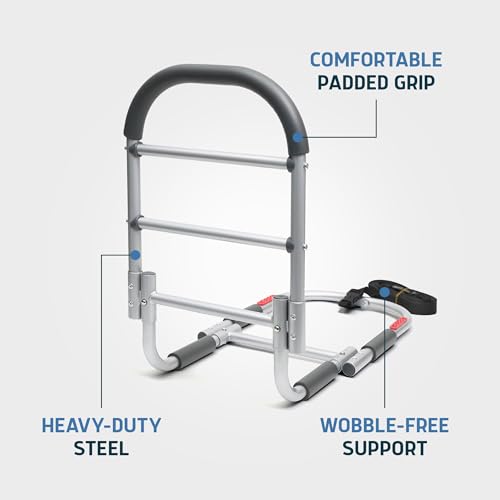
If adjustments do not make the current rail feel steady or comfortable, a different design may be a more practical next step than repeated fixes. One common option is a bedside rail with a padded, non-slip handle, a steel frame rated to hold 300 lb, and four horizontal stabilizing bars with a strap to secure it to the bed frame, which may help reduce the risk of wobble when getting in and out of bed.
For example, the Lunderg Bed Assist Rail for Seniors with Non-Slip is described as having a tool-free setup, an ergonomic padded grip, and a universal fit for twin through king beds with 7 to 13 inch mattresses on box spring, slat, or platform bases. It is not suitable for adjustable beds, so check your bed type first and review the specifications to see if the dimensions fit your setup.
This guide contains affiliate links, and we may earn a commission if you buy through them, at no extra cost to you.
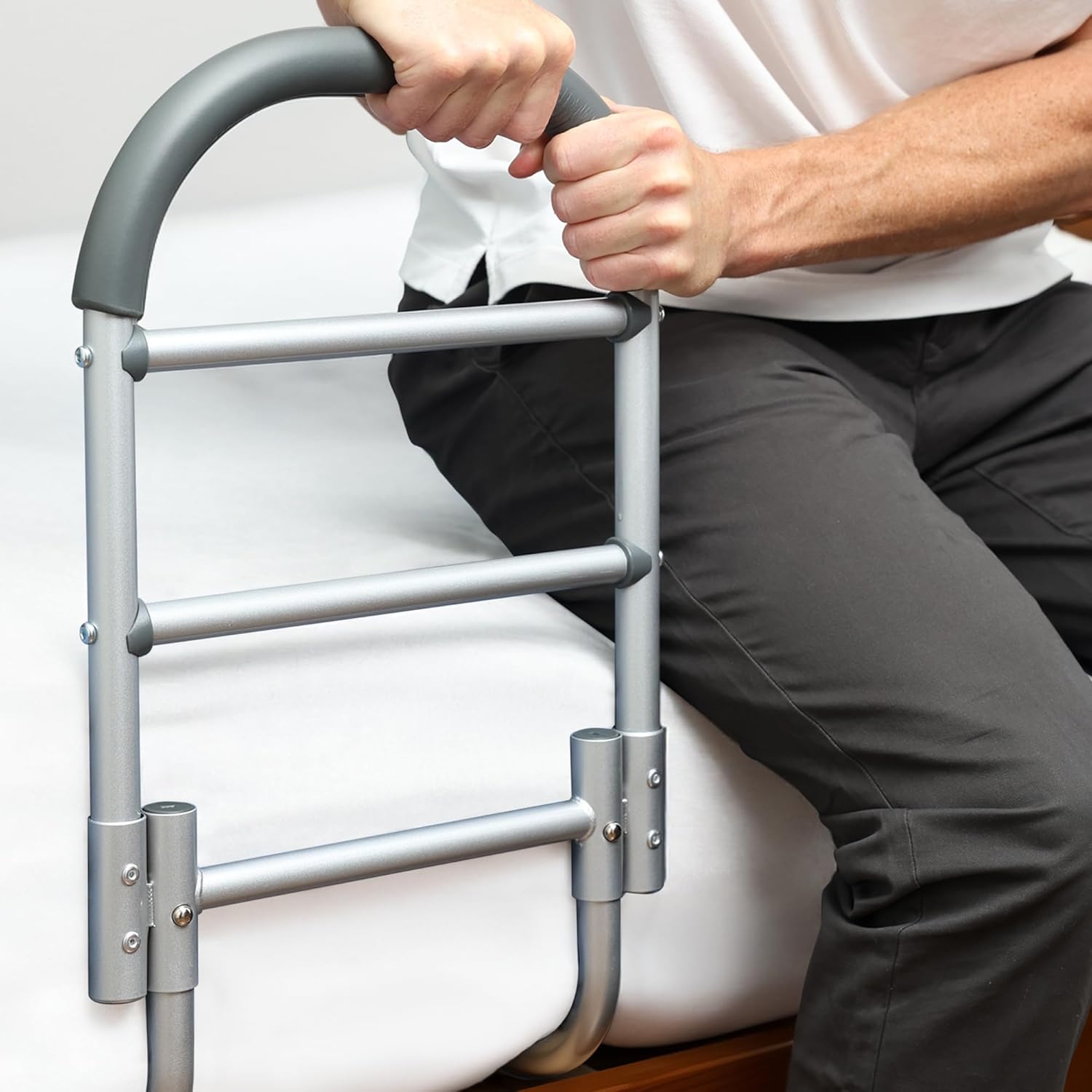
Lunderg Bed Assist Rail for Seniors



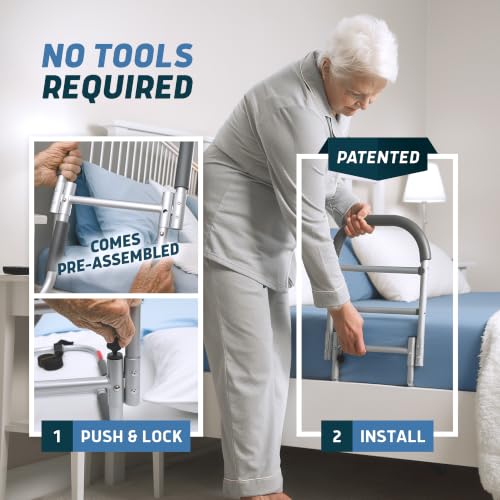
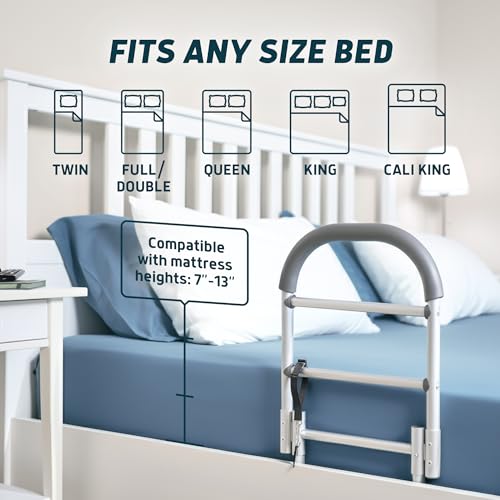
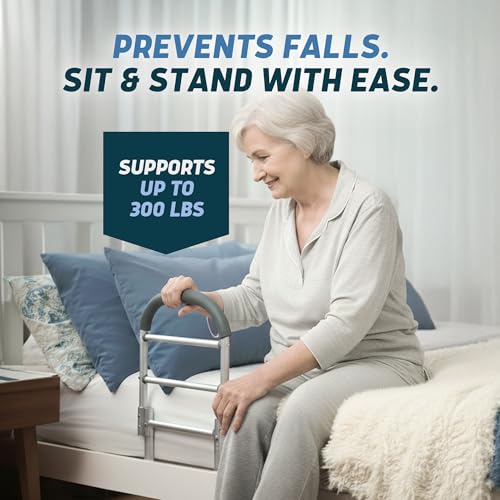

As an Amazon Associate we earn from qualifying purchases. Product prices and availability are accurate as of the date/time indicated.
When to Talk to a Professional Instead
A home adjustment is not the right choice if your parent has had a recent fall, shows sudden changes in strength or balance, or needs more support than a bedside rail can provide on its own. A bed rail is not ideal for seniors who need full weight bearing support, who may become entangled, or who have conditions that affect judgment or movement during the night.
In these situations, skip this type of DIY fix and speak with a doctor, physical therapist, or occupational therapist. They can assess the bedroom setup, review whether a bariatric rail is appropriate, and suggest safer alternatives such as a different transfer aid or a supervised care plan.
Frequently Asked Questions
Why does our bariatric bed rail still wobble after tightening? The base may not be fully under the mattress or the strap may be anchored to a moving part of the frame. Try re-centering the bars, routing the strap around a solid frame member, and checking that the bed itself is not sliding on the floor.
Can a bariatric rail work on any bed? No, many rails are not recommended for adjustable, hospital, or raised-edge frames and have specific mattress thickness ranges. Always compare your mattress height and frame type to the product’s listed compatibility before deciding to keep or replace it.
When should we replace rather than adjust the rail? Consider replacement if the rail is bent, hardware is missing, the grip is worn, or adjustments do not improve stability after a careful reinstall. If your parent still feels unsteady, ask a healthcare provider about other mobility aids that may better match their needs.
Browse more picks in our Bariatric & Plus Size Mobility category, or see our related guide on Medical Alert Watch vs Transfer Bench Picks for 2026.










Write Your Review
No reviews yet. Be the first to share your experience!