

Quick Answer
If your bariatric transfer bench feels unstable for an elderly user, check three things first: that all four legs are locked at the same height, that the suction cups and rubber feet are clean and flat on the tub and floor, and that the bench is centered so weight stays over the frame. Most wobble comes from uneven legs, a poor seal on the tub floor, or the bench being too small or unevenly loaded for the user and space.
Why This Happens
A transfer bench can feel shaky even when it is rated for higher weight. Small differences in leg height, a textured tub floor, soap film under suction cups, or a bench that is not level across the tub wall can all create rocking or sliding when your loved one sits or scoots.
Fit matters too. If the seat is too narrow, too low, or the armrests and backrest are on the wrong side for your bathroom layout, the user may lean or push unevenly. That uneven loading can make a sturdy frame feel unstable. Always check with a healthcare provider, physician, or occupational therapist before making mobility changes for a senior in your care.
Bathroom surfaces add another factor. Tile, mats, and tub coatings can reduce grip, and water plus bath products can make feet slip. If you are comparing options for different body sizes and heights, this guide on how to choose a bariatric transfer bench for a 6’2″ senior may help you understand how height and tub dimensions affect stability.
Finally, normal wear can loosen push buttons, screws, and armrests over time. A bench that was solid at setup may develop play after months of use, especially if it is moved often for cleaning or shared between users.
Practical Steps to Try
Try these checks in order, easiest first. Stop and get help if anything looks cracked, bent, or severely worn.
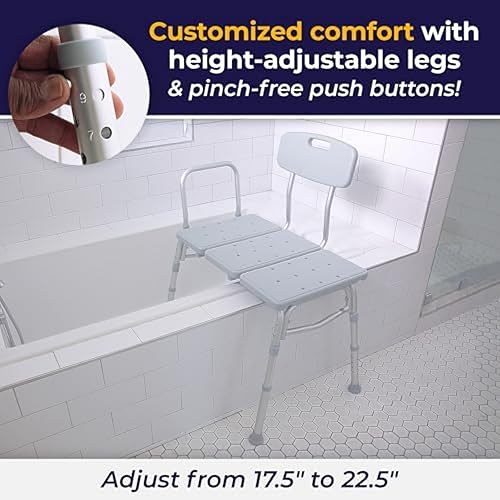
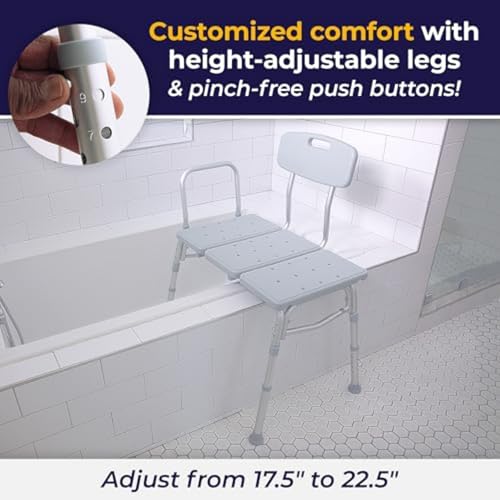
- Confirm all legs are locked evenly. Set the bench on a flat floor outside the tub, press each leg button and extend or retract until all four show the same height number or hole position, and listen for a clear click. Then place it back so two legs are in the tub and two are outside, with the seat level and not tilted toward the tub wall.
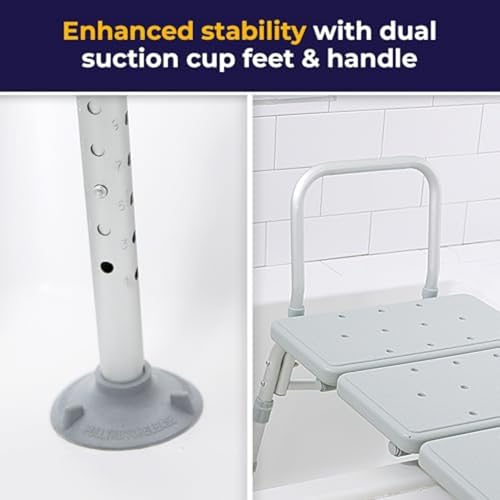
- Clean and reset the feet. Lift the bench, wipe the suction cups and rubber tips with warm water to remove soap film, and dry the tub floor and bathroom floor. Press each foot down firmly so suction cups seal and rubber tips grip, and check that no foot rests on a grout line, drain cover, or bath mat edge.
- Check the frame and hardware. With the bench empty, gently try to wiggle the backrest, armrests, and seat. Tighten any hand knobs or fasteners by hand as the manual directs, ensure the backrest is fully seated on the correct side, and look for cracks in the plastic seat or bent leg tubes.
- Review placement and loading. Center the bench over the tub wall so the weight stays over the frame, not hanging off one side. Encourage the user to sit fully on the seat before sliding, keep weight centered, and use the armrests to lower and rise slowly rather than pushing hard on one side.
- Assess the fit for the user and tub. Measure the tub width, wall height, and the user’s seated height. If knees are much higher than hips or feet do not reach the floor, adjust leg height within the allowed range so the user can sit with feet flat and move without leaning hard to one side.
If wobble continues after these steps, note when it happens. Does it rock only when sliding, only when sitting down, or only with weight on one armrest? That detail will help a professional recommend the next move.
When a Product Can Help
A product change may help when the current bench is the wrong size for the tub, does not offer enough support for the user’s needs, or has worn parts that no longer lock firmly. In those cases, one common option is a bench with an adjustable backrest and height settings that can be set to match your tub and the user’s seating height, which may help reduce the risk of slips during transfers.
This guide contains affiliate links, and we may earn a commission if you buy through them, at no extra cost to you.

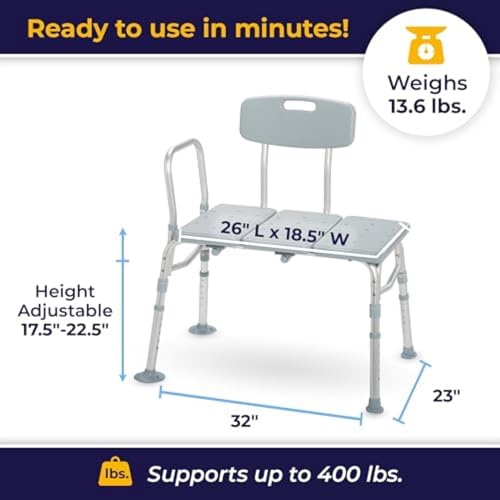
Prime Drive Medical Tub Transfer Bench





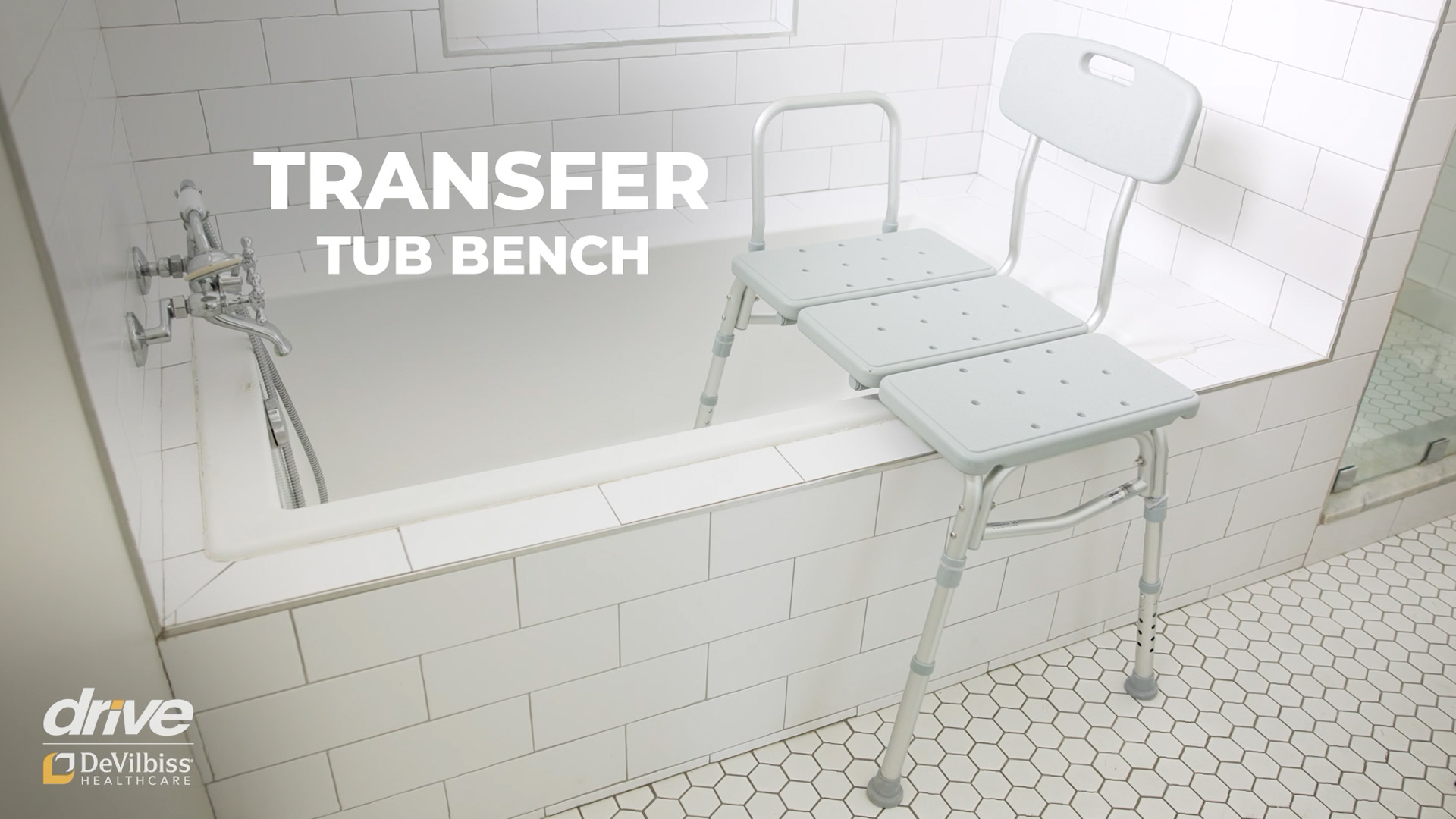
As an Amazon Associate we earn from qualifying purchases. Product prices and availability are accurate as of the date/time indicated.
This type of bench is often chosen when caregivers want a simple, reversible setup that can fit either side of the tub and allow a sit and slide motion. Look for features like slip resistant feet, a sturdy aluminum frame, and a backrest that can be positioned for your layout, and follow the included instructions for assembly and height adjustment.
When to Talk to a Professional Instead
A home adjustment is not ideal for every situation. If the user has had a recent fall, shows sudden changes in balance, or needs more support than a bench alone can offer, pause and get professional input before continuing to use the bench.
This bench style is not a good fit when the tub wall is unusually high, the bathroom floor is uneven or soft, or the user must be lifted rather than sliding independently. In those layouts, an occupational therapist or physical therapist can evaluate whether a different transfer method, additional grab support, or a bathroom modification is more appropriate.
You should also seek guidance if the bench frame is damaged, the suction cups no longer hold, or the user exceeds the bench’s rated capacity. A clinician can help you match the equipment to the person’s size and abilities and suggest safer alternatives, and you can explore related mobility topics in Bariatric & Plus Size Mobility or the broader Mobility Aids section.
Frequently Asked Questions
Why does the bench wobble only when my loved one slides across?
Sliding shifts weight from one side to the other, so any uneven leg height or weak foot grip shows up most then. Try resetting the legs to the same height and pressing the feet firmly onto clean, dry surfaces, and remind the user to move slowly with weight centered.
Should the suction cups stick to any tub surface?
Suction cups work best on smooth, flat, non textured surfaces and may not seal well on textured, curved, or refinished tubs. If the tub floor has a pattern or anti slip texture, the cups may grip poorly, and a professional can help you decide if a different foot style or bench type is better.
How do I know if the bench is simply the wrong size?
Signs include the seat hanging too far over the tub wall, legs that cannot be leveled without tilting, or the user having to lean heavily to reach an armrest. If you cannot get a level, centered fit after adjusting height and position, consider having an occupational therapist assess the fit before continued use.
Browse more picks in our Bariatric & Plus Size Mobility category, or see our related guide on Medical Alert Watch vs Transfer Bench Picks for 2026.










Write Your Review
No reviews yet. Be the first to share your experience!