

Quick Answer
If your motion sensor night light is not working well for a senior with arthritis, check three things first: where it is placed, whether the room is too bright for the sensor to trigger, and whether the battery or outlet power is low. Many lights only turn on when it is dark and when motion is close enough, so moving the light to the path to the bathroom, dimming nearby lamps, and recharging or reseating the light often helps more than pressing tiny buttons repeatedly.
Why This Happens
Motion sensor night lights are designed to stay off when the room is bright. If the light is near a hallway lamp, a TV, or even a bright alarm clock, the sensor may think it is daytime and not turn on. This is one of the most common reasons a light seems unreliable at night. Always check with a healthcare provider or occupational therapist before making safety changes for a senior in your care, especially when falls are a concern.
Placement also matters a lot for detection. A sensor mounted too high, too low, behind furniture, or pointed away from the walking path may not see slow or shuffling movement. For seniors with arthritis, a light that requires bending down to an outlet or reaching up to a high shelf can be hard to adjust, so it often ends up in a spot that is convenient for the hands but not ideal for the sensor.
Power and settings are the other common culprits. Rechargeable lights can dim or stop triggering when the battery is low, and plug-in models can be blocked by a loose outlet connection. Very low brightness settings or a short auto-off time can also make it seem like the light is not working, when it is actually on but too dim to be useful or turning off before the person needs it. Choosing a light with simple, arthritis-friendly controls can reduce the need for frequent fiddling, as noted in guides like best motion sensor night light for osteoporosis.
Practical Steps to Try
Try these steps in order, starting with the easiest and least disruptive. Stop and reassess if anything feels unsafe or requires forceful gripping or bending that is painful.
- Check the light and dark setting. If your light has an Auto or sensor mode, make sure it is set to turn on only when dark. Try dimming or turning off nearby lamps for a night and see if the light triggers more reliably. If the sensor has a small switch, use a soft touch and good lighting during the day to adjust it, or ask a caregiver to help so you do not have to strain finger joints.
- Reposition the light along the actual walking path. Place it at about waist to knee height along the route from bed to bathroom, facing the path rather than the bed. Avoid corners, behind doors, or behind clutter where the sensor view is blocked. A portable light with a base or adhesive pad can be moved without tools, which helps you try a few spots without drilling or hard gripping.
- Confirm power without extra strain. For a rechargeable light, charge it fully during the day, which typically takes a few hours, then return it to its spot in the evening. For a plug-in light, gently reseat it in the outlet and check that the outlet itself is not loose. If charging or unplugging requires small plugs or stiff buttons, consider keeping the charger in an easy-to-reach spot on a table rather than behind furniture.
- Adjust brightness and auto-off time to a comfortable level. A slightly brighter warm light that stays on for 60 to 120 seconds may be easier to navigate with than a very dim light that turns off after 20 seconds. Look for lights with a single large button or a long-press dimming option rather than tiny sliders, and set it once during the day so no nighttime adjustment is needed.
- Add a second low light instead of making one light do all the work. One light by the bed and one near the bathroom often works better than one bright light in the middle. This approach is similar to broader Bedroom Fall Prevention strategies where you light the whole path, not just one spot. If you use bed rails or other supports, make sure the lights do not create glare on them, and see related ideas in best bed rails for seniors with osteoporosis for keeping the bedside area clear and visible.
When a Product Can Help
A product may help when you have tried repositioning and charging but the current light still needs frequent button presses, hard-to-reach charging, or gives too little light for safe navigation. In that case, one common option is a portable, rechargeable light with a simple control, multiple brightness levels, and an auto-on motion sensor that works in the dark without any nighttime handling.
This guide contains affiliate links, and we may earn a commission if you buy through them, at no extra cost to you.

Prime CREWEEL Motion Sensor Night Light





As an Amazon Associate we earn from qualifying purchases. Product prices and availability are accurate as of the date/time indicated.
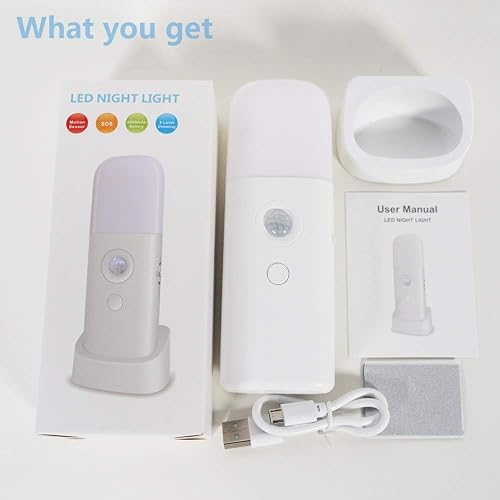
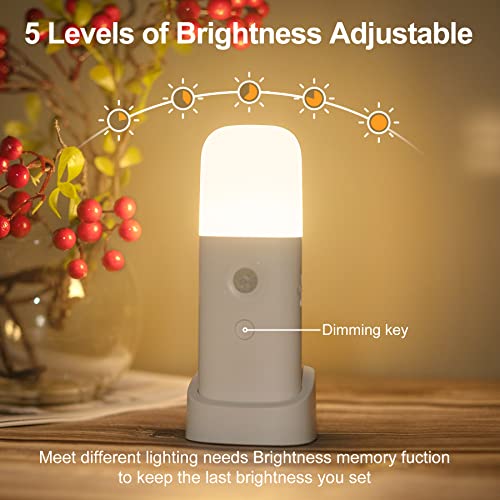
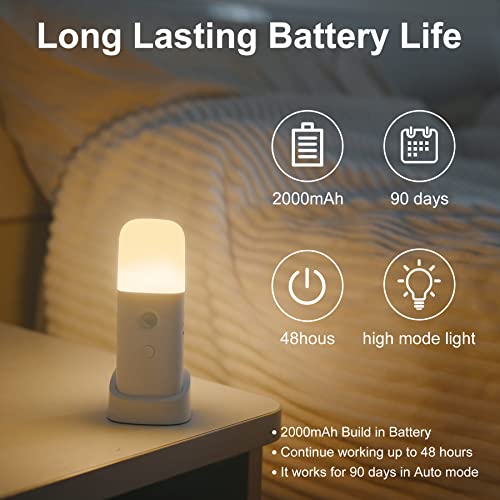
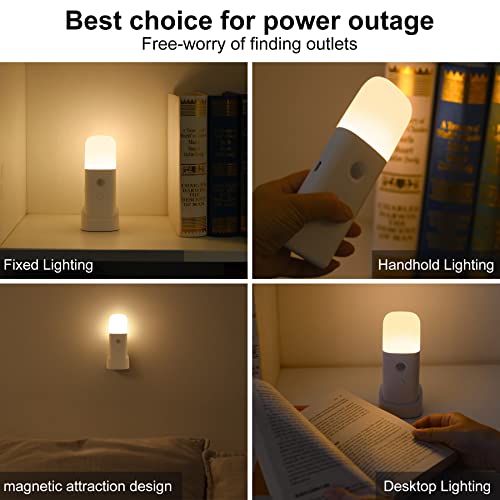
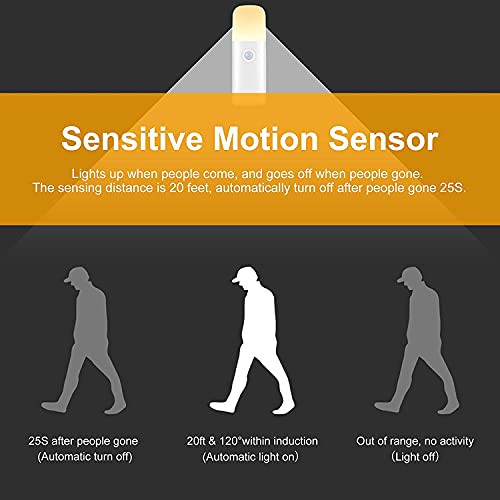
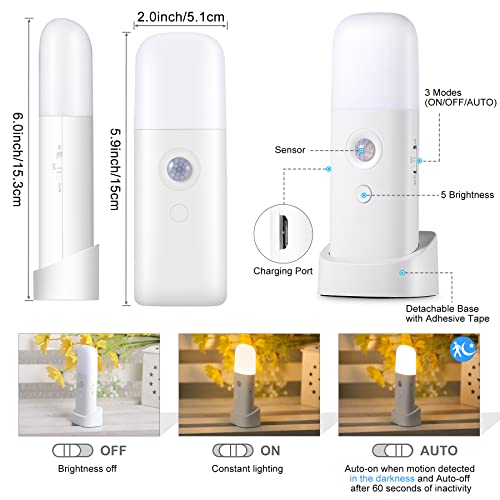
The CREWEEL Motion Sensor Night Light is one example caregivers often consider because it is described as having a 2000mAh rechargeable battery, five brightness levels, motion activation up to about 16 feet when dark with auto-off after about 25 seconds of no motion, and a compact design with a base and adhesive pads for tool-free placement on a flat surface or wall. Those features may help reduce the need for bending to outlets or handling small batteries, but any product may help reduce the risk of stumbles, it cannot eliminate it entirely.
When to Talk to a Professional Instead
If the senior is experiencing more frequent stumbles, new unsteadiness at night, or increased pain and stiffness that makes nighttime trips harder, a home light alone is not the right fix. A physician, physical therapist, or occupational therapist can look at the whole picture, from footwear and flooring to medication timing and overall mobility, and suggest safer next steps.
This type of portable stick-on light is not ideal for seniors who need substantial support to get in and out of bed, who have significant vision changes that require a full room lighting plan, or whose bedroom layout requires hardwired lighting or major electrical changes. It is also not a good fit if the light would be placed where it could be knocked off, create a tripping hazard, or be confused with a medical device.
Consider reaching out promptly if you notice repeated near-falls, reliance on furniture for balance, or confusion at night. A healthcare provider can help you decide whether additional supports, a different lighting plan, or a referral for a home safety evaluation is needed, rather than relying only on a night light.
Frequently Asked Questions
Why does my motion sensor night light only work when it is dark?
Most motion sensor night lights include a light sensor that keeps the light off when the room is bright to save power. If a bedside lamp or hallway light is on, the night light may not trigger. Try dimming nearby lights or moving the night light to a darker stretch of the path.
What helps make a night light easier for arthritic hands?
Look for a light with a large, simple button, memory for brightness so you do not have to reset it daily, and a rechargeable battery or plug-in design that does not need frequent battery changes. Placing the light where it can be charged on a table during the day and returned without bending or gripping small parts can also help.
Should I choose a plug-in or rechargeable motion sensor light for the bedroom?
A plug-in light avoids charging but needs a free outlet in the right spot and may be hard to reposition. A rechargeable portable light can be placed exactly where the senior walks, such as near the floor by the bed or bathroom, and moved without tools. Try the option that requires the least bending, reaching, and button pressing for the person using it.
Browse more picks in our Bedroom Fall Prevention category, or see our related guide on Osteoporosis Bed Rails We Recommend for 2026.





Write Your Review
No reviews yet. Be the first to share your experience!