

Caring for a senior with dementia often means watching a familiar routine become unpredictable. Your loved one may forget to lock brakes, try to carry the walker instead of pushing it, or stand and walk without waiting for support. When memory and judgment change, the choice between a traditional walker and a wheeled rollator becomes a safety decision, not just a comfort preference.
This guide contains affiliate links, and we may earn a commission if you buy through them, at no extra cost to you.
Quick Picks at a Glance
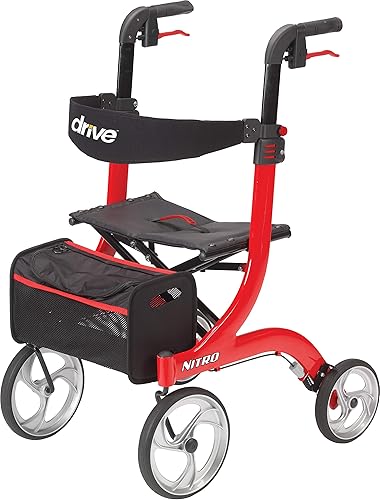
Prime Drive Medical Nitro Euro Style 4 Wheel Rollator

Prime Drive Medical Two-Button Folding Walker

Prime VOCIC Z21 Rollator Walker with Seat

Prime Medline Steel Rollator Walker with Seat

Prime HOMLAND Foldable Rollator Walker with Seat
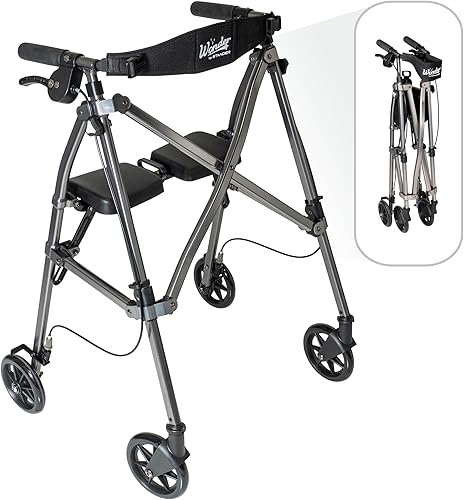
Prime Stander Space Saver Rollator Lightweight Folding

Prime Helavo H1160 Upright Walker with Seat
As an Amazon Associate we earn from qualifying purchases. Product prices and availability are accurate as of the date/time indicated.
Pros
- Effortless seat operation saves energy during long outings
- Sturdy aluminum frame supports stable walking without excessive bulk
- Smooth rolling performance transitions easily between different floor types
- Intuitive braking system delivers consistent and responsive control
Cons
- Standard seat cushion may require upgrading for users needing extended sitting comfort
- Adjustable height settings require manual pin adjustments rather than quick latch systems
- Heavier frame construction may demand extra strength for frequent car loading
This rolling walker provides essential mobility assistance for seniors and individuals managing limited endurance. Its nitrogen gas assisted seat mechanism allows users to sit down quickly without struggling with manual pumps. The design prioritizes daily convenience for people who need reliable support during shopping trips or neighborhood walks.
The integrated euro style handlebars encourage natural arm positioning and significantly reduce joint fatigue. evaluation confirms that the rear drum brakes engage smoothly and offer trustworthy stopping power on inclines. Users consistently report enhanced confidence when navigating crowded spaces or uneven sidewalks.
Aircraft grade aluminum construction keeps the overall weight manageable while maintaining a rigid structural frame. The quick fold function operates seamlessly for compact vehicle transport and apartment storage. Durable rubber casters glide quietly across hardwood floors and transition confidently onto carpeted hallways.
Some buyers note that the standard seating foam requires additional cushioning for lengthy rest periods. Adjusting the handlebar height typically involves removing small pins rather than utilizing rapid latch systems. These minor friction points do not significantly impact the overall functionality of the device.
This rollator successfully balances lightweight portability with robust daily usability. It remains a top recommendation for caregivers seeking a dependable assistive device that simplifies routine activities. The combination of ergonomic controls and reliable braking makes it a practical investment for sustained independence.
Pros
- Ultralight 7.5-pound frame is easy to lift, carry, and fold
- Simple assembly and intuitive push-button folding, even with limited dexterity
- Strong and stable support with adjustable height for a personalized fit
- Smooth maneuverability in hallways, doorways, and small living spaces
Cons
- Two-wheel design means rear legs can drag and may mark delicate floors
- Performance is limited on thick carpet and uneven outdoor surfaces
- No included storage accessories such as tray, basket, or pouch
The Drive Medical Two-Button Folding Walker with Wheels is a standard rolling walker designed for adults, seniors, and anyone recovering from hip or leg surgery who needs dependable daily support. It prioritizes stability, simplicity, and portability for both indoor use and light outdoor mobility.
In everyday use, the dual push-button folding system stands out for its ease of operation, even for users with limited hand strength or dexterity. The 5-inch front wheels and rear glide caps deliver smooth, controlled movement across hardwood, tile, and low-pile carpet while maintaining confident handling in narrow hallways and doorways.
Built from lightweight aluminum, the frame weighs only 7.5 pounds yet is rated to support up to 350 pounds without flexing or wobbling. Height is easily adjustable for a custom fit, and the ergonomically contoured vinyl grips help reduce fatigue during extended use while the walker folds flat for storage or travel.
The two-wheel design does have limitations, as the rear glide caps can drag on delicate flooring and may struggle on thick carpet or rough outdoor surfaces. Users who need to transport items will also need to purchase a separate tray or pouch, since no carry accessories are included.
Overall, this is a practical, no-frills walker that delivers excellent stability, portability, and value for home recovery and everyday mobility. For those seeking a lightweight, easy to fold walker from a trusted brand, it remains a top choice that balances comfort, safety, and independence.
Item Model: 10210-1
Frame Material: Durable, lightweight aluminum
Product Dimensions: 33.5 x 22 x 4 inches
Weight: 7.5 pounds
Weight Capacity: 350 pounds
Wheels: 5-inch front wheels with rear glide caps
Folding System: Dual push-button, folds flat
Grips: Ergonomically contoured vinyl hand grips
Pros
- Exceptional stability supports up to three hundred fifty pounds
- Quick assembly and intuitive folding save time and effort
- Smooth ride quality handles both indoor floors and outdoor trails
- Removable storage pouch adapts to changing carrying needs
Cons
- Weighs approximately twenty two pounds, making it slightly less portable than ultralight models
- Folds into a bulkier rectangular shape rather than flattening completely
- Internal storage capacity remains modest compared to premium rollators
The VOCIC Z21 Rollator Walker provides reliable mobility support tailored for seniors navigating daily routines. It seamlessly merges walking assistance with a convenient seating area for quick rest stops.
Daily performance excels due to its sturdy chassis and dependable dual hand brakes. The eight inch tires easily tackle uneven pavement while keeping rides remarkably smooth and controlled.
Engineering focuses on lasting durability paired with thoughtful comfort upgrades. The curved seat and soft backrest work together to minimize fatigue and protect sensitive joints during longer outings.
Potential limitations involve a moderately bulky folded shape that requires decent trunk clearance. Buyers also note the front pouch holds only small items instead of bulky shopping bags.
Our final assessment favors this model for users prioritizing safety and plush seating over extreme weight reduction. It stands out as a practical, high value solution for everyday independence.
Frame material consists of heavy duty iron alloy engineered for maximum load bearing capacity.
Overall dimensions measure roughly thirteen inches wide by twenty four inches deep with a total height of seventy five inches.
Maximum user weight support reaches three hundred fifty pounds across the reinforced chassis.
Handlebar height adjusts manually between thirty one point five and thirty six point six inches.
Warranty coverage extends for three years against manufacturing defects under normal household use.
Pros
- Highly rated for stability and easy maneuverability in tight spaces
- Comfortable padded seat and backrest praised for convenient rest breaks
- Easy to assemble and fold for travel and home storage
- Secure locking hand brakes and roomy under seat storage
- Strong 350 lb capacity at an accessible value
Cons
- Steel frame at 16.5 lbs is heavier than aluminum alternatives and harder to lift frequently
- Wider footprint requires more storage space than a standard walker when unfolded
- Available only in burgundy in this configuration, with limited color options
The Medline Steel Rollator Walker MDS86850ESKD is a four wheel rolling walker designed for seniors, adults and anyone with limited mobility who needs extra stability while walking. It combines a supportive walker with a convenient seat, making it ideal for daily errands, outdoor strolls and indoor navigation when frequent rest is needed.
In everyday use, the 6 inch wheels deliver smooth, confident movement across hardwood, carpet and pavement, while the tight turning radius makes bathrooms and narrow hallways easy to navigate. Users consistently praise the easy squeeze hand brakes that lock securely for sitting or standing, plus the roomy under seat bag that keeps personal items safe and accessible.
Built with a durable steel frame in burgundy, this rollator feels substantial and stable without feeling bulky. The padded 12 by 12 inch seat and supportive backrest offer comfortable resting, and the handle height adjusts from 31 to 35 inches for a tailored ergonomic fit that helps reduce back and wrist strain.
There are a few tradeoffs to consider. At 16.5 pounds, the steel construction is heavier than many aluminum rollators, so lifting it into a car may require extra effort. Its wider footprint also needs a bit more storage space, and color options are limited in this model.
Overall, the Medline Steel Rollator delivers outstanding stability, comfort and practicality at a very accessible value. For anyone seeking a dependable, easy to use rollator with a seat for both indoor and outdoor mobility, it is a smart and reassuring choice that earns its strong reputation.
Model: MDS86850ESKD by Medline Industries Healthcare, burgundy steel frame
Dimensions: 23 x 21 x 31 inches, weight 16.5 pounds, folds for transport and storage
Capacity and Comfort: Supports up to 350 lbs, 12x12 inch padded seat with backrest, handle height adjusts 31 to 35 inches
Mobility: 6 inch wheels for indoor and outdoor use, ergonomic hand brakes with push down locking
Storage: Spacious under seat bag for personal essentials, ideal for unisex adult use
Pros
- Exceptional load capacity combined with a remarkably stable frame prevents wobbling on uneven surfaces
- Padded seating offers superior comfort compared to standard wire or flat plastic walker seats
- Rapid assembly process saves time and eliminates frustration during initial setup
- Responsive customer service quickly resolves any minor hardware questions or replacement part requests
Cons
- The unit folds into a moderately bulky shape, which may require careful storage planning in smaller vehicles or tight closets
- Occasional users report needing extra patience to align wheel attachments during the very first setup attempt
- Handle grips lack premium memory foam inserts, which might feel firm during prolonged gripping sessions
The HOMLAND foldable rollator walker delivers reliable mobility assistance for seniors and individuals recovering from mobility limitations. This four wheeled support system bridges the gap between stationary aids and heavier power chairs. It suits daily commuters, recreational walkers, and caregivers seeking dependable transit support.
Real world performance highlights its smooth eight inch wheels and spacious padded resting platform. Riders experience effortless gliding across hardwood, tile, and packed dirt paths without jarring vibrations. The convenient under seat pouch secures personal items while keeping center of gravity balanced.
Construction relies on a reinforced alloy steel framework that prioritizes stiffness and impact resistance. Quick release mechanisms enable immediate height customization for adults measuring between four feet seven and six feet six. The chassis tolerates heavy loads while remaining portable enough for car trunk transport.
Shoppers should anticipate a moderately folded footprint that requires adequate closet clearance. Initial wheel mounting demands precise pin alignment since instructional diagrams lack close up visuals. Standard rubber grips may feel stiff for users managing advanced joint inflammation.
Final evaluation positions this rollator as a highly practical choice for families valuing structural integrity and hassle free operation. The thoughtful integration of broad seating and adaptive tuning guarantees years of consistent use. Buyers expecting a rugged yet manageable walking aid will find this model exceptionally reliable.
Frame Material: Reinforced Alloy Steel
Maximum Weight Capacity: 350 lbs
Product Weight: Approximately 20 lbs
Wheel Size: 8 Inch Durable PU Tires
Seat Dimensions: 16 Inches by 12 Inches
Adjustable Height Range: 4 Feet 7 Inches to 6 Feet 6 Inches
Pros
- Exceptionally compact folding design saves significant storage space
- Smooth rolling performance adapts well to both indoor and outdoor surfaces
- Quick tool free setup eliminates assembly frustration
- Secure braking system enhances confidence on varied terrain
Cons
- Two hundred fifty pound weight capacity may not suit heavier individuals
- Absence of a built in storage basket limits carrying capacity for daily essentials
- Narrow seat depth might feel less spacious for broader body types
The Stander Space Saver Rollator redefines portable mobility solutions for active seniors and adults seeking reliable daily assistance. This innovative walker combines essential safety features with a revolutionary compact design that targets frequent travelers and those living in apartments with limited storage.
real-world feedback highlights the patented folding technology as the absolute game changer. Users consistently praise how effortlessly the frame collapses into a manageable size that slides neatly into vehicle trunks or closet corners without straining arms or backs.
Build quality reflects thoughtful engineering throughout the chassis and seating area. The padded eighteen point five inch seat paired with a supportive backrest offers comfortable lumbar relief during rest periods. Durable six inch wheels navigate transitions between carpets and paved paths with minimal resistance.
Some buyers note practical limitations worth considering before purchase. The two hundred fifty pound rating excludes heavier users seeking bariatric options. Additionally the lack of an included storage compartment requires relying on external cross bars or backpack straps to carry personal items.
Overall this walker delivers outstanding value for individuals prioritizing portability and dependable support. It earns a strong recommendation for anyone wanting a dependable mobility companion that bridges the gap between medical equipment and everyday convenience.
This mobility device measures twenty three by twenty six point five by thirty six inches when fully deployed. The total unit weight sits at fourteen point five pounds for easy lifting and transport.
Handle height ranges from thirty three to thirty six inches to accommodate taller individuals. Available in two configurations to match specific user heights and room layouts.
Pros
- Promotes upright posture to relieve pressure on back, shoulders and wrists
- Highly adjustable handle height from 40.9 to 46.9 inches and adjustable backrest for tall users
- All terrain 10 inch front and 8 inch rear rubber tires with 360 degree front wheels
- Lightweight aluminium frame that folds compactly for travel and storage
- Comfort focused with padded seat, breathable backrest and ergonomic foldable handles
Cons
- Heavier than standard rollators at 22.7 lbs, less ideal for frequent lifting into vehicles
- Larger folded footprint at 26.4 inches wide requires more storage space
- Tall handle range may not suit users under 5 foot 6
The Helavo H1160 is a foldable upright walker and rollator designed to let you walk standing tall instead of hunched over. With a built in seat, padded armrests and a handle height range of 40.9 to 46.9 inches, it is built for tall adults and seniors who need posture support and frequent rest breaks.
Its standout feature is the upright design with ergonomic handles and padded armrests that shift weight from wrists to forearms for more comfortable longer walks. The Helavo Slide System makes height adjustment smooth without push buttons, while the adjustable and breathable backrest, all terrain rubber tires and 360 degree front wheels deliver confident mobility on pavement, grass and indoor floors.
Built from lightweight aluminium, the H1160 weighs 22.7 pounds yet supports up to 300 pounds with a stable and durable frame. The super soft seat, extra padded backrest and practical add ons like a transport bag and clip on cup holder show thoughtful attention to everyday comfort and convenience.
The upright frame is bulkier than a traditional rollator, so it needs more storage room and is heavier to lift into a vehicle. Users under 5 foot 6 may also find the tall handle range less suited to their height, so checking measurements before buying is important.
Overall, the Helavo H1160 is a strong choice for anyone seeking an all terrain, posture friendly walker that doubles as a comfortable seat. If you value upright walking, easy adjustability and outdoor capability in one foldable package, this rollator delivers excellent comfort and versatility.
Model: Helavo H1160 Upright Walker
Dimensions: 26.38 x 26.38 x 46.85 inches, 22.71 pounds
Frame: Lightweight aluminium, foldable to 14.6 x 26.4 x 40.9 inches
Capacity: 300 lbs maximum load
Wheels: 10 inch front, 8 inch rear leakproof all terrain rubber tires with 360 degree front rotation
Seat: Height 22 inches, surface 9.1 x 18.9 inches with extra padded breathable backrest
Handle Height: 40.9 to 46.9 inches with Helavo Slide System and ergonomic foldable handles
Includes: Transport bag and clip on cup holder
Buying Guide: How to Choose Between Walker and Rollator for Seniors With Dementia
Dementia adds cognitive and behavioral factors that standard mobility advice often overlooks. A device that is perfect for a cognitively sharp senior can be confusing or unsafe for someone who forgets steps, misjudges distances, or wanders without purpose. The checklist below focuses on dementia-specific needs, and before you make a safety-related change, consider speaking with a doctor, occupational therapist, or physical therapist who knows your loved one’s needs.
- Can your loved one remember and repeat brake steps after a short delay with cueing
- Does your loved one need to lean heavily or pause frequently for balance
- Will the aid fit through doorways, hallways, and bathroom turns at home
- Does fatigue or wandering make a built-in seat helpful or risky
1. Cognitive Load and Brake Simplicity
Cognitive load is the most important filter when you compare walkers and rollators for dementia. A standard walker like the Drive Medical Two-Button Folding Walker has no hand brakes to remember, you simply lift and place it, which reduces the number of steps your loved one must recall. This simplicity helps when short-term memory, sequencing, and attention are limited, and it lowers the chance of the frame rolling away unexpectedly.
If your loved one can learn and consistently use hand brakes with cueing, a rollator such as the Medline Steel Rollator Walker with Seat, Burgundy may still work with close supervision. Look for large, intuitive brake handles, clear visual cues, and a simple locking mechanism you can demonstrate repeatedly during calm, supervised practice. Our fall prevention strategies explain how consistent routines and environmental cues reduce brake-related slips and improve adherence.
2. Stability, Weight-Bearing and Fall Risk
Stability and weight-bearing needs should guide your next decision. A two-button walker provides the highest stability because all four legs stay on the ground until intentionally moved, which helps seniors who lean heavily, shuffle, or need to pause mid-step. This slower, lift-and-place rhythm also prevents the device from rolling away if grip loosens or attention shifts, a common scenario with dementia.
Rollators glide on four wheels, which makes walking smoother but also means the frame can move before the senior is ready. Models like the Drive Medical RTL10266 Nitro Euro-Style 4-Wheel and the VOCIC Z21 Rollator Walker for Seniors with Seat offer excellent maneuverability for seniors who can control speed and brake reliably. For those who forget to brake, that same ease of movement increases fall risk, so weigh stability over convenience and review our mobility aids guide for balance and support considerations.
3. Maneuverability, Size and Caregiver Handling
Maneuverability at home and ease of handling for caregivers matter just as much as the senior’s abilities. Measure doorways, hallway turns, and bathroom space before you decide, because a wider rollator may not fit where your loved one walks most. Weight and folding design also affect whether you can lift the aid into a car, carry it over a threshold, or store it quickly when not in use.
The Stander Space Saver Rollator is designed to fold three times smaller than traditional frames, which helps caregivers manage transport and storage without complex steps. In contrast, the Helavo Upright Walker with Seat provides forearm support and an upright posture but has a larger footprint that needs more space to turn. The Drive Medical Two-Button Folding Walker remains one of the lightest and simplest to fold with dual push-button operation, a benefit when dementia makes multi-step folding confusing. Pair your choice with grab bars for balance support in tight areas where turning is difficult.
4. Seating, Rest Breaks and Wandering Safety
Seating and rest options influence safety for seniors who fatigue quickly or wander. A rollator with a built-in seat lets your loved one sit immediately when tired, which can prevent hurried, unstable attempts to find a chair. This is valuable for longer outings, hallway walks, or for seniors who need frequent breaks due to low endurance or medication-related drowsiness.
The VOCIC Z21 Rollator Walker for Seniors with Seat includes an ergonomic arc seat and ultra backrest for comfort during pauses, while the HOMLAND Foldable Rollator Walkers with Seat offers a wide, thick padded seat that supports longer rests. The Medline Steel Rollator Walker with Seat, Burgundy also provides a padded seat and backrest for comfort. Always confirm the senior can lock brakes before sitting and cannot be left unsupervised on a seated rollator, and check our bathroom safety checklist for related resting and transfer tips near toilets and showers.
Use this checklist together with observed behavior, not just diagnosis. Watch how your loved one responds to verbal cues, whether they remember to use brakes after a short delay, and how they handle turns and thresholds. Document what works during supervised walks, share notes with family and care staff, and revisit the decision as needs change, since dementia progression often shifts the balance from rollator to walker.
Who Shouldn’t Buy This
This category of walkers and rollators is not a good fit for seniors who cannot follow one-step directions even with hand-over-hand guidance, who push or pull the frame unpredictably, or who attempt to stand without waiting for support. It is also not ideal for homes with very narrow doorways, steep thresholds, or where constant wandering without supervision is the primary concern, as no walker or rollator can substitute for direct oversight and environmental safeguards.
Final Thoughts
If you need maximum simplicity and stability for a senior with moderate to advanced dementia, the Drive Medical Two-Button Folding Walker offers a lightweight, brake-free design that reduces cognitive steps and provides steady support. If your loved one can manage hand brakes with cueing and benefits from frequent seated rests, the Medline Steel Rollator Walker with Seat, Burgundy adds comfortable seating and smooth wheels for longer, supervised outings.
Frequently Asked Questions
Which is safer for a senior with dementia, a walker or a rollator?
For most seniors with dementia, a standard walker is safer because it does not roll away and has no brakes to forget. It forces a slower, more deliberate pace and stays in place when the user pauses, which reduces forward falls. A rollator can be safe only if the senior consistently remembers to brake and is always supervised during use.
Consider a brief supervised trial with both types and note errors like forgetting to lock brakes or pushing the rollator too fast. If errors occur even with cueing, choose the walker and add supports like bed rails for nighttime safety for times when the aid is not in use.
Can a senior with dementia learn to use hand brakes on a rollator in 2026?
Some seniors in early stages can learn hand brakes with consistent, patient cueing and a simple, large-handle design. Success depends on memory, hand strength, and the ability to sequence squeeze, hold, and lock actions without prompting. Practice should be short, calm, and repeated at the same time of day when attention is best.
If learning does not carry over after a short delay or requires constant hand-over-hand help, a brake-free walker is the more reliable choice. You can also simplify the environment with door lever handles that ease daily movement so fewer complex hand actions are needed throughout the home.
When should we switch from a rollator to a walker as dementia progresses?
Consider switching when you notice more frequent brake errors, increased leaning or weight-bearing on the frame, or attempts to walk while the rollator is still moving. Other signs include forgetting to lock the seat brakes before sitting or difficulty steering through doorways. These changes suggest the cognitive and motor demands of a rollator now outweigh its convenience.
Reassess every few months and after any hospitalization, fall, or medication change, and involve the care team in the decision. A walker like the Drive Medical Two-Button Folding Walker often becomes the safer default as supervision needs increase and endurance decreases.
Do rollators with seats help or create risks for seniors who wander?
Seats help seniors who fatigue easily by providing an immediate, stable place to rest, which can reduce risky searches for a chair. Models such as the VOCIC Z21 Rollator Walker for Seniors with Seat, HOMLAND Foldable Rollator Walkers with Seat, and Helavo Upright Walker with Seat offer padded seating and backrests for comfort. This benefit matters most on longer walks or in homes with few nearby chairs.
The risk is that a senior may sit without locking brakes or may use the rollator as a wheelchair and try to scoot while seated. Prevent this by teaching and supervising the lock-before-sitting sequence and never leaving the senior unattended on a seated rollator. If wandering is frequent and unsupervised, prioritize a walker and closer supervision over seating features.
Browse more picks in our Checklists category.








Write Your Review
No reviews yet. Be the first to share your experience!